

 English
 Spanish
 Catalan
 French
 Italian
 Al otro lado de un Estrecho –que, según la mitología, Hércules abrió entre Europa y África–, nos espera Ceuta, 22 km² de suelo español situados en el continente que fue cuna de la humanidad y justo en el mismo lugar en el que el océano Atlántico y el mar Mediterráneo se unen, mezclándose, pero sin perder cada uno de ellos su propia esencia. Viajar a Ceuta, cruzando el Estrecho de Gibraltar en barco, convierte el trayecto en un motivo más para visitarla, por su comodidad y rapidez en llegar a la orilla africana de España. La ciudad que nos encontramos al otro lado del mar es ideal para pasar un fin de semana. Día 1 18h De compras por Ceuta Después de tomarnos un buen café en alguna de las muchas y excelentes cafeterías de la zona comercial de la ciudad tendremos las suficientes energías para recorrer el Paseo del Revellín, que se inicia en el histórico Edificio Trujillo y la Calle Real, en busca de los productos que, en Ceuta, resultan muy interesantes por su bajo precio en relación a la Península como la tienda Tax Free de Baleària. 22h Cena en las Murallas Reales El Conjunto Monumental de las Murallas Reales era el límite de la Ceuta antigua. Atravesándolo, se encuentra el Foso Real, navegable desde la época de dominación portuguesa. En su espectacular Patio de Armas, que también alberga un interesante museo abierto, los restaurantes El Santuario y El Secreto de Yuste ofrecen las mejores delicias gastronómicas en un entorno incomparable que no pierde belleza con la oscuridad de la noche, sino todo lo contrario. 00h Copas marineras Para acabar la noche, nos dirigiremos al Poblado Marinero, lugar por excelencia del ocio nocturno caballa. Día 2 12h Desde el mar No podemos perdernos el paseo en el Barco Turístico El Desnarigado, que nos ofrecerá la posibilidad de disfrutar de la belleza de la ciudad desde el mar. El paso de este barco por el Foso Real del Conjunto Monumental de las Muralles Reales es, sencillamente, espectacular. 13h En la sucursal del Paraíso El Parque Marítimo del Mediterráneo merece una especial atención. En pleno centro de la ciudad emerge un lugar idílico: 56.000 m2 ganados al mar, con espectaculares lagos azules de agua salada, cascadas, hamacas en solariums rodeados de bellas palmeras y un precioso circuito botánico. En este macro complejo, encontramos todo lo que podemos necesitar: bares de tapas, restaurantes, zonas de ocio y recreo para niños y mayores, excelentes atenciones y todas las comodidades. En definitiva, un pedacito de Paraíso que el genial artista César Manrique quiso situar en esta hermosa ciudad. [gallery type="slideshow" size="full" link="none" ids="1455,1459,1454,1453,1452,1450"] 18h Un paseo por la historia Después del correspondiente descanso, dirigimos nuestros pasos al Conjunto Monumental de las Murallas Reales, para recorrer a la luz del día el Patio de Armas, los baluartes, la muralla del Foso Real y el museo abierto del Revellín de San Ignacio. Después, nos dirigimos a la Plaza de África, desde donde vamos a continuar con un largo paseo que nos permitirá conocer un poco de la milenaria historia de la ciudad. Allí, el monumento a los caídos en la guerra de África, la Catedral de Nuestra Señora de la Asunción y el Santuario de Nuestra Señora de África (patrona y alcaldesa perpetua de Ceuta), serán los primeros lugares que recorreremos. Ya en la conocida como Gran Vía, se erige el Palacio de la Asamblea, que fue inaugurado por el Rey Alfonso XIII y Doña Victoria Eugenia en 1927. Más adelante, en la Basílica tardo romana, podremos tener acceso a los únicos restos cristianos en esta orilla del Mediterráneo (siglo IV). Continuando hacia la zona comercial, no podemos dejar de visitar el Museo Específico de la Legión, en el Paseo de Colón y el Museo de Ceuta, en el Paseo del Revellín, donde encontraremos una sección de arqueología y salas de exposiciones itinerantes. A lo largo de este trayecto, podremos observar varias y espectaculares estatuas. La foto junto al enorme y famoso Hércules, situado en la Plaza de la Constitución, es inevitable. 21h De tapeo, para abrir boca El recorrido por parte del patrimonio histórico-cultural de la ciudad puede acabar en la preciosa Casa de los Dragones, un edificio historicista de tres plantas, muy cerca de la Plaza de los Reyes. Después nos dirigiremos a uno de los muchos mesones y bares de tapas que, en el centro de la ciudad, ofrecen una gran variedad de opciones 22h Gastronomía exótica Después de abrir boca con una buena tapa, vamos a probar la gastronomía árabe que, en Ceuta, por su peculiar situación geográfica, podemos disfrutar con una calidad excelente. Podemos escoger los restaurantes Oasis o Al Andalus, ambos ubicados en el monte Hacho. Antes de sentarnos a la mesa nos deleitaremos con la hermosa imagen de Ceuta iluminada desde el mirador de San Antonio, también en el Hacho, un santo muy popular en la ciudad cuya ermita está en este mismo lugar. Día 3 11h Actividades náutico-deportivas Por la mañana nos dirigiremos a las instalaciones de Ceuta Kayak, donde nos ofertan una gran variedad de actividades náutico-deportivas: kayak, paddle surf, bautismos de buceo. La ciudad es un destino idóneo para la práctica de deportes náuticos. Es indudable que su situación geográfica, entre dos mares, la convierten en un lugar excepcional para ello. Bucear en sus impresionantes fondos marinos, por ejemplo, es un lujo que aquellos que han podido disfrutar en alguna ocasión no dudan en repetir. 14h Despedida gastronómica Las últimas horas en la ciudad las vamos a pasar saboreando de nuevo su sorprendente oferta gastronómica. No se puede abandonar la ciudad sin probar los elaborados platos y el exquisito trato del Mesón Alberto, ubicado en el Polígono Virgen de África y calificado como un restaurante de altísima calidad. Ceuta, nuestra ciudad al sur del sur, no sólo es un lugar al que hay que ir, es un lugar al que volver Quique Rodríguez Castillo | Periodista

 X
X 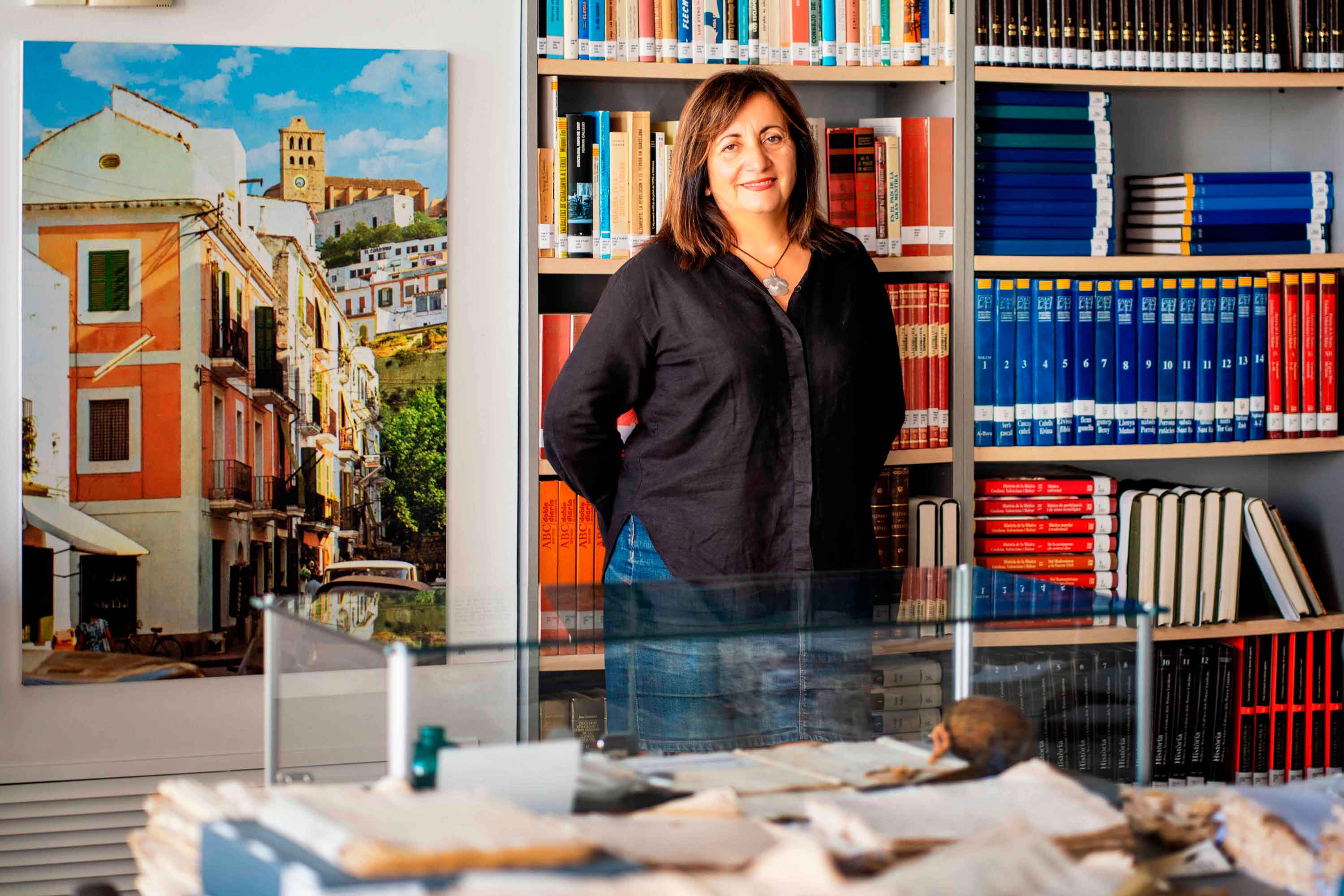
Historias del mar
Fanny Tur: «Baleària ya forma parte de la historia del transporte marítimo»
Ibicenca, activista medioambiental, historiadora, directora del archivo histórico de Eivissa… Fanny Tur Riera desempeñó, entre otros cargos públicos, el de consellera de Cultura del Govern Balear entre 2017 y 2019. Desde esta perspectiva, su análisis con visión histórica cobra valor: «Baleària ya forma parte de la historia del transporte marítimo de las Balears y del Mediterráneo», afirma antes de reflexionar sobre lo que supuso la irrupción de la naviera, ya que «los monopolios nunca son buenos y diversificar la oferta siempre tiene que beneficiar al usuario». En clave cultural y de género, esta historiadora destaca de la naviera Baleària cuestiones como «la atención en y al catalán, o poner nombres de mujer a algunos barcos, mostrando que la historia también la escribimos las mujeres». Desde la perspectiva ecologista, Tur Riera valora el compromiso de Baleària con la sostenibilidad partiendo de que «la actividad humana en general y el turismo y la gran movilidad en particular tienen unos efectos devastadores sobre el mar y el territorio». En este sentido, destaca, «todas las medidas que se pongan en práctica para minimizar los efectos de la masificación, como por ejemplo emplear energías renovables y colaborar con entidades ecologistas, ponen un grano de arena en una lucha que hace tiempo es imprescindible para la misma supervivencia». Pero si algo destaca de la aportación de Baleària esta exconsellera de Cultura del Govern Balear es el papel desempeñado por la Fundación Baleària, que ha hecho que «la creación pueda viajar a nuevos escenarios y no se quede en el lugar de origen. Para enriquecerse y crecer, el arte y la creación se tienen que mover mientras conservan sus raíces bien fuertes». Y ello, subraya, en combinación con la gestión de espacios culturales «en diferentes lugares —lo que desde la Fundación Baleària llaman las Llonges de la Cultura—, facilitando así que puedan acoger actividades, encuentros, investigación, muestras colectivas y creadores de todo el país para que se puedan encontrar y enriquecerse mutuamente» porque, reflexiona, «el arte y la investigación son trabajo propio, pero también son puesta en común y conocimiento mutuo». Creación cultural «En definitiva —asegura Fanny Tur— Baleària a través de su fundación ha hecho posible que la creación tenga movilidad, circule, se muestre en nuevos escenarios, porque así crece y encuentra nuevos paisajes… ha contribuido a la relación y el conocimiento mutuo entre creadores, facilitando que se encuentren, se conozcan y, en definitiva, que establezcanvínculos». En el caso de Balears, Fanny Tur considera que la de Baleària y de su fundación han sido una magnífica aportación favorecedora de la articulación social y cultural, además de subrayar la revitalización que ha supuesto la conexión, en todos los ámbitos, entre Dénia y Eivissa.
Read more

Historias del mar
De grumete a capitán. Vocabulario marítimo básico (I)
¿Dónde queda babor y estribor? ¿Cuál es la diferencia entre manga y eslora? Seguro que has oído una y mil veces términos como estos pero todavía te siguen generando dudas cuando subes a bordo de un ferri. No te preocupes, hemos preparado un glosario básico de léxico marítimo para que alimentes tu vocabulario y disfrutes todavía más de tu experiencia de viaje. Deja atrás tus titubeos de grumete y presume de hablar con la propiedad de un capitán. ¿Empezamos? PARTES DEL FERRI CASCO. El cuerpo del buque. La estructura ‘en neto’, sin máquinas, mástiles ni elementos accesorios para la navegación. CUBIERTA: Cada uno de los pisos de una embarcación. Forman la estructura que permiten un espacio habitable para la tripulación y el pasaje. Los barcos tienen varias cubiertas, tanto para la bodega -donde se ubica la carga y los vehículos- como para las zonas de pasajeros –con salones, áreas de butacas, restaurantes, etc.- siendo la principal la superior. QUILLA: Es la columna vertebral del barco. La pieza de hierro que va de popa a proa por la parte inferior del barco y en que se asienta toda su armazón.Constituye el principal refuerzo estructural de la embarcación, en el que se encastan los demás y sobre el que descargan su peso. [caption id="attachment_1776" align="aligncenter" width="800"] Corte transversal del ferri Martín i Soler de Baleària, donde se diferencia el casco, la quilla y las diferentes cubiertas.[/caption] VOLUMEN Y DIMENSIONES ESLORA: La longitud de la embarcación. O dicho de otra manera, la distancia de punta a punta de la estructura del buque. MANGA: La anchura (máxima) de un buque. PUNTAL. La altura de la bodega de la nave desde la quilla hasta el extremo de la cubierta superior. DESPLAZAMIENTO: El volumen de agua que desplaza la parte sumergida del barco. Es decir… el peso del barco. Ahora se entiende mejor ¿verdad?. POSICIÓN EN EL BARCO PROA y POPA. La proa es la parte delantera del barco. Tiene forma de cuña para que el buque pueda "cortar el agua”. Por el contrario, la popa es la parte posterior de la estructura del buque. BABOR y ESTRIBOR. Por babor se considera el lado izquierdo de un buque, mirando desde atrás hacia delante, esto es de popa a proa. Estribor es la banda o lado derecho de un buque, mirando desde atrás hacia delante, esto es de popa a proa. OBRA VIVA y MUERTA. La viva es la parte del casco bajo el agua. Es decir, desde la quilla a la línea de flotación a máxima carga. La muerta, la parte del casco que sobresale del mar MANIOBRAS ARRIAR. Aflojar o soltar un cabo (las cuerdas de a bordo). También se utilizan los términos LASCAR (aflojar) y LARGAR (soltar). Una advertencia: a bordo de los barcos sólo hay una cuerda, la del cronómetro. Las demás se llaman CABOS (y en los barcos grandes ESTACHAS). VIRAR. Lo contrario de arriar, es decir COBRAR o recuperar un cabo o el ancla, cuando el buque se encuentra fondeado. Por cierto, la maniobra de virar es propia de buques de vela y no tanto de ferris. ATRACAR. Operación para ubicar el buque en el lugar previsto del muelle. Concluye en el momento en que la embarcación AMARRA (o ata firmemente) el último cabo al NORAY o bolardo del muelle. Por cierto, la maniobra contraria a ATRACAR ser llama DESATRACAR. Lógico ¿no? BARLOVENTEAR. Maniobrar aprovechando la fuerza viento (a favor o en contra) para que el impulso sea lo más favorable a la embarcación. Por ejemplo, en el caso de una operación de atraque. CAPEAR. Se trata de una maniobra de navegación con mal tiempo. Consiste en tratar de mantener la proa al viento y con poca velocidad, para conseguir una trayectoria controlada y segura hasta que amaine el temporal. FONDEAR. Posicionar el buque en aguas establecidas para el anclaje. Y hasta aquí, por esta vez. Si quieres seguir aprendiendo sobre ferris y transporte marítimo, sigue navegando con el blog Entreolas y no te pierdas nuestra próxima entrega de vocabulario.
Read more