
 English
 Spanish
 Catalan
 French
 Italian

Ángela María Fernández (Palma de Mallorca, 1990), better known as Angy, began her professional career in show business after finishing second in the music competition Factor X. However, her real breakthrough came with her role in the series Física o Química. A production that captivated an entire generation and which returns almost 10 years later to mark another turning point in the career of this young woman who is deeply attached to her homeland. We took advantage of a crossing on the ferry Hypatia de Alejandría to chat with her.
Q. Where does your interest in music and acting come from? What were those early days like?
A. My interest in music began thanks to my family. My father was singing and playing the guitar all day long, he was very keen on flamenco, and my sister, who is eleven years older than me, sings very well. I was always listening to music because of them. My love of acting comes from always watching films. I have been fascinated by them since I was little, and whenever I went to the cinema I was amazed. I also started going to theatre classes when I was six and continued until I started secondary school.
Q. You have worked in several areas of the entertainment world. Which side of it do you prefer?
A. It is very difficult to choose one. Although I enjoy all of them very much, I think I would choose acting. Music is part of my daily life, but I am less active in that area at the moment. I have not sung for a while and it is something that still bothers me, because I have not yet found my path in music. But I am working on having more confidence in myself so that I can release something I truly believe in and can really stand behind. Even though I still choose acting, filming Física o Química again made me very happy; I love it so much.
Q. What has it been like returning to the set of Física o Química after so many years?
A. Incredible, we had such a great time. With the health situation we were going through, it was a little strange because we could not hug each other, although in some scenes we had no choice but to kiss or hug if the script called for it… We are very sad that there are only two episodes and that we only spent three weeks together, because we had already got back into the working rhythm and it felt as though no time had passed between us.
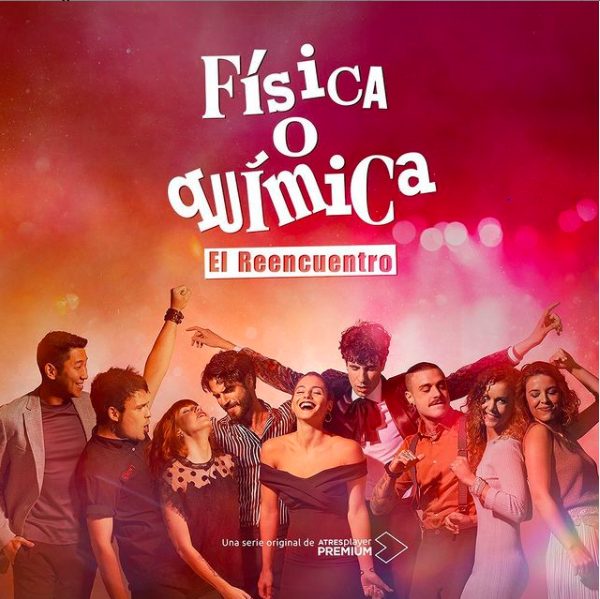
Poster for ‘Física o Química: El Reencuentro’. Photo: @angynas
Q. More than ten years ago you left your native Mallorca to look for an opportunity as an actress in the capital. What do you miss about the city where you grew up?
A. I miss the sea, although I also miss my family and friends. I left when I was 16 and back then I had a routine: I went to secondary school, had dance and piano lessons, my groups of friends… In Madrid that is more complicated in the end, especially because of the career I chose.
Q. What is that favourite place you can never miss on a trip to Palma?
A. I always like going to Passeig del Born, where I used to spend time with my friends as a teenager. I enjoy wandering through Palma, having an ice cream at Ca’n Joan de s’Aigo or an almond horchata, which is delicious (sighs). I also like having a glass of wine at a hotel with a view, doing a bit of sightseeing, going somewhere high enough to see Palma from above and, always, even in winter, seeing the sea.
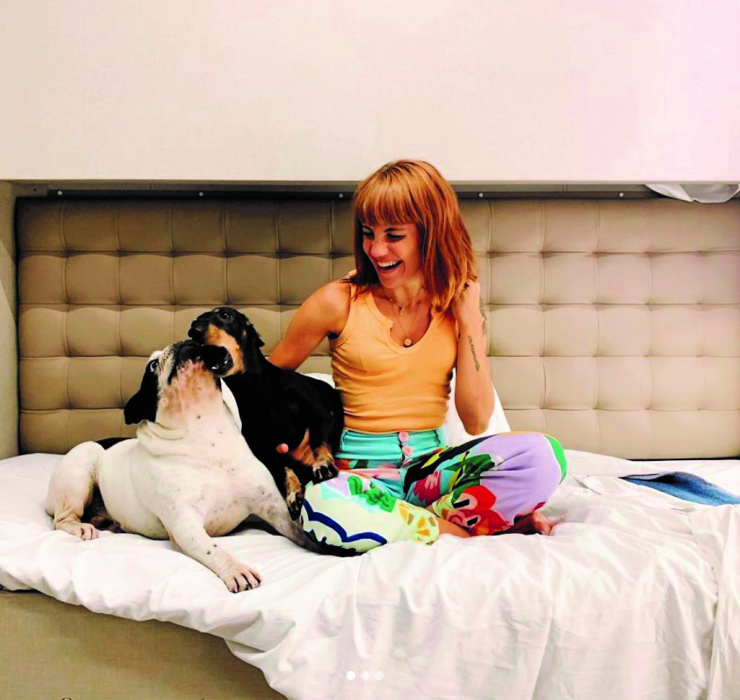
Angy with Noel and Elvis in the #petfriendly cabin on the ‘Hypatia de Alejandría’.
Q. What does being able to travel mean to you? And what do you like about travelling by sea?
A. For me, travelling means enjoying myself, learning and overcoming my own fears, because I have always been afraid of many things. When I travel, I am very nervous for the first two days, but then I adapt; it is like a challenge. I am not very used to travelling by ship, and when we suddenly arrived at the port of Palma and I saw the cathedral, I immediately felt at home. We were very comfortable in the cabin with my dogs, who were absolutely fine, and if next year I spend a long time without working, the thought that I can go away by ferry with my little dogs makes me very happy.
Q. What dream have you still not fulfilled?
A. My dream is for someone to believe in me and offer me a film or television role where I can explore, learn and discover, because there are so many people in this industry that I do not always get the opportunity.
TEXT:
Ángela María Fernández (Palma de Mallorca, 1990), better known as Angy, began her professional career in show business after finishing second in the music competition Factor X. However, her real breakthrough came with her role in the series Física o Química. A production that captivated an entire generation and which returns almost 10 years later to mark another turning point in the career of this young woman who is deeply attached to her homeland. We took advantage of a crossing on the ferry Hypatia de Alejandría to chat with her.
Q. Where does your interest in music and acting come from? What were those early days like?
A. My interest in music began thanks to my family. My father was singing and playing the guitar all day long, he was very keen on flamenco, and my sister, who is eleven years older than me, sings very well. I was always listening to music because of them. My love of acting comes from always watching films. I have been fascinated by them since I was little, and whenever I went to the cinema I was amazed. I also started going to theatre classes when I was six and continued until I started secondary school.
Q. You have worked in several areas of the entertainment world. Which side of it do you prefer?
A. It is very difficult to choose one. Although I enjoy all of them very much, I think I would choose acting. Music is part of my daily life, but I am less active in that area at the moment. I have not sung for a while and it is something that still bothers me, because I have not yet found my path in music. But I am working on having more confidence in myself so that I can release something I truly believe in and can really stand behind. Even though I still choose acting, filming Física o Química again made me very happy; I love it so much.
Q. What has it been like returning to the set of Física o Química after so many years?
A. Incredible, we had such a great time. With the health situation we were going through, it was a little strange because we could not hug each other, although in some scenes we had no choice but to kiss or hug if the script called for it… We are very sad that there are only two episodes and that we only spent three weeks together, because we had already got back into the working rhythm and it felt as though no time had passed between us.
Q. More than ten years ago you left your native Mallorca to look for an opportunity as an actress in the capital. What do you miss about the city where you grew up?
A. I miss the sea, although I also miss my family and friends. I left when I was 16 and back then I had a routine: I went to secondary school, had dance and piano lessons, my groups of friends… In Madrid that is more complicated in the end, especially because of the career I chose.
Q. What is that favourite place you can never miss on a trip to Palma?
A. I always like going to Passeig del Born, where I used to spend time with my friends as a teenager. I enjoy wandering through Palma, having an ice cream at Ca’n Joan de s’Aigo or an almond horchata, which is delicious (sighs). I also like having a glass of wine at a hotel with a view, doing a bit of sightseeing, going somewhere high enough to see Palma from above and, always, even in winter, seeing the sea.
Q. What does being able to travel mean to you? And what do you like about travelling by sea?
A. For me, travelling means enjoying myself, learning and overcoming my own fears, because I have always been afraid of many things. When I travel, I am very nervous for the first two days, but then I adapt; it is like a challenge. I am not very used to travelling by ship, and when we suddenly arrived at the port of Palma and I saw the cathedral, I immediately felt at home. We were very comfortable in the cabin with my dogs, who were absolutely fine, and if next year I spend a long time without working, the thought that I can go away by ferry with my little dogs makes me very happy.
Q. What dream have you still not fulfilled?
A. My dream is for someone to believe in me and offer me a film or television role where I can explore, learn and discover, because there are so many people in this industry that I do not always get the opportunity.
TEXT: PAULA NIETO
 X
X