

 English
 Spanish
 Catalan
 French
 Italian
 El pasado septiembre partimos emocionados de Barcelona con destino a Menorca para pasar unos días de vacaciones con los niños. Teníamos muchas ganas de llegar para disfrutar de las aguas turquesa y las estupendas playas menorquinas que tan buena y merecida fama tienen. Pero el viaje en si mismo también nos apetecía mucho, y a nuestros tres peques les emocionaba en gran medida la idea de dormir en un camarote, pues el primer trayecto sería de noche hasta alcanzar la isla. Con el coche cargado hasta los topes con todo lo necesario para unos días de vacaciones veraniegas llegamos al puerto con una sonrisa en la cara y el típico nerviosismo de antes de emprender un viaje. En un momento ya estábamos en la más alta de las cubiertas del ferry ‘Martín i Soler’ de Baleària dispuestos a despedir a la ciudad de Barcelona, que sin haber zarpado siquiera nos parecía extrañamente lejana. [caption id="attachment_453" align="alignnone" width="900"]  Embarque en el 'Martín i Soler' (autor: Daniel Ruiz)[/caption] Después de decir adiós a la montaña de Montjuïc y dejar a un lado las lucecitas de los enormes mercantes fondeados frente al puerto inspeccionamos con mucha atención nuestros dos camarotes. Allí no faltaba de nada. Después de duras negociaciones entre los cinco sobre el reparto de camas nos dirigimos al restaurante para cenar. Cada uno eligió en base a sus gustos entre los diferentes menús, en los que no faltaban platos adaptados a los viajeros más pequeños. Fue una cena de lo más agradable, amenizada con un suave balanceo del barco, puesto que ya surcábamos las aguas profundas del Mediterráneo alejados de la costa catalana. Con la barriga llena y el relax de estar ya instalados y en ruta sin ningún contratiempo nos abandonamos a un profundo sueño en nuestras deseadas camas. [gallery columns="2" link="none" size="medium" ids="455,456"] La llegada a la isla de Menorca fue espectacular. La tripulación del ferry nos despertó con unos suaves golpes en la puerta del camarote y una cantinela que se alejaba por el pasillos repitiendo buenosdíasmediahora. Los chicos saltaron de la cama emocionados para anunciar que ya se vislumbraba a través del ojo de buey de nuestros camarotes una fina línea azulada que parecía tierra. Nuestra travesía hasta Menorca llegaba a su fin. Picados por la curiosidad nos vestimos a la carrera para subir a cubierta a otear el horizonte. Efectivamente. estábamos a pocas millas del Puerto de Ciutadella, y justo detrás empezaba a amanecer el sol, en total alineación con el rumbo del ferry. No podíamos esperar un recibimiento de este calibre, tan escénico, a la más septentrional de las Islas Baleares. Poco a poco el buque iba aminorando la marcha mientras la silueta de la isla se hacía más evidente bañada en tonos rojizos. [caption id="attachment_454" align="alignnone" width="900"]
  Llegada al puerto de Ciutadella (autor: Daniel Ruiz)[/caption] Cambiando de estribor a babor, y viceversa, los chicos no se perdieron ni un detalle de las maniobras del buque para atracar en el Puerto de Ciutadella, y estaban contentos y excitados por haber llegado a la isla. Tras una inspección en el camarote para cerciorarnos que lo teníamos todo, descendimos a las bodegas en busca de nuestro coche. Y con cuatro giros y maniobras ajustadas salimos a la deslumbrante luz del Mediterráneo en un periquete. Delante de nosotros teníamos una estupenda ocasión para disfrutar de unos días maravillosos en Menorca, y empezábamos nuestras andanzas relajados, descansados y contentos tras haber viajado tan cómodamente los cinco. Daniel Ruiz | Blogger Viajares

 X
X 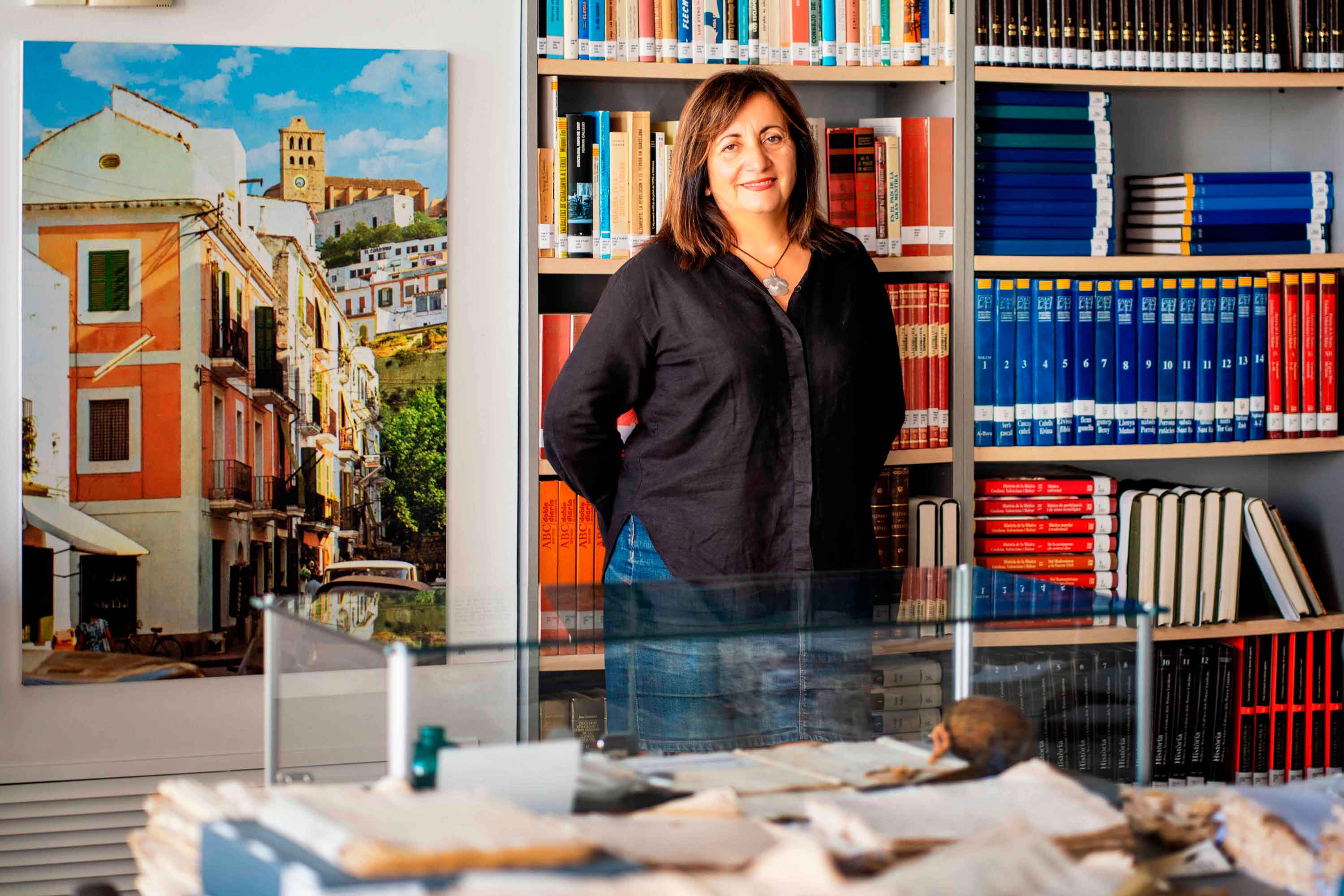
Historias del mar
Fanny Tur: «Baleària ya forma parte de la historia del transporte marítimo»
Ibicenca, activista medioambiental, historiadora, directora del archivo histórico de Eivissa… Fanny Tur Riera desempeñó, entre otros cargos públicos, el de consellera de Cultura del Govern Balear entre 2017 y 2019. Desde esta perspectiva, su análisis con visión histórica cobra valor: «Baleària ya forma parte de la historia del transporte marítimo de las Balears y del Mediterráneo», afirma antes de reflexionar sobre lo que supuso la irrupción de la naviera, ya que «los monopolios nunca son buenos y diversificar la oferta siempre tiene que beneficiar al usuario». En clave cultural y de género, esta historiadora destaca de la naviera Baleària cuestiones como «la atención en y al catalán, o poner nombres de mujer a algunos barcos, mostrando que la historia también la escribimos las mujeres». Desde la perspectiva ecologista, Tur Riera valora el compromiso de Baleària con la sostenibilidad partiendo de que «la actividad humana en general y el turismo y la gran movilidad en particular tienen unos efectos devastadores sobre el mar y el territorio». En este sentido, destaca, «todas las medidas que se pongan en práctica para minimizar los efectos de la masificación, como por ejemplo emplear energías renovables y colaborar con entidades ecologistas, ponen un grano de arena en una lucha que hace tiempo es imprescindible para la misma supervivencia». Pero si algo destaca de la aportación de Baleària esta exconsellera de Cultura del Govern Balear es el papel desempeñado por la Fundación Baleària, que ha hecho que «la creación pueda viajar a nuevos escenarios y no se quede en el lugar de origen. Para enriquecerse y crecer, el arte y la creación se tienen que mover mientras conservan sus raíces bien fuertes». Y ello, subraya, en combinación con la gestión de espacios culturales «en diferentes lugares —lo que desde la Fundación Baleària llaman las Llonges de la Cultura—, facilitando así que puedan acoger actividades, encuentros, investigación, muestras colectivas y creadores de todo el país para que se puedan encontrar y enriquecerse mutuamente» porque, reflexiona, «el arte y la investigación son trabajo propio, pero también son puesta en común y conocimiento mutuo». Creación cultural «En definitiva —asegura Fanny Tur— Baleària a través de su fundación ha hecho posible que la creación tenga movilidad, circule, se muestre en nuevos escenarios, porque así crece y encuentra nuevos paisajes… ha contribuido a la relación y el conocimiento mutuo entre creadores, facilitando que se encuentren, se conozcan y, en definitiva, que establezcanvínculos». En el caso de Balears, Fanny Tur considera que la de Baleària y de su fundación han sido una magnífica aportación favorecedora de la articulación social y cultural, además de subrayar la revitalización que ha supuesto la conexión, en todos los ámbitos, entre Dénia y Eivissa.
Read more

Historias del mar
De grumete a capitán. Vocabulario marítimo básico (I)
¿Dónde queda babor y estribor? ¿Cuál es la diferencia entre manga y eslora? Seguro que has oído una y mil veces términos como estos pero todavía te siguen generando dudas cuando subes a bordo de un ferri. No te preocupes, hemos preparado un glosario básico de léxico marítimo para que alimentes tu vocabulario y disfrutes todavía más de tu experiencia de viaje. Deja atrás tus titubeos de grumete y presume de hablar con la propiedad de un capitán. ¿Empezamos? PARTES DEL FERRI CASCO. El cuerpo del buque. La estructura ‘en neto’, sin máquinas, mástiles ni elementos accesorios para la navegación. CUBIERTA: Cada uno de los pisos de una embarcación. Forman la estructura que permiten un espacio habitable para la tripulación y el pasaje. Los barcos tienen varias cubiertas, tanto para la bodega -donde se ubica la carga y los vehículos- como para las zonas de pasajeros –con salones, áreas de butacas, restaurantes, etc.- siendo la principal la superior. QUILLA: Es la columna vertebral del barco. La pieza de hierro que va de popa a proa por la parte inferior del barco y en que se asienta toda su armazón.Constituye el principal refuerzo estructural de la embarcación, en el que se encastan los demás y sobre el que descargan su peso. [caption id="attachment_1776" align="aligncenter" width="800"] Corte transversal del ferri Martín i Soler de Baleària, donde se diferencia el casco, la quilla y las diferentes cubiertas.[/caption] VOLUMEN Y DIMENSIONES ESLORA: La longitud de la embarcación. O dicho de otra manera, la distancia de punta a punta de la estructura del buque. MANGA: La anchura (máxima) de un buque. PUNTAL. La altura de la bodega de la nave desde la quilla hasta el extremo de la cubierta superior. DESPLAZAMIENTO: El volumen de agua que desplaza la parte sumergida del barco. Es decir… el peso del barco. Ahora se entiende mejor ¿verdad?. POSICIÓN EN EL BARCO PROA y POPA. La proa es la parte delantera del barco. Tiene forma de cuña para que el buque pueda "cortar el agua”. Por el contrario, la popa es la parte posterior de la estructura del buque. BABOR y ESTRIBOR. Por babor se considera el lado izquierdo de un buque, mirando desde atrás hacia delante, esto es de popa a proa. Estribor es la banda o lado derecho de un buque, mirando desde atrás hacia delante, esto es de popa a proa. OBRA VIVA y MUERTA. La viva es la parte del casco bajo el agua. Es decir, desde la quilla a la línea de flotación a máxima carga. La muerta, la parte del casco que sobresale del mar MANIOBRAS ARRIAR. Aflojar o soltar un cabo (las cuerdas de a bordo). También se utilizan los términos LASCAR (aflojar) y LARGAR (soltar). Una advertencia: a bordo de los barcos sólo hay una cuerda, la del cronómetro. Las demás se llaman CABOS (y en los barcos grandes ESTACHAS). VIRAR. Lo contrario de arriar, es decir COBRAR o recuperar un cabo o el ancla, cuando el buque se encuentra fondeado. Por cierto, la maniobra de virar es propia de buques de vela y no tanto de ferris. ATRACAR. Operación para ubicar el buque en el lugar previsto del muelle. Concluye en el momento en que la embarcación AMARRA (o ata firmemente) el último cabo al NORAY o bolardo del muelle. Por cierto, la maniobra contraria a ATRACAR ser llama DESATRACAR. Lógico ¿no? BARLOVENTEAR. Maniobrar aprovechando la fuerza viento (a favor o en contra) para que el impulso sea lo más favorable a la embarcación. Por ejemplo, en el caso de una operación de atraque. CAPEAR. Se trata de una maniobra de navegación con mal tiempo. Consiste en tratar de mantener la proa al viento y con poca velocidad, para conseguir una trayectoria controlada y segura hasta que amaine el temporal. FONDEAR. Posicionar el buque en aguas establecidas para el anclaje. Y hasta aquí, por esta vez. Si quieres seguir aprendiendo sobre ferris y transporte marítimo, sigue navegando con el blog Entreolas y no te pierdas nuestra próxima entrega de vocabulario.
Read more