

 English
 Spanish
 Catalan
 French
 Italian
 Detrás del nombre de un buque se esconde una historia que lo identifica, le da carácter y singularidad. Más allá de unas letras impresas en el casco o en las tarjetas de embarque, el nombre otorga personalidad a cada barco. En el caso de Baleària los personajes históricos o artísticos vinculados con las Baleares y el Estrecho tienen cierto protagonismo, como por ejemplo, el Ramon Llull. Su nombre rinde homenaje al escritor, teólogo y divulgador científico mallorquín nacido en 1232 autor de obras como ‘Blanquerna’ o del ‘Llibre de les meravelles’ que lo encumbraron como uno de los principales impulsores del catalán literario. Su figura simboliza la unidad histórico cultural de algunos de los territorios donde opera la naviera: las Illes Balears, la Comunitat Valenciana y Catalunya. A Ramon Llull se le atribuye, además, la invención de la rosa de los vientos y el nocturlabio, un aparato utilizado para determinar el tiempo en función de la posición de una estrella. [gallery columns="1" size="full" link="none" type="slideshow" ids="584,585,586,587,588,589,590"] También toman el nombre de personajes históricos muy vinculados a las zonas donde opera la compañía los trillizos Jaume I, II y III. De hecho, el nombre de Jaume I, que rinde homenaje al célebre conquistador, fue el personaje elegido por el público del programa televisivo ‘El favorit’ de TV3. Jaume I d’Aragó conquistó Mallorca, Menorca, Eivissa y Formentera entre 1230 y 1235. A él se le atribuye la creación de los reinos de Mallorca y Valencia. Otros dos ferries con nombres ilustres son el Poeta López Anglada, que homenajea al célebre poeta ceutí Luis López Anglada, fallecido en 2007 y Premio Nacional de Literatura en 1961 por su libro ‘Contemplación de España’ , y, por otro lado, el Martín i Soler, compositor valenciano nacido en 1754 conocido en Italia como il Valenziano. Martín i Soler fue el creador de más de 30 óperas y una veintena de ballets muy apreciados por sus contemporáneos. Sus obras fueron representadas en los teatros de mayor renombre de Europa e interpretadas por los más virtuosos cantantes del momento. Otros de los nombres de la flota están vinculados al mar, como es el caso de los Maverick, un vocablo antiguo que quiere decir águila o libertad, además de ser un tipo de ola muy grande. El Posidonia, por su parte, es un tributo a esta planta acuática del Mediterráneo responsable de otorgar la transparencia de las aguas de nuestro mar. En 1999 las praderas de Posidonia entre Eivissa y Formentera fueron declaradas Patrimonio de la Humanidad por la UNESCO. Además, se considera que esta planta de 100.000 años de edad, es uno de los organismos vivos más grandes y longevos del mundo. ¡Larga vida deseamos también para el buque! Otros barcos se identifican más con los territorios en los que opera la naviera. En esta categoría encontramos al Passió per Formentera, que rinde homenaje a esta isla para la que fue inicialmente destinado el ferry.. También el Bahama Mama, que se bautizó primero como Alhucemas, tomó este nombre cuando fue destinado a la ruta entre los EUA y las Bahamas. A través de un concurso entre escolares de la zona, el buque tomó prestado el nombre de un famoso cóctel caribeño a base de ron y zumo de limón, naranja, piña y coco. Seguro que mucho subirán al barco con otro sabor de boca… En este último grupo también se encuentra el barco solar La Panseta, que une diariamente de forma gratuita la bahía de Dénia con la estación marítima de Baleària Port. Un barquito que lleva el nombre del producto más dulce y conocido de la ciudad, la pasa, cuyo comercio contribuyó en gran medida a su expansión y riqueza. Un bonito y sencillo tributo a una ciudad que ha sido la cuna y catapulta exterior de esta naviera. Por último, el nombre del recién incorporado Dénia Ciutat Creativa es un reconocimiento a la proclamación de Dénia como Ciudad Creativa Gastronómica por la UNESCO, título que recibió a finales de 2015.

 X
X 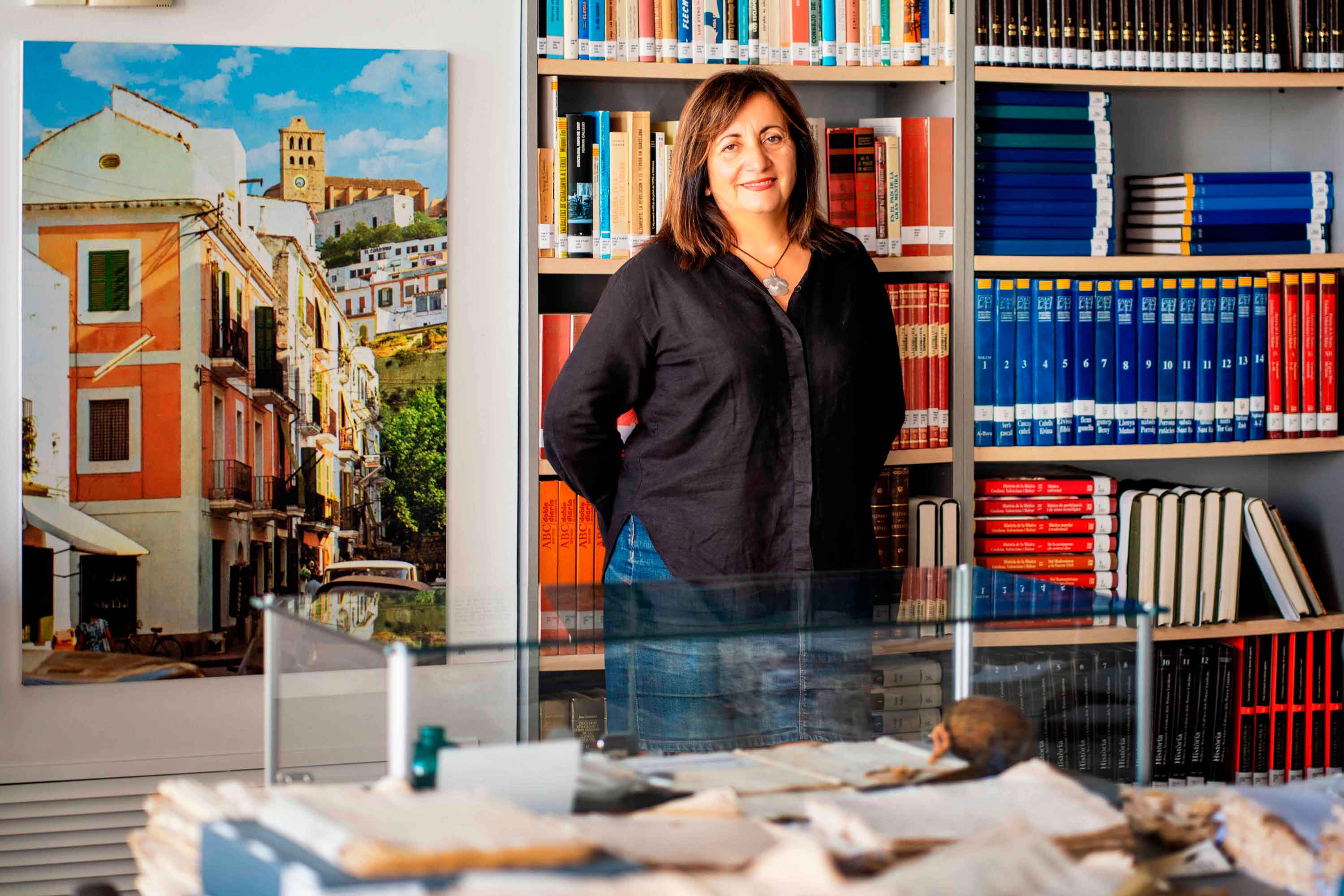
Historias del mar
Fanny Tur: «Baleària ya forma parte de la historia del transporte marítimo»
Ibicenca, activista medioambiental, historiadora, directora del archivo histórico de Eivissa… Fanny Tur Riera desempeñó, entre otros cargos públicos, el de consellera de Cultura del Govern Balear entre 2017 y 2019. Desde esta perspectiva, su análisis con visión histórica cobra valor: «Baleària ya forma parte de la historia del transporte marítimo de las Balears y del Mediterráneo», afirma antes de reflexionar sobre lo que supuso la irrupción de la naviera, ya que «los monopolios nunca son buenos y diversificar la oferta siempre tiene que beneficiar al usuario». En clave cultural y de género, esta historiadora destaca de la naviera Baleària cuestiones como «la atención en y al catalán, o poner nombres de mujer a algunos barcos, mostrando que la historia también la escribimos las mujeres». Desde la perspectiva ecologista, Tur Riera valora el compromiso de Baleària con la sostenibilidad partiendo de que «la actividad humana en general y el turismo y la gran movilidad en particular tienen unos efectos devastadores sobre el mar y el territorio». En este sentido, destaca, «todas las medidas que se pongan en práctica para minimizar los efectos de la masificación, como por ejemplo emplear energías renovables y colaborar con entidades ecologistas, ponen un grano de arena en una lucha que hace tiempo es imprescindible para la misma supervivencia». Pero si algo destaca de la aportación de Baleària esta exconsellera de Cultura del Govern Balear es el papel desempeñado por la Fundación Baleària, que ha hecho que «la creación pueda viajar a nuevos escenarios y no se quede en el lugar de origen. Para enriquecerse y crecer, el arte y la creación se tienen que mover mientras conservan sus raíces bien fuertes». Y ello, subraya, en combinación con la gestión de espacios culturales «en diferentes lugares —lo que desde la Fundación Baleària llaman las Llonges de la Cultura—, facilitando así que puedan acoger actividades, encuentros, investigación, muestras colectivas y creadores de todo el país para que se puedan encontrar y enriquecerse mutuamente» porque, reflexiona, «el arte y la investigación son trabajo propio, pero también son puesta en común y conocimiento mutuo». Creación cultural «En definitiva —asegura Fanny Tur— Baleària a través de su fundación ha hecho posible que la creación tenga movilidad, circule, se muestre en nuevos escenarios, porque así crece y encuentra nuevos paisajes… ha contribuido a la relación y el conocimiento mutuo entre creadores, facilitando que se encuentren, se conozcan y, en definitiva, que establezcanvínculos». En el caso de Balears, Fanny Tur considera que la de Baleària y de su fundación han sido una magnífica aportación favorecedora de la articulación social y cultural, además de subrayar la revitalización que ha supuesto la conexión, en todos los ámbitos, entre Dénia y Eivissa.
Read more

Historias del mar
De grumete a capitán. Vocabulario marítimo básico (I)
¿Dónde queda babor y estribor? ¿Cuál es la diferencia entre manga y eslora? Seguro que has oído una y mil veces términos como estos pero todavía te siguen generando dudas cuando subes a bordo de un ferri. No te preocupes, hemos preparado un glosario básico de léxico marítimo para que alimentes tu vocabulario y disfrutes todavía más de tu experiencia de viaje. Deja atrás tus titubeos de grumete y presume de hablar con la propiedad de un capitán. ¿Empezamos? PARTES DEL FERRI CASCO. El cuerpo del buque. La estructura ‘en neto’, sin máquinas, mástiles ni elementos accesorios para la navegación. CUBIERTA: Cada uno de los pisos de una embarcación. Forman la estructura que permiten un espacio habitable para la tripulación y el pasaje. Los barcos tienen varias cubiertas, tanto para la bodega -donde se ubica la carga y los vehículos- como para las zonas de pasajeros –con salones, áreas de butacas, restaurantes, etc.- siendo la principal la superior. QUILLA: Es la columna vertebral del barco. La pieza de hierro que va de popa a proa por la parte inferior del barco y en que se asienta toda su armazón.Constituye el principal refuerzo estructural de la embarcación, en el que se encastan los demás y sobre el que descargan su peso. [caption id="attachment_1776" align="aligncenter" width="800"] Corte transversal del ferri Martín i Soler de Baleària, donde se diferencia el casco, la quilla y las diferentes cubiertas.[/caption] VOLUMEN Y DIMENSIONES ESLORA: La longitud de la embarcación. O dicho de otra manera, la distancia de punta a punta de la estructura del buque. MANGA: La anchura (máxima) de un buque. PUNTAL. La altura de la bodega de la nave desde la quilla hasta el extremo de la cubierta superior. DESPLAZAMIENTO: El volumen de agua que desplaza la parte sumergida del barco. Es decir… el peso del barco. Ahora se entiende mejor ¿verdad?. POSICIÓN EN EL BARCO PROA y POPA. La proa es la parte delantera del barco. Tiene forma de cuña para que el buque pueda "cortar el agua”. Por el contrario, la popa es la parte posterior de la estructura del buque. BABOR y ESTRIBOR. Por babor se considera el lado izquierdo de un buque, mirando desde atrás hacia delante, esto es de popa a proa. Estribor es la banda o lado derecho de un buque, mirando desde atrás hacia delante, esto es de popa a proa. OBRA VIVA y MUERTA. La viva es la parte del casco bajo el agua. Es decir, desde la quilla a la línea de flotación a máxima carga. La muerta, la parte del casco que sobresale del mar MANIOBRAS ARRIAR. Aflojar o soltar un cabo (las cuerdas de a bordo). También se utilizan los términos LASCAR (aflojar) y LARGAR (soltar). Una advertencia: a bordo de los barcos sólo hay una cuerda, la del cronómetro. Las demás se llaman CABOS (y en los barcos grandes ESTACHAS). VIRAR. Lo contrario de arriar, es decir COBRAR o recuperar un cabo o el ancla, cuando el buque se encuentra fondeado. Por cierto, la maniobra de virar es propia de buques de vela y no tanto de ferris. ATRACAR. Operación para ubicar el buque en el lugar previsto del muelle. Concluye en el momento en que la embarcación AMARRA (o ata firmemente) el último cabo al NORAY o bolardo del muelle. Por cierto, la maniobra contraria a ATRACAR ser llama DESATRACAR. Lógico ¿no? BARLOVENTEAR. Maniobrar aprovechando la fuerza viento (a favor o en contra) para que el impulso sea lo más favorable a la embarcación. Por ejemplo, en el caso de una operación de atraque. CAPEAR. Se trata de una maniobra de navegación con mal tiempo. Consiste en tratar de mantener la proa al viento y con poca velocidad, para conseguir una trayectoria controlada y segura hasta que amaine el temporal. FONDEAR. Posicionar el buque en aguas establecidas para el anclaje. Y hasta aquí, por esta vez. Si quieres seguir aprendiendo sobre ferris y transporte marítimo, sigue navegando con el blog Entreolas y no te pierdas nuestra próxima entrega de vocabulario.
Read more