

 English
 Spanish
 Catalan
 French
 Italian
 Fue en Fitur, cuando el presidente de Baleària, Adolfo Utor, desveló los nombres que llevarán los dos nuevos ferries propulsados por GNL, Gas Natural Licuado: Hypatia de Alejandría y Marie Curie, dos mujeres destacadas por su sus aportaciones a la ciencia. Dos mujeres que dan nombre a los nuevos smartships de Baleària, actualmente en diferentes fases de construcción en el Cantiere Navale Visentini, astilleros situados a menos de una hora al sur de Venecia. En esta misma factoría nacieron también otros barcos de Baleària: el Visemar One y los gemelos Nápoles y Sicilia. Los dos nuevos con nombres de dos mujeres trascendentes en la historia, serán las construcciones número 232 y 233 de la empresa de la familia Visentini. Los barcos se bautizan con un nombre que los identifica y generalmente lo mantienen durante toda su vida operativa, aunque en otras ocasiones, este puede variar, como también su bandera o puerto de registro. Lo que nunca cambiará un buque es su número de IMO, las siglas de la Organización Marítima Internacional. Se trata de una combinación de siete cifras que se asigna desde mediados de los años 90 a aquellos barcos sujetos al Convenio Internacional para la Seguridad de la Vida Humana en el Mar, y que tiene que ser visible desde el exterior. En Baleària, los nombres de la flota tienen diferentes orígenes: desde la concienciación por el medio ambiente, ser homenaje o recordar ciudades, islas o zonas geográficas. También están dedicados a personajes históricos o incluso recuerdan a barcos de otros tiempos. Estos son 12 nombres de barcos de la flota actual y de la histórica de la compañía en los que quizá ya hayas navegado o en los que viajarás próximamente. ¿Te has preguntado quién o que está detrás de su denominación? Cecilia Payne La más reciente incorporación a la flota de la compañía es un catamarán de 86 metros de eslora que tiene capacidad para 800 pasajeros y 200 vehículos y que inicialmente se destinará a la línea que une diariamente Palma con Dénia, realizando una escala intermedia en Eivissa. Baleària ha querido dedicar este buque de alta velocidad a Cecilia Helena Payne-Gaposchkin (ese es su nombre completo), que se convirtió en la primera en lograr un doctorado en el área de astronomía en el Radcliffe College, hoy parte de Harvard, y que demostró, entre otros hallazgos, que el hidrógeno es el principal componente de las estrellas. Su trabajo fue definido en su momento como “la tesis doctoral en astronomía más brillante de la historia”, según Otto Struve, uno de los grandes astrónomos de la historia. [caption id="attachment_2001" align="aligncenter" width="1000"] 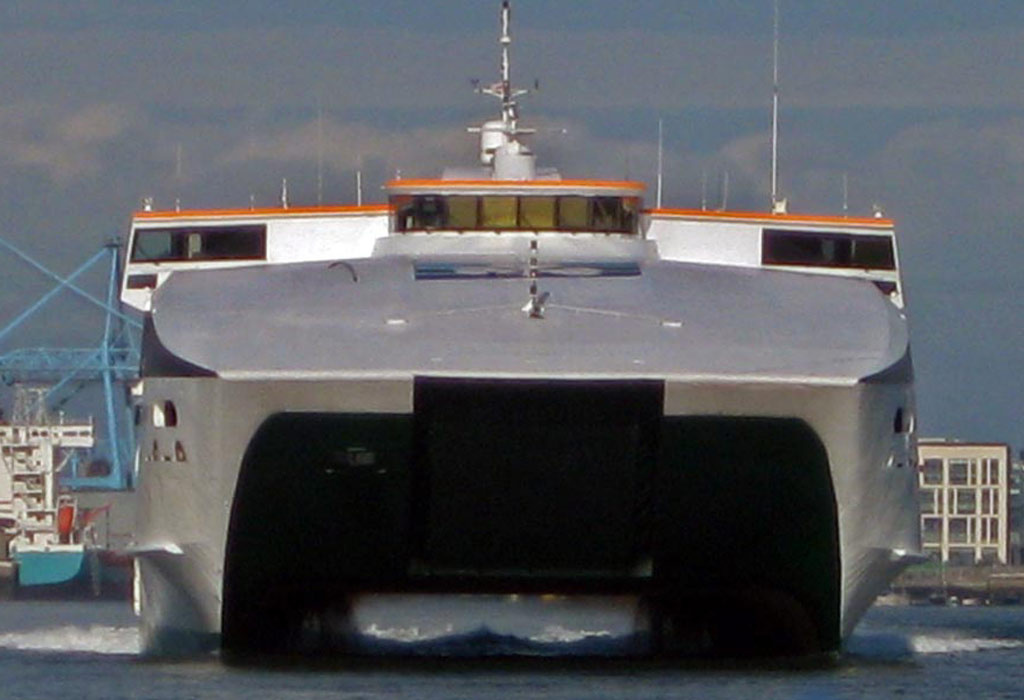 Cecilia Payne, la más reciente incorporación a la flota de la compañía.[/caption] Martín i Soler Este ferry de 165 metros de eslora y construido en los astilleros Barreras de Vigo, recuerda a un compositor de música para ballet y ópera nacido en Valencia en 1754. El músico vivió y tuvo un éxito profesional notable en ciudades como Nápoles, Viena y San Petersburgo, siempre cerca de la corte local, donde llegó a componer hasta 21 óperas. El Martín i Soler, que aun habiendo pasado por casi todas las líneas de la compañía, en los últimos tiempos opera casi en exclusiva la línea Barcelona-Ciutadella, con escala intermedia en Alcúdia. Dénia Ciutat Creativa Con algo más de 44.000 habitantes, que se multiplican hasta los 200.000 en los meses de verano, Dénia, en la comarca de la Marina Alta, es una de las ciudades más importantes de la provincia de Alicante y la Costa Blanca y es la casa de Baleària, pues las oficinas centrales de la naviera están en su puerto, en Baleària Port, un moderno edificio que es uno de los corazones de la localidad. El ferry de 150 metros de eslora que se incorporó en 2016 se bautizó como Dénia Ciudad Creativa' ya que la Unesco la designó, por su excelencia y variedad, como ciudad creativa de la gastronomía en 2015. [caption id="attachment_2002" align="aligncenter" width="1000"]
 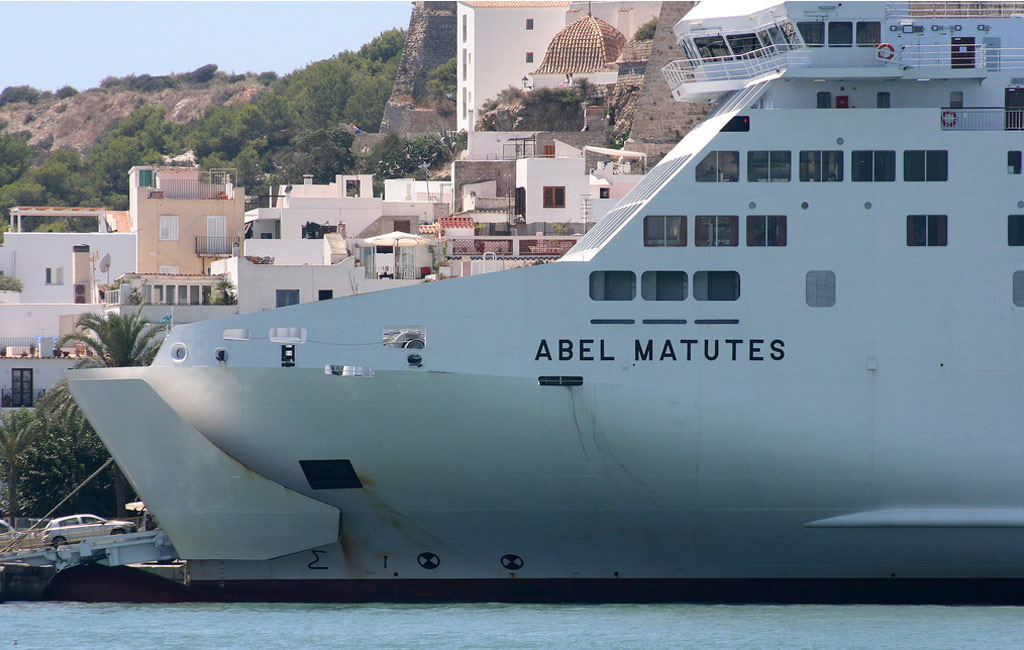 El barco 'Abel Matutes' es el de mayor eslora de la flota de Baleària (foto: Javier Ortega).[/caption] Abel Matutes Con el bautizo de este buque, el de mayor eslora de la flota y que realiza la línea entre Palma y Barcelona, Baleària quiso rendir homenaje a los emprendedores que a finales del siglo XIX pusieron en marcha las primera navieras de Eivissa, y que con su tesón y capacidad para vencer las dificultades consolidaron a lo largo de las décadas las líneas marítimas desde la isla a la península. Este linaje empresarial fue heredado por Abel Matutes Juan. Entre sus intereses empresariales están los hoteles, la aviación o el negocio marítimo con dos navieras, Pitra y Umafisa, que se integraron en Baleària hace 15 años, convirtiéndolo en accionista de esta. [caption id="attachment_2023" align="aligncenter" width="1000"]
 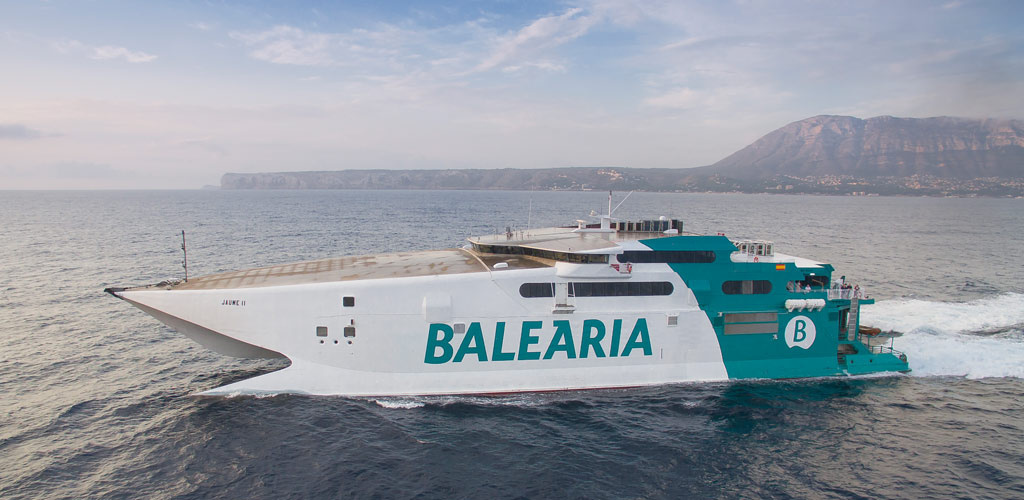 El 'Jaume II', uno de los tres HSC o catamaranes de alta velocidad de la flota Baleària.[/caption] Jaume I, Jaume II y Jaume III Tres HSC o catamaranes de alta velocidad prácticamente gemelos y construidos por Incat en Tasmania, Australia, que el mayor especialista en este tipo de embarcaciones, llevan el nombre de tres reyes. Uno es Jaume I, conocido como "el Conquistador". Fue rey de Aragón, de Valencia y de Mallorca, además de conde de Barcelona, conde de Urgel y señor de Montpellier, lugar donde nació en 1208. Jaume II, valenciano nacido en 1267 y conocido como "el Justo", reinó en Sicilia también en Aragón y Valencia, además de detentar el Condado de Barcelona. Finalmente, Jaume III, nacido en Catania, Sicilia, en 1315, fue conocido como "el Temerario" y reinó en Mallorca, además de ser Conde del Rosellón, La Cerdanya y señor de Montpellier. Tres reyes mediterráneos que dan nombre a otros tres barcos de entre 77 y 81 metros de eslora y que surcan este mar a velocidades de hasta 38 nudos. Poeta López Anglada Un ferry de 130 metros de eslora y construido en los astilleros franceses de Dubigeon, Nantes y destinado generalmente a las líneas del Estrecho, recuerda actualmente a un singular personaje: Luis López Anglada, militar, escritor y poeta nacido en Ceuta hace 99 años. Anglada, que llegó a ostentar el grado de Coronel, fue uno de los fundadores de la revista de poesía Halcón y también participó en Espadaña, revista que publicó en los 40 y 50 la obra de poetas opuestos al régimen franquista, manteniendo una línea editorial de compromiso político y social. Este poeta ceutí, recibió varios galardones, entre ellos el Premio Nacional de Literatura de 1961. [caption id="attachment_2014" align="aligncenter" width="1000"]
 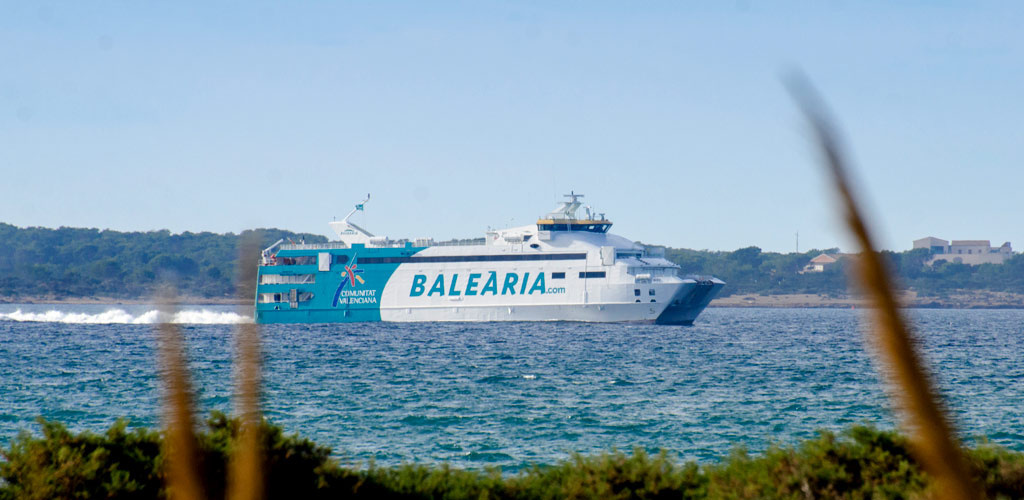 El 'Nixe' es un catamarán que recuerda al yate del mismo nombre del archiduque Luis Salvador de Austria.[/caption] Nixe Con 63 metros de eslora y con capacidad para navegar a 33 nudos por hora, el Nixe es un catamarán que a su vez recuerda a otro barco mucho más antiguo y de nombre idéntico: el yate del archiduque Luis Salvador de Austria. Este noble nacido en Florencia, tenía alma bohemia y era un enamorado del mar. Con su barco de recreo de 52 metros navegó durante dos décadas (1873-1894) por todo el Mediterráneo, con base en Mallorca, isla de la que se enamoró desde su primera visita, construyendo una residencia allí. Tras el Nixe original, el archiduque construyó un Nixe II, que al igual que en Baleària también dio nombre a un segundo barco gemelo al catamarán de alta velocidad construido en los astilleros Marinteknik de Singapur. [caption id="attachment_1998" align="aligncenter" width="1000"]
 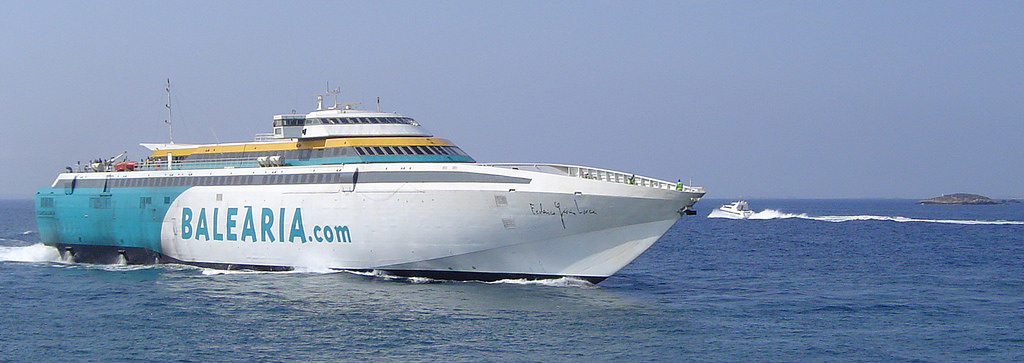 El 'García Lorca' fue una de las unidades más apreciadas de la casa en todas las líneas en las que operó (foto: Javier Ortega).[/caption] Federico García Lorca Hay barcos que son decisivos en las navieras y probablemente el Lorca marcó un antes y un después en la historia de Baleària: con 38 nudos de velocidad, una línea moderna y 115 metros de eslora, fue una de las unidades más apreciadas de la casa en todas las líneas en las que operó, aunque se dedicó de manera especial a una histórica: la rotación diaria Palma-Eivissa-Dénia-Eivissa-Palma uniendo por primera vez los tres puertos con alta velocidad. Fue construido en los astilleros Rodriquez de Pietra Ligure, en Italia, y desde su botadura en 2001 y hasta 2013, recordó al famoso poeta y autor teatral nacido en Fuente Vaqueros, Granada. Un intelectual que vivió 38 intensos años de vida que terminaron abruptamente cuando fue fusilado en agosto de 1936 durante las primeras semanas de la guerra civil española. Manuel Azaña El Azaña es uno de los históricos y más recordados buques de la compañía. Operó entre 1999 y 2009 navegando con un perfil de forma singular: un puente de mando en el centro del barco con unas vistas de 360º, similar al de una torre de control. Desde allí se veían, de proa a popa, los 140 metros de eslora de un ferry construido en los astilleros de Huelva, Andalucía. Su nombre recordaba a un escritor, periodista y político nacido en Alcalá de Henares, que tras ostentar varios cargos de alta responsabilidad, llegó a ser Presidente y Jefe de Estado de la República Española durante casi tres años: entre 1936 y 1939, etapa marcada por el golpe de estado que derivó en la posterior guerra civil. [caption id="attachment_1996" align="aligncenter" width="1000"]
 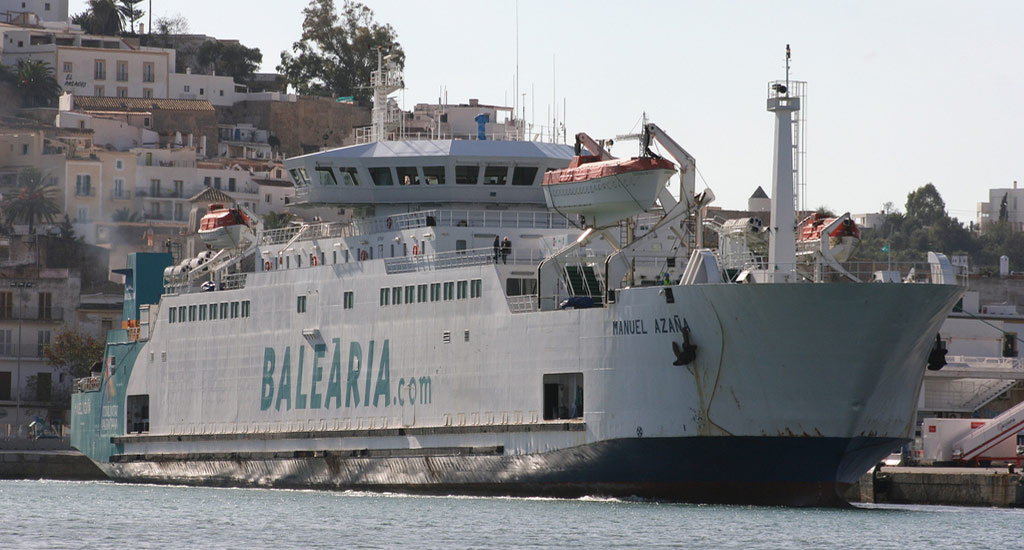 'Manuel Azaña' es uno de los buques históricos de Baleària (foto: Javier Ortega).[/caption] Pau Casals Entre 2006 y 2008 Baleària operó un buque de 180 metros construido en AESA, los astilleros de Sevilla, sobre el río Guadalquivir. Durante ese tiempo llevó el nombre de uno de los mejores violonchelistas de todos los tiempos: Pau Casals i Defilló, nacido en el Vendrell, Tarragona, en 1876. Además de ser un excelente intérprete, un gran director de orquesta y músico, Casals fue uno de los pocos compositores que han llegado a tocar en la sede de la ONU. Vivió y actuó en diferentes lugares del mundo y parte de su vida estuvo marcada por el exilio, alejado de la dictadura franquista. Falleció en 1973, con 96 años, en San Juan de Puerto Rico, donde vivió buena parte de las dos últimas décadas de su existencia. [caption id="attachment_2013" align="aligncenter" width="1000"]
 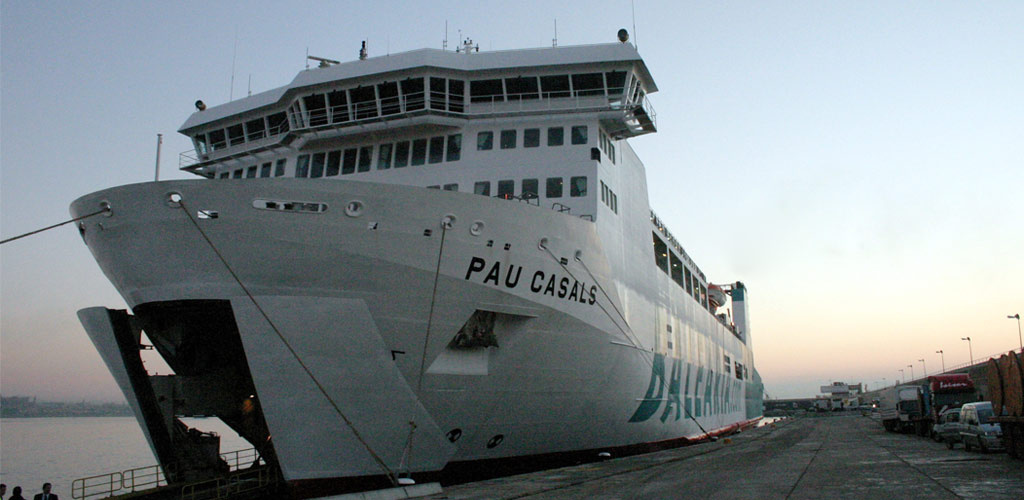 El 'Pau Casals' toma su nombre de uno de los mejores violonchelistas de todos los tiempos, nacido en Tarragona 1876.[/caption] Javier Ortega Figueiral |@Sr_JOF

 X
X 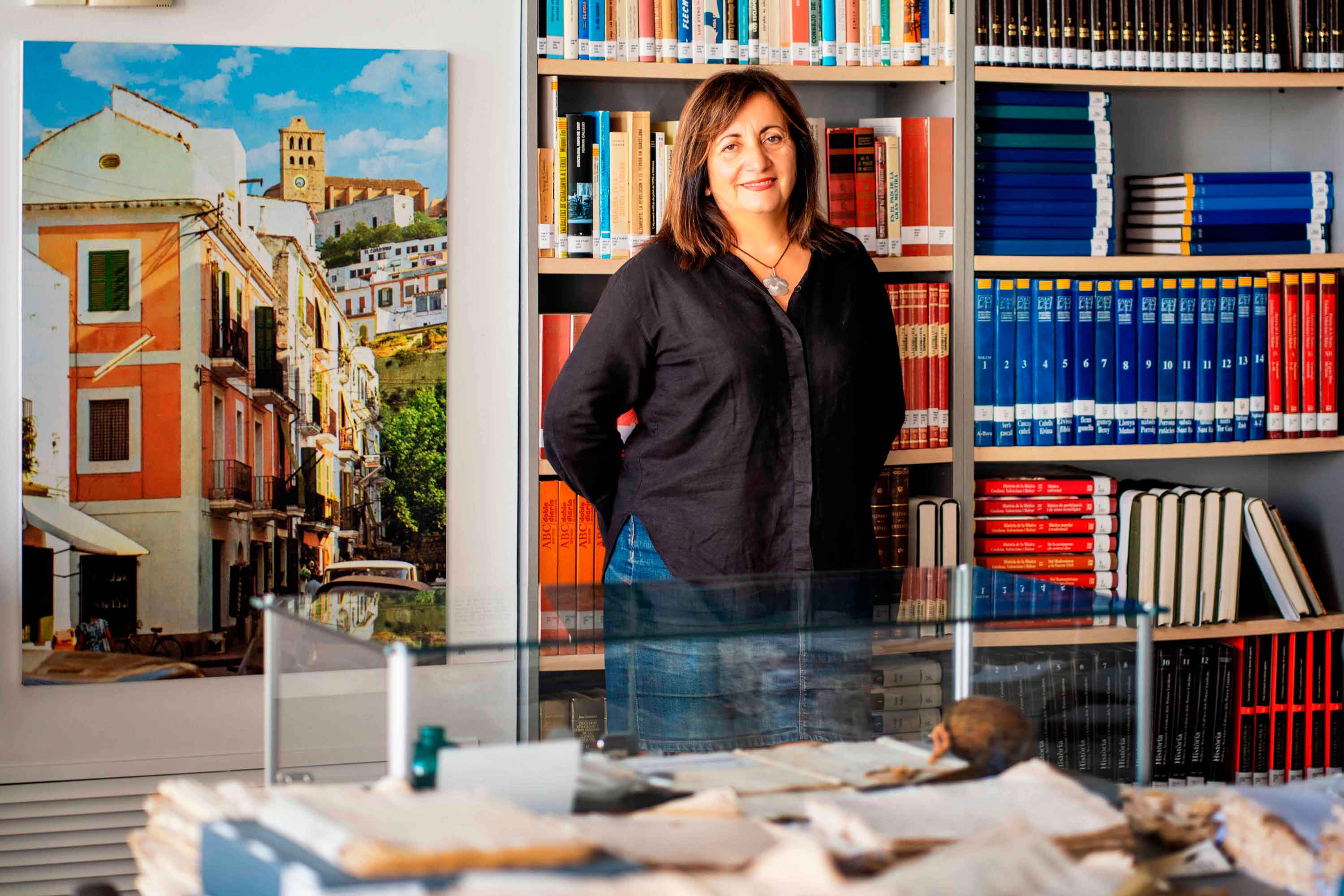
Historias del mar
Fanny Tur: «Baleària ya forma parte de la historia del transporte marítimo»
Ibicenca, activista medioambiental, historiadora, directora del archivo histórico de Eivissa… Fanny Tur Riera desempeñó, entre otros cargos públicos, el de consellera de Cultura del Govern Balear entre 2017 y 2019. Desde esta perspectiva, su análisis con visión histórica cobra valor: «Baleària ya forma parte de la historia del transporte marítimo de las Balears y del Mediterráneo», afirma antes de reflexionar sobre lo que supuso la irrupción de la naviera, ya que «los monopolios nunca son buenos y diversificar la oferta siempre tiene que beneficiar al usuario». En clave cultural y de género, esta historiadora destaca de la naviera Baleària cuestiones como «la atención en y al catalán, o poner nombres de mujer a algunos barcos, mostrando que la historia también la escribimos las mujeres». Desde la perspectiva ecologista, Tur Riera valora el compromiso de Baleària con la sostenibilidad partiendo de que «la actividad humana en general y el turismo y la gran movilidad en particular tienen unos efectos devastadores sobre el mar y el territorio». En este sentido, destaca, «todas las medidas que se pongan en práctica para minimizar los efectos de la masificación, como por ejemplo emplear energías renovables y colaborar con entidades ecologistas, ponen un grano de arena en una lucha que hace tiempo es imprescindible para la misma supervivencia». Pero si algo destaca de la aportación de Baleària esta exconsellera de Cultura del Govern Balear es el papel desempeñado por la Fundación Baleària, que ha hecho que «la creación pueda viajar a nuevos escenarios y no se quede en el lugar de origen. Para enriquecerse y crecer, el arte y la creación se tienen que mover mientras conservan sus raíces bien fuertes». Y ello, subraya, en combinación con la gestión de espacios culturales «en diferentes lugares —lo que desde la Fundación Baleària llaman las Llonges de la Cultura—, facilitando así que puedan acoger actividades, encuentros, investigación, muestras colectivas y creadores de todo el país para que se puedan encontrar y enriquecerse mutuamente» porque, reflexiona, «el arte y la investigación son trabajo propio, pero también son puesta en común y conocimiento mutuo». Creación cultural «En definitiva —asegura Fanny Tur— Baleària a través de su fundación ha hecho posible que la creación tenga movilidad, circule, se muestre en nuevos escenarios, porque así crece y encuentra nuevos paisajes… ha contribuido a la relación y el conocimiento mutuo entre creadores, facilitando que se encuentren, se conozcan y, en definitiva, que establezcanvínculos». En el caso de Balears, Fanny Tur considera que la de Baleària y de su fundación han sido una magnífica aportación favorecedora de la articulación social y cultural, además de subrayar la revitalización que ha supuesto la conexión, en todos los ámbitos, entre Dénia y Eivissa.
Read more

Historias del mar
De grumete a capitán. Vocabulario marítimo básico (I)
¿Dónde queda babor y estribor? ¿Cuál es la diferencia entre manga y eslora? Seguro que has oído una y mil veces términos como estos pero todavía te siguen generando dudas cuando subes a bordo de un ferri. No te preocupes, hemos preparado un glosario básico de léxico marítimo para que alimentes tu vocabulario y disfrutes todavía más de tu experiencia de viaje. Deja atrás tus titubeos de grumete y presume de hablar con la propiedad de un capitán. ¿Empezamos? PARTES DEL FERRI CASCO. El cuerpo del buque. La estructura ‘en neto’, sin máquinas, mástiles ni elementos accesorios para la navegación. CUBIERTA: Cada uno de los pisos de una embarcación. Forman la estructura que permiten un espacio habitable para la tripulación y el pasaje. Los barcos tienen varias cubiertas, tanto para la bodega -donde se ubica la carga y los vehículos- como para las zonas de pasajeros –con salones, áreas de butacas, restaurantes, etc.- siendo la principal la superior. QUILLA: Es la columna vertebral del barco. La pieza de hierro que va de popa a proa por la parte inferior del barco y en que se asienta toda su armazón.Constituye el principal refuerzo estructural de la embarcación, en el que se encastan los demás y sobre el que descargan su peso. [caption id="attachment_1776" align="aligncenter" width="800"] Corte transversal del ferri Martín i Soler de Baleària, donde se diferencia el casco, la quilla y las diferentes cubiertas.[/caption] VOLUMEN Y DIMENSIONES ESLORA: La longitud de la embarcación. O dicho de otra manera, la distancia de punta a punta de la estructura del buque. MANGA: La anchura (máxima) de un buque. PUNTAL. La altura de la bodega de la nave desde la quilla hasta el extremo de la cubierta superior. DESPLAZAMIENTO: El volumen de agua que desplaza la parte sumergida del barco. Es decir… el peso del barco. Ahora se entiende mejor ¿verdad?. POSICIÓN EN EL BARCO PROA y POPA. La proa es la parte delantera del barco. Tiene forma de cuña para que el buque pueda "cortar el agua”. Por el contrario, la popa es la parte posterior de la estructura del buque. BABOR y ESTRIBOR. Por babor se considera el lado izquierdo de un buque, mirando desde atrás hacia delante, esto es de popa a proa. Estribor es la banda o lado derecho de un buque, mirando desde atrás hacia delante, esto es de popa a proa. OBRA VIVA y MUERTA. La viva es la parte del casco bajo el agua. Es decir, desde la quilla a la línea de flotación a máxima carga. La muerta, la parte del casco que sobresale del mar MANIOBRAS ARRIAR. Aflojar o soltar un cabo (las cuerdas de a bordo). También se utilizan los términos LASCAR (aflojar) y LARGAR (soltar). Una advertencia: a bordo de los barcos sólo hay una cuerda, la del cronómetro. Las demás se llaman CABOS (y en los barcos grandes ESTACHAS). VIRAR. Lo contrario de arriar, es decir COBRAR o recuperar un cabo o el ancla, cuando el buque se encuentra fondeado. Por cierto, la maniobra de virar es propia de buques de vela y no tanto de ferris. ATRACAR. Operación para ubicar el buque en el lugar previsto del muelle. Concluye en el momento en que la embarcación AMARRA (o ata firmemente) el último cabo al NORAY o bolardo del muelle. Por cierto, la maniobra contraria a ATRACAR ser llama DESATRACAR. Lógico ¿no? BARLOVENTEAR. Maniobrar aprovechando la fuerza viento (a favor o en contra) para que el impulso sea lo más favorable a la embarcación. Por ejemplo, en el caso de una operación de atraque. CAPEAR. Se trata de una maniobra de navegación con mal tiempo. Consiste en tratar de mantener la proa al viento y con poca velocidad, para conseguir una trayectoria controlada y segura hasta que amaine el temporal. FONDEAR. Posicionar el buque en aguas establecidas para el anclaje. Y hasta aquí, por esta vez. Si quieres seguir aprendiendo sobre ferris y transporte marítimo, sigue navegando con el blog Entreolas y no te pierdas nuestra próxima entrega de vocabulario.
Read more