

 English
 Spanish
 Catalan
 French
 Italian
 Fez es la ciudad imperial más antigua de Marruecos, ha sido tres veces capital del reino y está considerada como su centro espiritual e intelectual. Sus murallas albergan el-Bali, la mayor zona peatonal del mundo y, al mismo tiempo, el emplazamiento medieval más extenso que se conserva de la actualidad. Esta impresionante medina parece hacer realidad todos los escenarios que imaginó Sherezade en sus mil y una noches. Aquí están los fabricantes de elixires para el mal de amores los maestros de saberes milenarios, los faquires, los adivinos, los aguadores y los vendedores de alfombras, alguna de ellas dispuesta a volar... 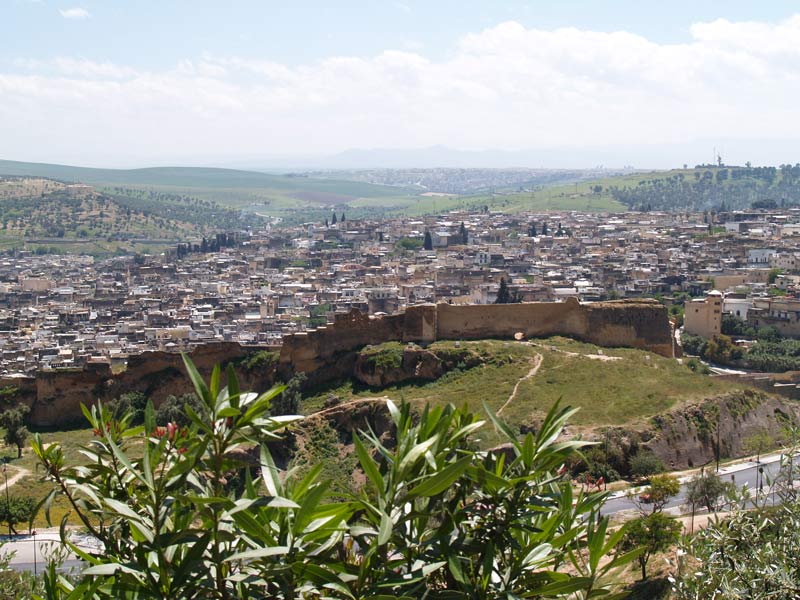 El-Bali comprende la ciudad a lo largo de 350 hectáreas de callejuelas y rincones. Un enorme laberinto, sin apenas cambios en su trazado en el último milenio, distinguido como Patrimonio de la Humanidad por la UNESCO. Sin embargo, si queremos captar la medina en toda su dimensión debemos alejarnos: lo mejor es observarla desde lo alto, en el Hotel des Mérinides en El Kolla, situado en la ciudad nueva. Herencia andaluza, madrazas y mezquitas Para acceder a la medina se bordea el Barrio de los Andaluces, donde se asentaron hace más de mil años los inmigrantes de la España musulmana y trasladaron su arte y cultura, como revela con especial esmero la Mezquita de los Andaluces, caracterizada por su minarete verde y blanco. No es ésta, desde luego, la única mezquita ni la más importante de Fez. Ese reconocimiento corresponde a Karaouiyine, la segunda más grande de Marruecos, el centro de enseñanza más antiguo de occidente y la sede de una de las bibliotecas más ricas del mundo. Sólo la supera en belleza y elegancia Bou Inania, la gran madraza del siglo XIV, rica en adornos de madera de cedro y estucos esculpidos, ornamentos de mármol y ónice. Nota para el viajero: los nesrani (no musulmanes) tienen prohibida la entrada y tendrán que conformarse con vislumbrar alguno de sus patios. Tampoco es posible visitar la zaouia y tumba de Moulay Idriss II, uno de los principales santuarios de Fez.
 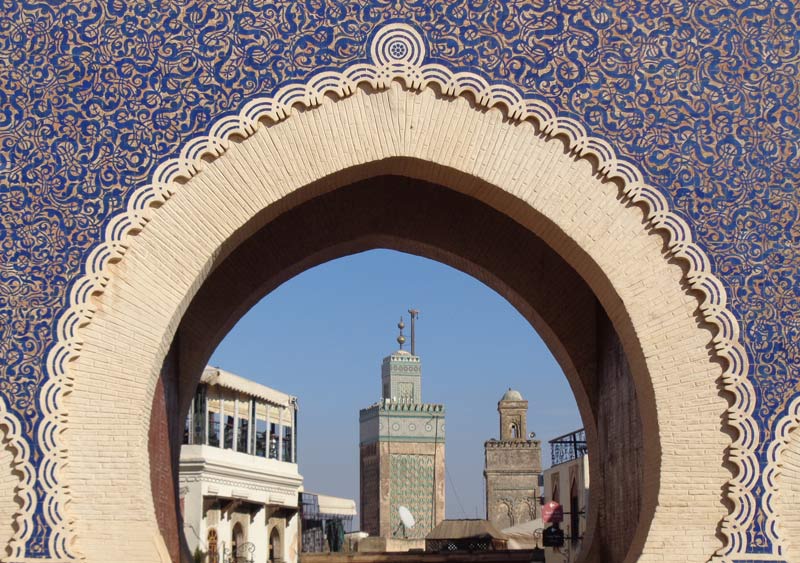 En las proximidades encontremos la Place el-Nejjarine donde se erige la fuente más hermosa de la ciudad, decorada con bellos mosaicos, y el fondac o caravansar el-Nejjarine, que alberga el Museo de la Madera. La decoración de la madraza el-Attarine roza el refinamiento de Bou Inania y cuenta con unas magníficas vistas desde la azotea. Para rematar este recorrido monumental tenemos el antiguo palacio Dar Batha, de estilo arábigo andalusí, y hoy museo de las artes y tradiciones de Fez. Una visita imprescindible para apreciar la producción de una ciudad célebre por la destreza de sus artesanos. Entrando en la medina: zocos y talleres Pero por muchos y muy bellos monumentos que guarde la medina, su auténtica alma se encuentra en los callejones -a veces de sólo 60 centímetros de ancho- y en sus barrios de artesanos donde perviven oficios y maneras medievales: afiladores, zapateros, alfareros, tintoreros y orfebres entre otros, organizados en gremios, como hace siglos.
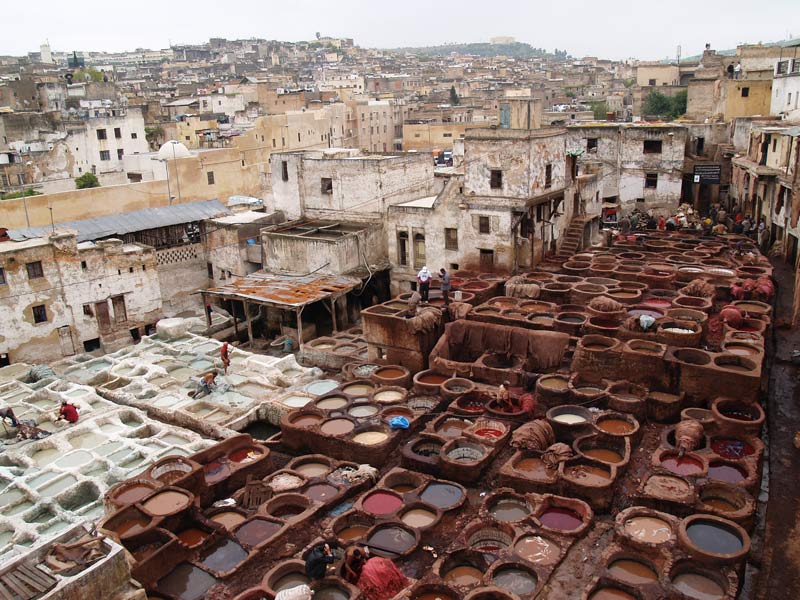
 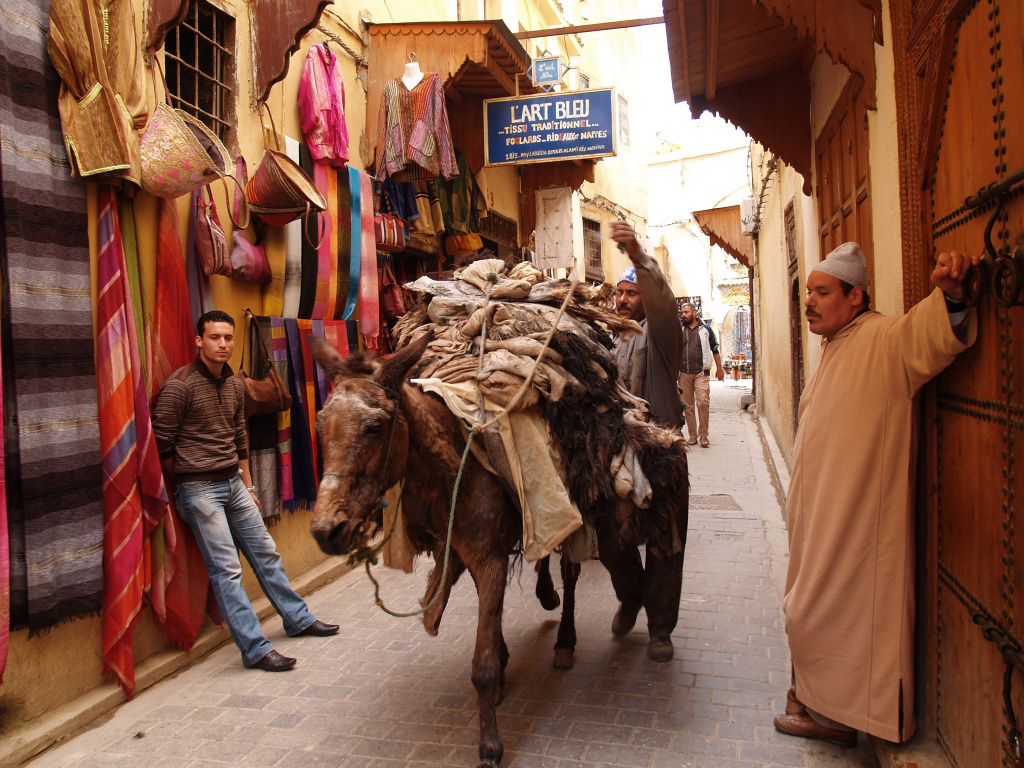 En Fez es difícil orientarse, pero como dicen los fasíes, la ciudad se encuentra al perderse. En nuestro itinerario recorreremos calles cubiertas de cañamazos que filtran la luz, un trasiego de burros y carretillas (los únicos “vehículos” que pueden circular) y un repertorio humano compuesto por ancianos de aspecto bíblico, mujeres ataviadas en kaftanes de seda, mendigos, la divertida chiquillería o los faux guides, personajes clave para encontrar el camino. La medina es un abanico de sensaciones. Un barullo en el que sobresale el ruido de las alhóndigas; las voces de vendedores, aguadores y conductores de asnos, pidiendo paso al grito de belek, belek, el canto de los muecines desde los minaretes o los politonos con hits del pop magrebí... Nos acompaña el aroma de especias, verduras y pescados, de las carnicerías que exhiben cabezas de camello, de pasteles y dulces recién elaborados, y de los puestos ambulantes de b´sara, una sopa de ajo y judías especialidad fasí. [gallery type="rectangular" link="file" ids="1827,1826,1825,1824"] El patio de curtidores Pero sin duda el perfume más característico de la medina de Fez es el persistente hedor de las tenerías que curten y tiñen los cordobanes que dan fama a la ciudad desde hace siglos. El tufo se distingue desde lejos y apenas se mitiga con el ramillete de jazmines o las hojas de hierbabuena con las que se obsequia al viajero. Nos invade el olor a una mezcla de pieles crudas con heces de paloma y orina de vaca con ceniza, esenciales para el tinte. Y de materias primas naturales –según exige la tradición fasí- como cromo, tanino, alumbre, índigo, azafrán o amapola, que dan vivos colores pero no consiguen mejorar el aroma. El espectáculo, compensa los inconvenientes. Desde las terrazas es posible contemplar el durísimo trabajo a la intemperie de los artesanos en un escenario multicolor salido de la imaginación de un pintor cubista. En la curtiduría Swara, la más grande de las cuatro que existen en la medina, los obreros (a veces niños o adolescentes) se sumergen hasta las rodillas en tinajas de colores para pisotear pieles de oveja, cabra, buey o camello e impregnarlas de pigmentos. Cueros que luego secan al calor de un sol implacable que en verano regala temperaturas de 50 grados. El resultado es un producto de gran suavidad, color uniforme y calidad excepcional. El cuero de Fez está considera el mejor del mundo y es una fuente de riqueza esencial para la ciudad desde hace siglos, como recuerda el proverbio árabe dar dbagh dar dhab ("la curtiduría es una mina de oro").
  La medina secreta Después de una jornada de vivencias únicas, todavía aguardan algunas sorpresas. Tras los sobrios muros de las madrazas y mezquitas, ocultas al final de estrechos callejones, al dorso de anodinas puertas, encontramos lujosos palacios y casas señoriales, muchas de ellas convertidas hoy en riads (hoteles tradicionales) donde la vida se organiza en torno a un patio y una fuente. Un oasis de calma frente al bullicio de el-Bali. Y para reconciliarse con el cielo que oculta la medina quedan los jardines públicos de Boujeloud o los del mítico hotel Palais Jamaï, de visita obligada al atardecer. En esta zona destaca el Palacio Real, con sus magníficas puertas doradas y el barrio judío, o Mellah con su impresionante cementerio. Texto de Enrique Sancho Fotografías de Carmen Cespedosa www.turismomarruecos.com

 X
X 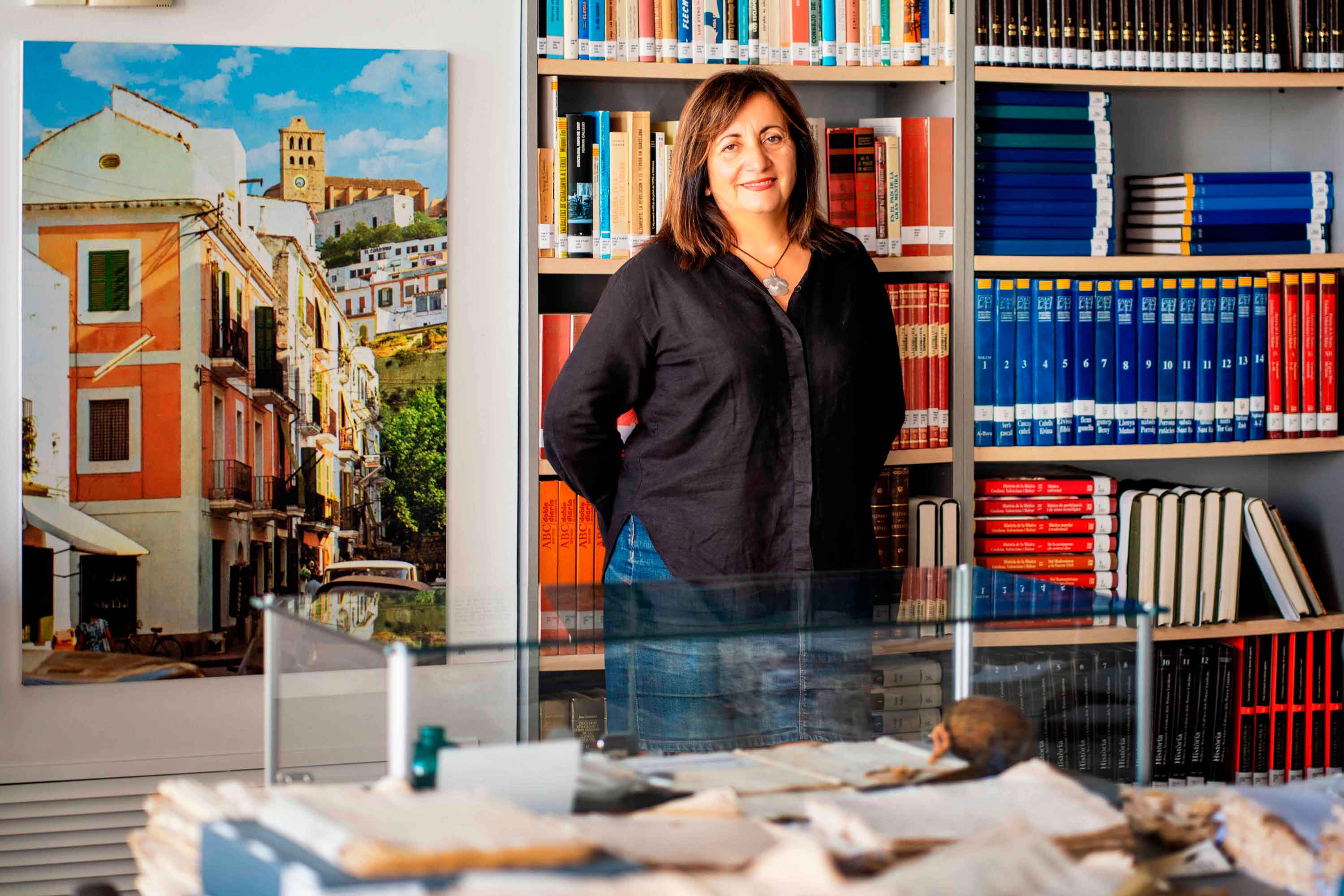
Historias del mar
Fanny Tur: «Baleària ya forma parte de la historia del transporte marítimo»
Ibicenca, activista medioambiental, historiadora, directora del archivo histórico de Eivissa… Fanny Tur Riera desempeñó, entre otros cargos públicos, el de consellera de Cultura del Govern Balear entre 2017 y 2019. Desde esta perspectiva, su análisis con visión histórica cobra valor: «Baleària ya forma parte de la historia del transporte marítimo de las Balears y del Mediterráneo», afirma antes de reflexionar sobre lo que supuso la irrupción de la naviera, ya que «los monopolios nunca son buenos y diversificar la oferta siempre tiene que beneficiar al usuario». En clave cultural y de género, esta historiadora destaca de la naviera Baleària cuestiones como «la atención en y al catalán, o poner nombres de mujer a algunos barcos, mostrando que la historia también la escribimos las mujeres». Desde la perspectiva ecologista, Tur Riera valora el compromiso de Baleària con la sostenibilidad partiendo de que «la actividad humana en general y el turismo y la gran movilidad en particular tienen unos efectos devastadores sobre el mar y el territorio». En este sentido, destaca, «todas las medidas que se pongan en práctica para minimizar los efectos de la masificación, como por ejemplo emplear energías renovables y colaborar con entidades ecologistas, ponen un grano de arena en una lucha que hace tiempo es imprescindible para la misma supervivencia». Pero si algo destaca de la aportación de Baleària esta exconsellera de Cultura del Govern Balear es el papel desempeñado por la Fundación Baleària, que ha hecho que «la creación pueda viajar a nuevos escenarios y no se quede en el lugar de origen. Para enriquecerse y crecer, el arte y la creación se tienen que mover mientras conservan sus raíces bien fuertes». Y ello, subraya, en combinación con la gestión de espacios culturales «en diferentes lugares —lo que desde la Fundación Baleària llaman las Llonges de la Cultura—, facilitando así que puedan acoger actividades, encuentros, investigación, muestras colectivas y creadores de todo el país para que se puedan encontrar y enriquecerse mutuamente» porque, reflexiona, «el arte y la investigación son trabajo propio, pero también son puesta en común y conocimiento mutuo». Creación cultural «En definitiva —asegura Fanny Tur— Baleària a través de su fundación ha hecho posible que la creación tenga movilidad, circule, se muestre en nuevos escenarios, porque así crece y encuentra nuevos paisajes… ha contribuido a la relación y el conocimiento mutuo entre creadores, facilitando que se encuentren, se conozcan y, en definitiva, que establezcanvínculos». En el caso de Balears, Fanny Tur considera que la de Baleària y de su fundación han sido una magnífica aportación favorecedora de la articulación social y cultural, además de subrayar la revitalización que ha supuesto la conexión, en todos los ámbitos, entre Dénia y Eivissa.
Read more

Historias del mar
De grumete a capitán. Vocabulario marítimo básico (I)
¿Dónde queda babor y estribor? ¿Cuál es la diferencia entre manga y eslora? Seguro que has oído una y mil veces términos como estos pero todavía te siguen generando dudas cuando subes a bordo de un ferri. No te preocupes, hemos preparado un glosario básico de léxico marítimo para que alimentes tu vocabulario y disfrutes todavía más de tu experiencia de viaje. Deja atrás tus titubeos de grumete y presume de hablar con la propiedad de un capitán. ¿Empezamos? PARTES DEL FERRI CASCO. El cuerpo del buque. La estructura ‘en neto’, sin máquinas, mástiles ni elementos accesorios para la navegación. CUBIERTA: Cada uno de los pisos de una embarcación. Forman la estructura que permiten un espacio habitable para la tripulación y el pasaje. Los barcos tienen varias cubiertas, tanto para la bodega -donde se ubica la carga y los vehículos- como para las zonas de pasajeros –con salones, áreas de butacas, restaurantes, etc.- siendo la principal la superior. QUILLA: Es la columna vertebral del barco. La pieza de hierro que va de popa a proa por la parte inferior del barco y en que se asienta toda su armazón.Constituye el principal refuerzo estructural de la embarcación, en el que se encastan los demás y sobre el que descargan su peso. [caption id="attachment_1776" align="aligncenter" width="800"] Corte transversal del ferri Martín i Soler de Baleària, donde se diferencia el casco, la quilla y las diferentes cubiertas.[/caption] VOLUMEN Y DIMENSIONES ESLORA: La longitud de la embarcación. O dicho de otra manera, la distancia de punta a punta de la estructura del buque. MANGA: La anchura (máxima) de un buque. PUNTAL. La altura de la bodega de la nave desde la quilla hasta el extremo de la cubierta superior. DESPLAZAMIENTO: El volumen de agua que desplaza la parte sumergida del barco. Es decir… el peso del barco. Ahora se entiende mejor ¿verdad?. POSICIÓN EN EL BARCO PROA y POPA. La proa es la parte delantera del barco. Tiene forma de cuña para que el buque pueda "cortar el agua”. Por el contrario, la popa es la parte posterior de la estructura del buque. BABOR y ESTRIBOR. Por babor se considera el lado izquierdo de un buque, mirando desde atrás hacia delante, esto es de popa a proa. Estribor es la banda o lado derecho de un buque, mirando desde atrás hacia delante, esto es de popa a proa. OBRA VIVA y MUERTA. La viva es la parte del casco bajo el agua. Es decir, desde la quilla a la línea de flotación a máxima carga. La muerta, la parte del casco que sobresale del mar MANIOBRAS ARRIAR. Aflojar o soltar un cabo (las cuerdas de a bordo). También se utilizan los términos LASCAR (aflojar) y LARGAR (soltar). Una advertencia: a bordo de los barcos sólo hay una cuerda, la del cronómetro. Las demás se llaman CABOS (y en los barcos grandes ESTACHAS). VIRAR. Lo contrario de arriar, es decir COBRAR o recuperar un cabo o el ancla, cuando el buque se encuentra fondeado. Por cierto, la maniobra de virar es propia de buques de vela y no tanto de ferris. ATRACAR. Operación para ubicar el buque en el lugar previsto del muelle. Concluye en el momento en que la embarcación AMARRA (o ata firmemente) el último cabo al NORAY o bolardo del muelle. Por cierto, la maniobra contraria a ATRACAR ser llama DESATRACAR. Lógico ¿no? BARLOVENTEAR. Maniobrar aprovechando la fuerza viento (a favor o en contra) para que el impulso sea lo más favorable a la embarcación. Por ejemplo, en el caso de una operación de atraque. CAPEAR. Se trata de una maniobra de navegación con mal tiempo. Consiste en tratar de mantener la proa al viento y con poca velocidad, para conseguir una trayectoria controlada y segura hasta que amaine el temporal. FONDEAR. Posicionar el buque en aguas establecidas para el anclaje. Y hasta aquí, por esta vez. Si quieres seguir aprendiendo sobre ferris y transporte marítimo, sigue navegando con el blog Entreolas y no te pierdas nuestra próxima entrega de vocabulario.
Read more