
 English
 Spanish
 Catalan
 French
 Italian
Floating above the calm waters of the Mediterranean, almost as if suspended in mid-air, lies Formentera. This Balearic island has been described as “the Mediterranean's last paradise” because its sea-only access creates an almost “Brechtian” distance from the noise of everyday life, helping to preserve it from mass tourism.
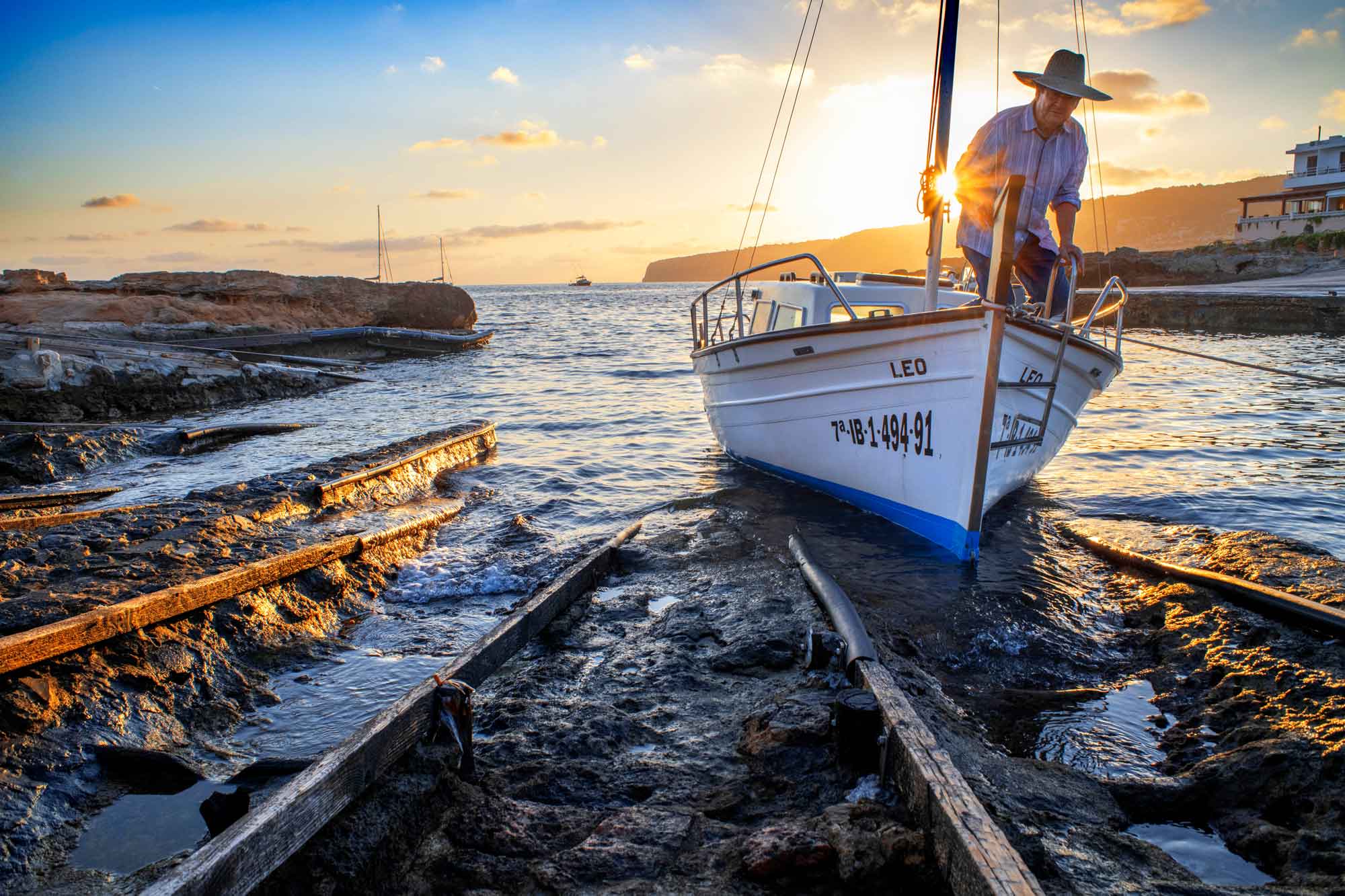
Formentera begins the day with a captivating sunrise over the cliffs at La Mola lighthouse and ends it with spectacular sunsets from its other lighthouse, Cap de Barbaria. Throughout the day, the magical Mediterranean light illuminates its 69 kilometres of coastline. The island offers beaches for every taste. To the north, wild and secluded Cavall d'en Borràs leads towards Ses Illetes, regularly ranked among the world's finest beaches. It lies on a narrow strip of land —the Es Trucadors peninsula— occupying the western side, with Llevant beach on the opposite coast. On the west coast, between low cliffs, lies Cala Saona. To the north are Es Pujols, Sa Roqueta and Ses Platjetes. And to the south is Migjorn, a five-kilometre stretch of sandy beaches and coves interspersed with rocky areas.
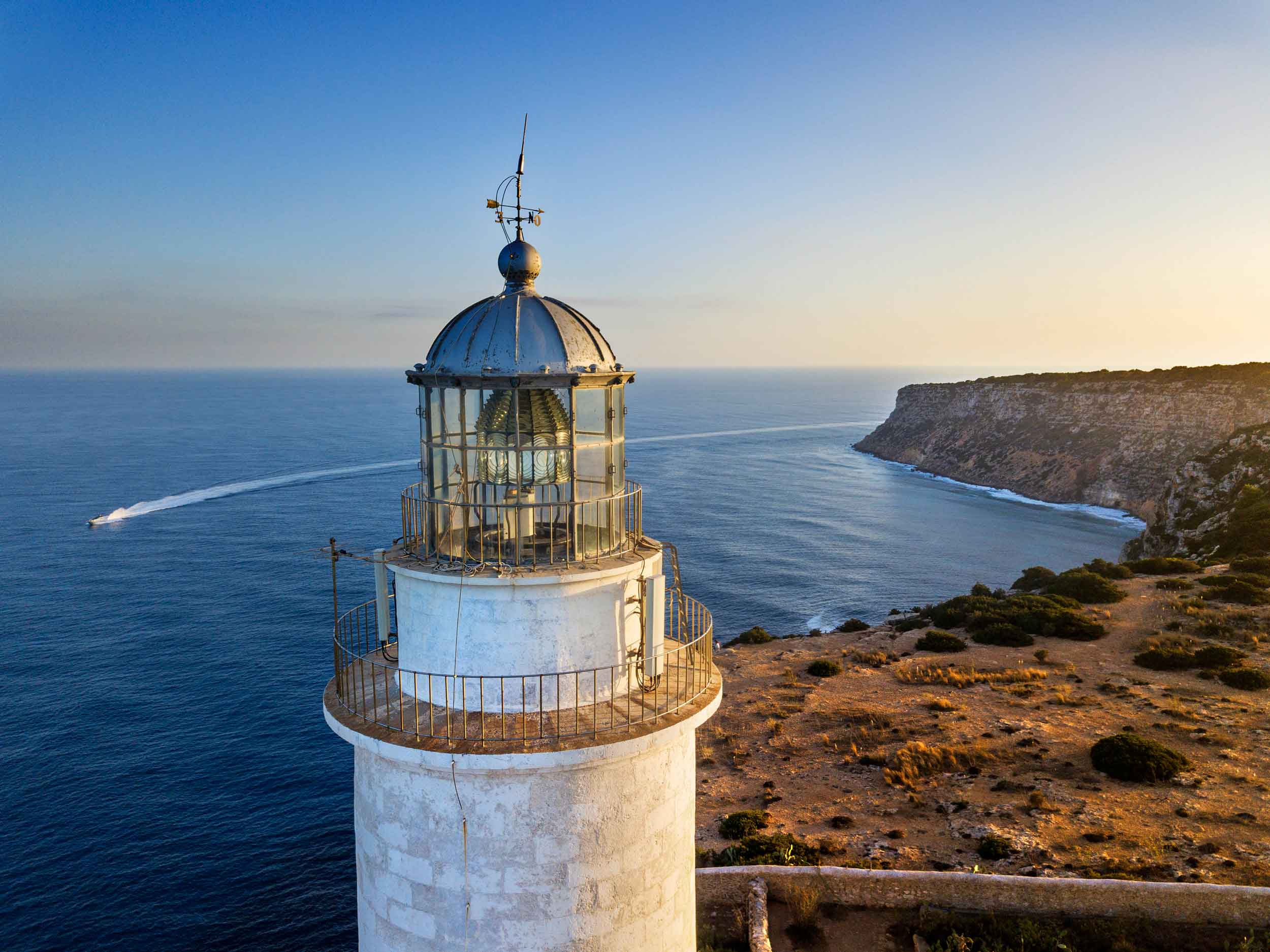
Its villages are the finest expression of the island's character and local traditions. La Savina is its maritime gateway, with both a fishing harbour and marina. Sant Francesc, the capital, boasts a genuine historic centre dominated by its 18th-century fortified church. Sant Ferran retains its bohemian atmosphere. Es Pujols concentrates most of the island's hotel and leisure offering. Es Caló de Sant Agustí preserves its photogenic fishing-port character, complete with old slipways. And El Pilar de la Mola hosts the island's best-known craft market.
Nature, history and the local economy come together at Ses Salines, a salt-related natural park that has been a World Heritage Site since 1999. The park also includes two lagoons (Estany Pudent and Estany des Peix), an interpretation centre (Can Marroig) and a rocky area with unusual formations, Sa Pedrera, a former quarry. But when it comes to nature, the island's underwater treasure deserves special attention: Posidonia oceanica. This plant, around 100,000 years old, grows on shallow sandy seabeds.
Another option is to lose yourself along its walking trails. Around one hundred kilometres of interconnected paths make Formentera the perfect place to walk or cycle while discovering its landscapes. Highlights include the Es Caló-El Pilar de la Mola route, which follows the Camí de Sa Pujada and includes a spectacular viewpoint; or the Es Cap-Torrent de s'Alga route, which reveals one of the island's lesser-known areas, with well-preserved slipways and juniper trees where “peix sec”, one of Formentera's most typical culinary products, is hung out to dry.
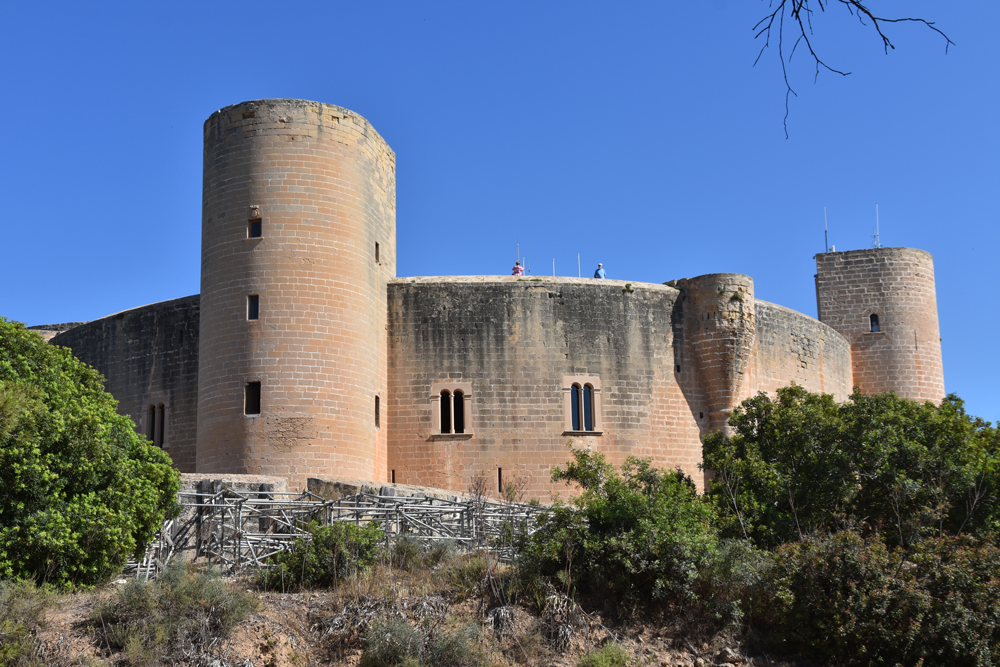
Its historical heritage should not be overlooked either. Travel back in time through three key archaeological sites: Ca na Costa, a megalithic tomb dating back to the Bronze Age beside Estany Pudent; Cap de Barbaria I, II and III, three of around twenty archaeological sites; and Can Blai, the remains of a fortified Roman structure near Es Caló. Jumping several centuries forward, you will encounter five historic defensive towers. Circular in plan with a truncated-cone structure, they were built in the 18th century to watch for pirate raids.
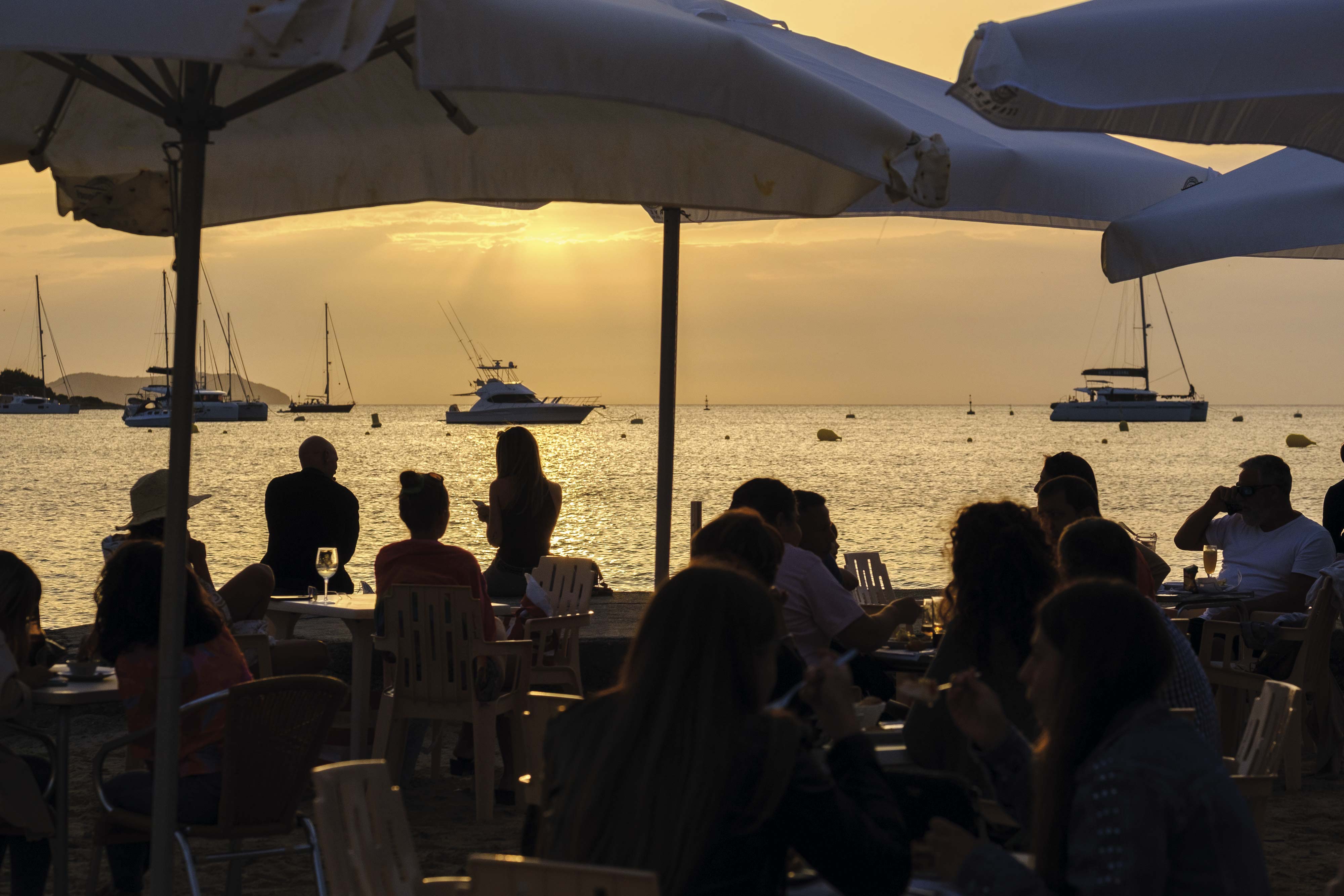
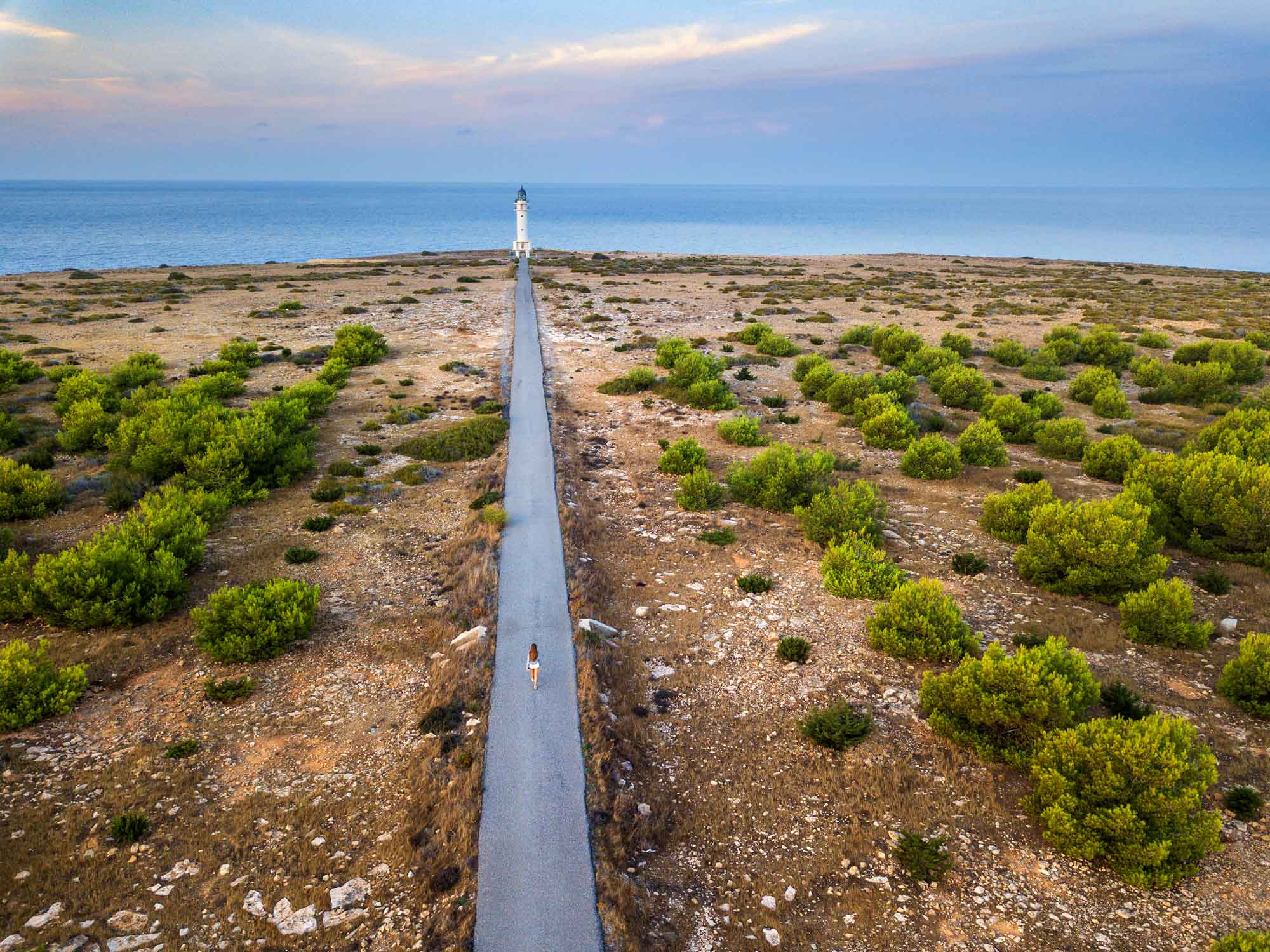
And to end the day, there is nothing better than heading to Cap de Barbaria in the south-west. In the middle of an almost lunar landscape, the imposing cliffs become natural viewing galleries at sunset, from which to watch the sun settle on the Mediterranean horizon before disappearing and leaving the sky glowing with a reddish trail.
 X
X