

 English
 Spanish
 Catalan
 French
 Italian
 Marruecos era un destino que llevaba tiempo rondándonos por la cabeza, lo que hizo que, cuando estuvimos decidiendo cuál sería nuestro próximo road trip, sin duda esta era una de nuestras primeras opciones. Nosotros solemos viajar en coche, y si puede ser con el nuestro propio, mucho mejor, así que cuando vimos la posibilidad de cruzar hasta Tánger con nuestro propio vehículo a bordo de un ferry de Baleària, no nos lo pensamos dos veces. Viajar con tu propio coche ofrece un sinfín de ventajas y poder lanzarnos a la aventura de recorrer las carreteras de Marruecos sin tener que coger ningún vuelo, pudiendo llevar todo listo desde casa y con la comodidad de hacer la travesía en ferry, pasando de Algeciras a Tánger en apenas una hora y media, hizo que el plan de nuestro road trip por Marruecos se convirtiese en una realidad. Así que, tras sacar los billetes, preparar las maletas y cargar el coche, pusimos rumbo a Algeciras para cruzar al puerto de Tánger Med a la mañana siguiente. 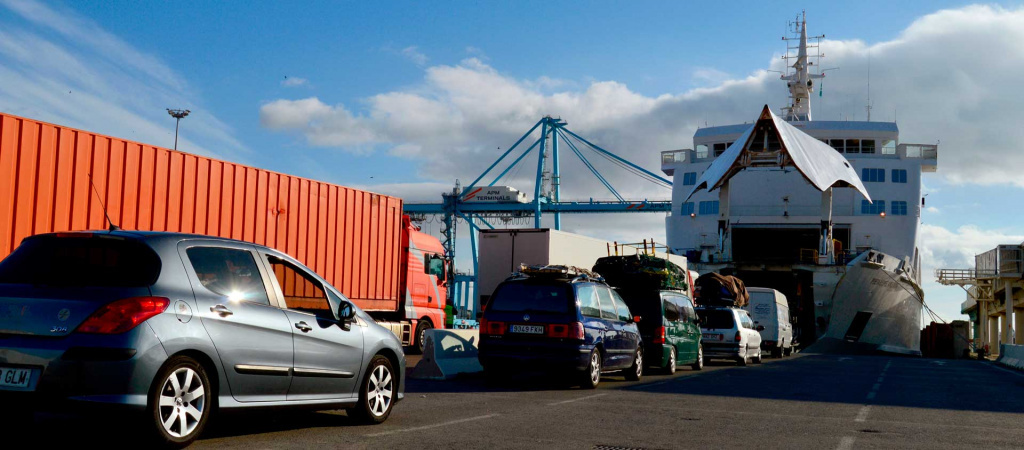 LA RUTA Aprovechando que en el primer día estamos más descansados, la primera etapa de nuestro road trip por Marruecos consistió en hacer unos 700 km siguiendo la autopista de la costa (la A1), para adentrarnos a última hora de la tarde en la que sería nuestra primera parada del viaje, Las Cascadas de Ouzoud.
 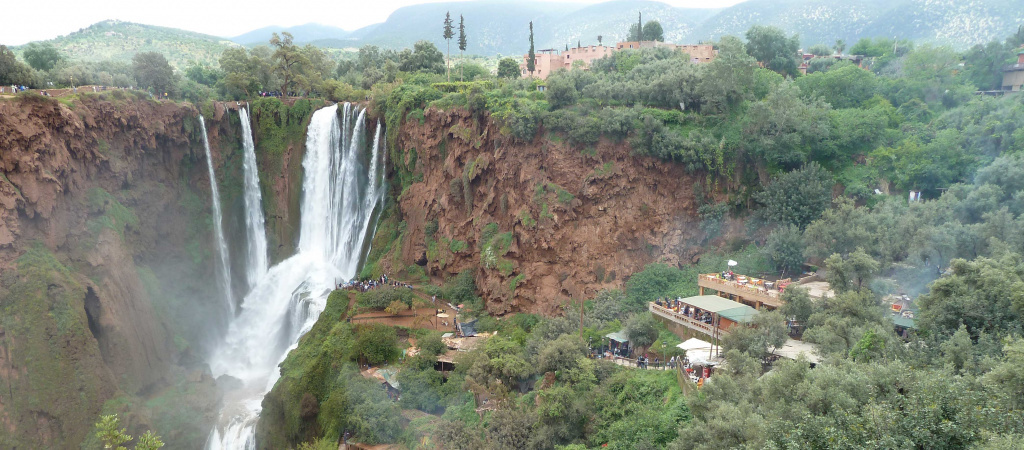 Tras disfrutar de esta maravilla de la naturaleza, seguimos nuestro viaje por Marruecos en coche en dirección al que sería nuestro siguiente hito, el puerto de Tichka, nada más y nada menos que a 2260 metros de altitud. Sin duda, las carreteras de Marruecos nos estaban sorprendiendo, especialmente por los paisajes que regalan. Del puerto de Tichka seguimos la ruta y pudimos disfrutar de uno de los sitios de Marruecos declarado Patrimonio de la Humanidad por la UNESCO, Ait Ben Haddou, escenario de rodaje de muchas películas de Hollywood y series, como Gladiator o Juego de Tronos.
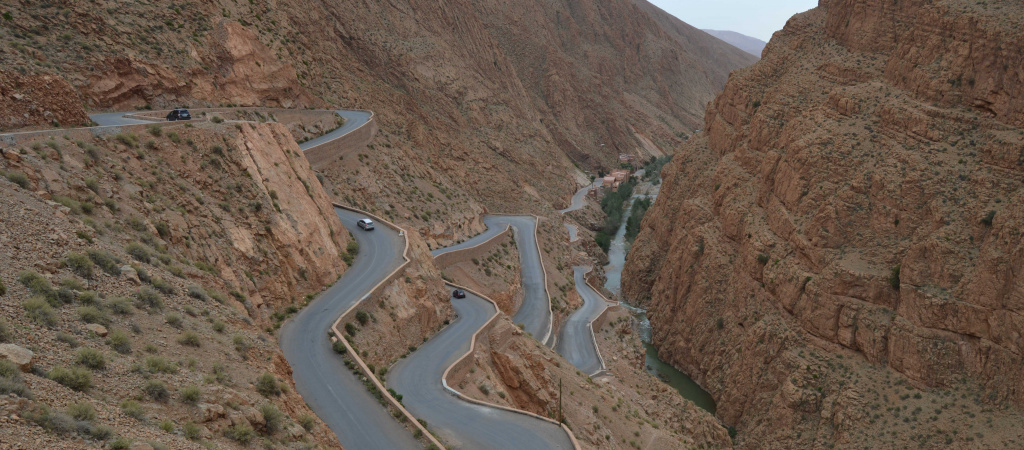
 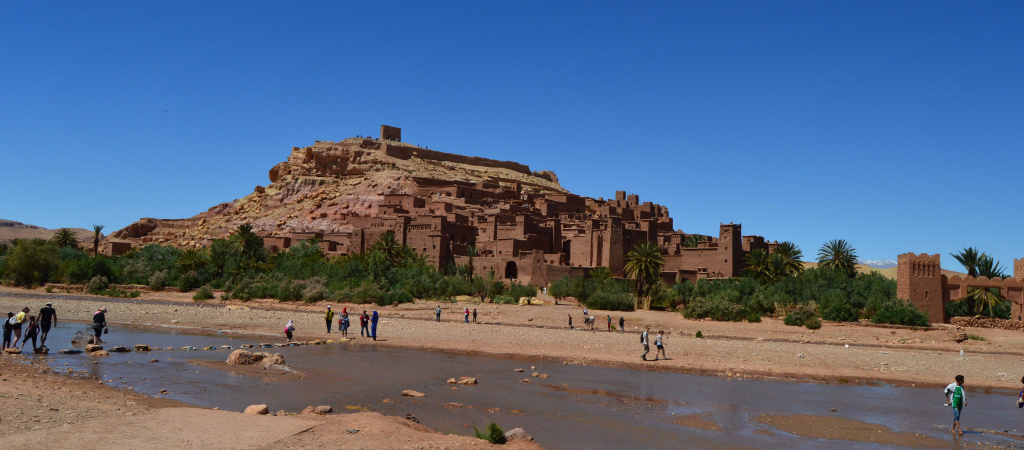 Comenzamos a tener el primer contacto con el paisaje más típico del sur de Marruecos: las Kasbash salpicaban los palmerales, ofreciendo una mezcla de colores verdes y marrones incomparable con otro paisaje que hubiésemos visto antes. Continuamos la ruta por el Valle del Draa y sus palmeras datileras hasta llegar al desierto de Zagora, para recorrer después el Valle de las Rosas con su aroma a rosa tan característico. Del Valle de las Rosas seguimos por el Valle del Dades y el Valle del Todra, disfrutando de sus carreteras y sus gargantas, que tantas veces habíamos visto en fotografías y que tantas ganas teníamos de conocer.
  Acabamos la ruta por los valles de Marruecos en el desierto de Merzouga, donde nos quedamos dos noches. Tras conocer la vida en el desierto tocaba poner rumbo al norte para embarcar en el ferry de vuelta. En este trayecto de Merzouga a Tánger hicimos dos paradas, una cerca de Meknes, para poder visitar las ruinas romanas de Volubilis, y otra en Chefchaouen, para perdernos por las calles del pueblo azul de Marruecos y aprovechar para hacer compras de recuerdos de nuestro roadtrip. El viaje por Marruecos llegaba a su fin y tan solo nos quedaba relajarnos en la cafetería del ferry Poeta López Anglada y aprovechar la travesía de vuelta para reponer fuerzas. Mucha gente nos ha preguntado a la vuelta del viaje que qué es lo que nos hemos traído de Marruecos, y sin duda muchas ganas de volver a recorrer este país que tanto tiene por descubrir, nos hemos traído cientos de momentos que no queremos olvidar nunca y conversaciones con extraños que se hacían cómplices gracias a una sonrisa… En definitiva, no nos hemos traído nada, sino que nos hemos dejado allí una parte de nosotros. Bea y Rober | Germen Viajero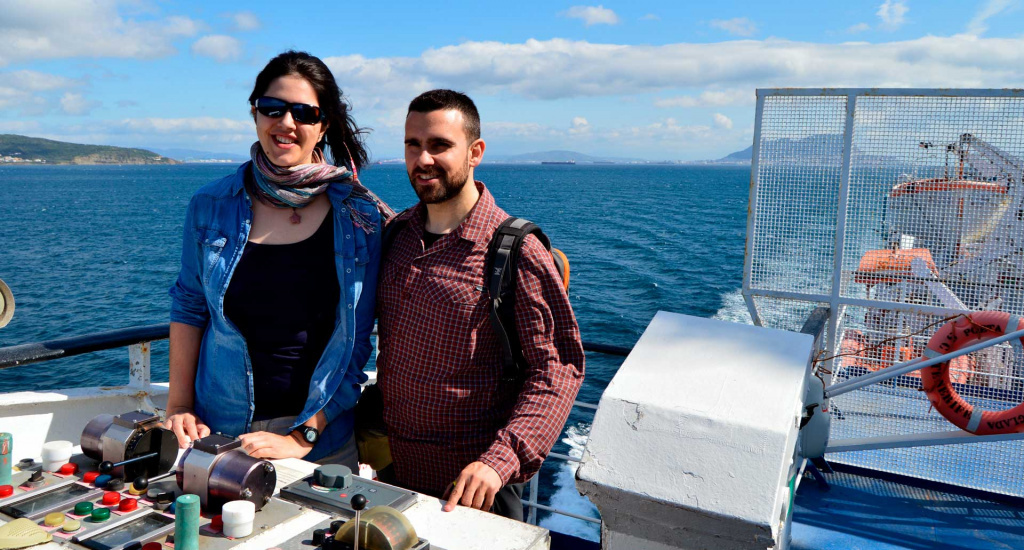

 X
X 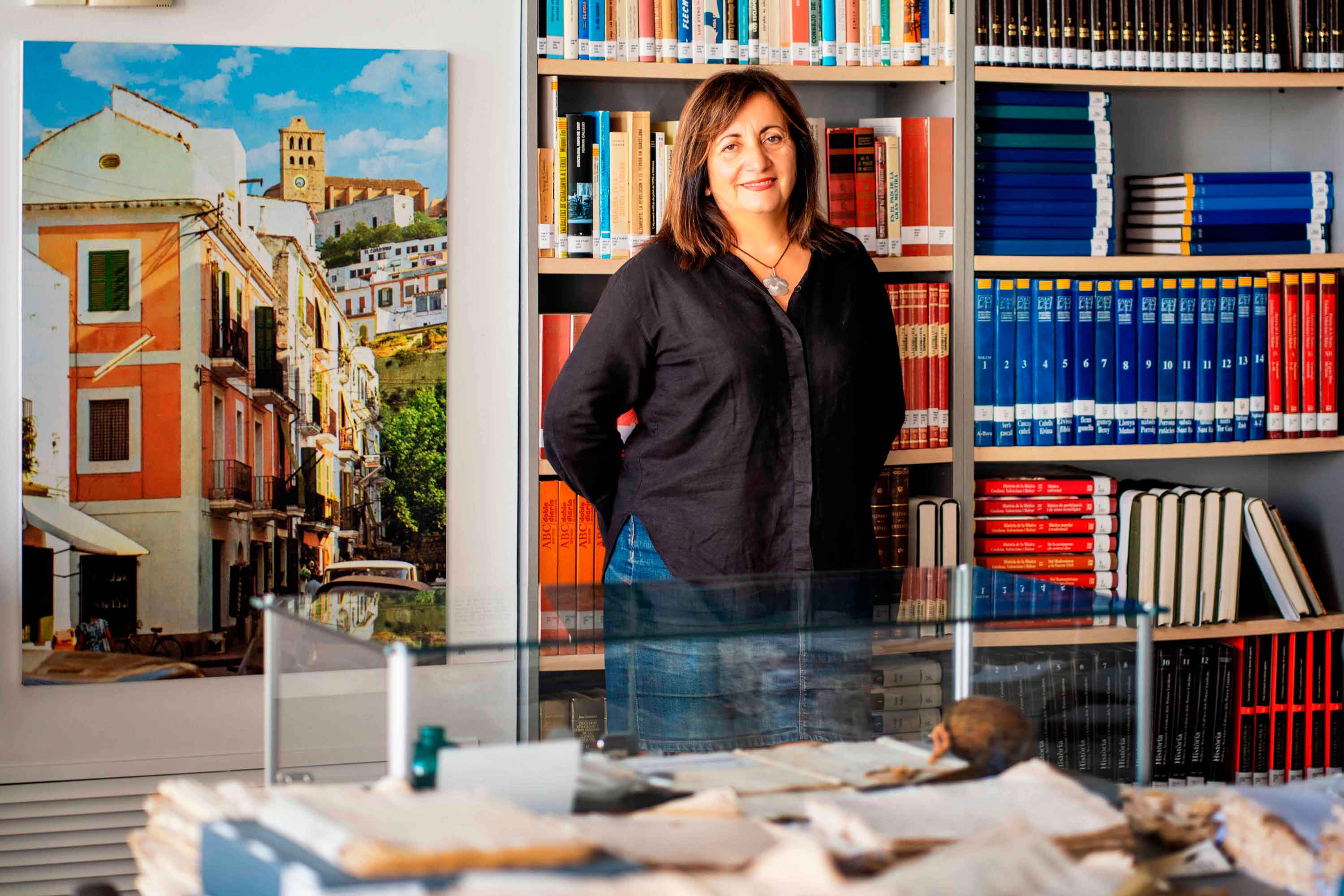
Historias del mar
Fanny Tur: «Baleària ya forma parte de la historia del transporte marítimo»
Ibicenca, activista medioambiental, historiadora, directora del archivo histórico de Eivissa… Fanny Tur Riera desempeñó, entre otros cargos públicos, el de consellera de Cultura del Govern Balear entre 2017 y 2019. Desde esta perspectiva, su análisis con visión histórica cobra valor: «Baleària ya forma parte de la historia del transporte marítimo de las Balears y del Mediterráneo», afirma antes de reflexionar sobre lo que supuso la irrupción de la naviera, ya que «los monopolios nunca son buenos y diversificar la oferta siempre tiene que beneficiar al usuario». En clave cultural y de género, esta historiadora destaca de la naviera Baleària cuestiones como «la atención en y al catalán, o poner nombres de mujer a algunos barcos, mostrando que la historia también la escribimos las mujeres». Desde la perspectiva ecologista, Tur Riera valora el compromiso de Baleària con la sostenibilidad partiendo de que «la actividad humana en general y el turismo y la gran movilidad en particular tienen unos efectos devastadores sobre el mar y el territorio». En este sentido, destaca, «todas las medidas que se pongan en práctica para minimizar los efectos de la masificación, como por ejemplo emplear energías renovables y colaborar con entidades ecologistas, ponen un grano de arena en una lucha que hace tiempo es imprescindible para la misma supervivencia». Pero si algo destaca de la aportación de Baleària esta exconsellera de Cultura del Govern Balear es el papel desempeñado por la Fundación Baleària, que ha hecho que «la creación pueda viajar a nuevos escenarios y no se quede en el lugar de origen. Para enriquecerse y crecer, el arte y la creación se tienen que mover mientras conservan sus raíces bien fuertes». Y ello, subraya, en combinación con la gestión de espacios culturales «en diferentes lugares —lo que desde la Fundación Baleària llaman las Llonges de la Cultura—, facilitando así que puedan acoger actividades, encuentros, investigación, muestras colectivas y creadores de todo el país para que se puedan encontrar y enriquecerse mutuamente» porque, reflexiona, «el arte y la investigación son trabajo propio, pero también son puesta en común y conocimiento mutuo». Creación cultural «En definitiva —asegura Fanny Tur— Baleària a través de su fundación ha hecho posible que la creación tenga movilidad, circule, se muestre en nuevos escenarios, porque así crece y encuentra nuevos paisajes… ha contribuido a la relación y el conocimiento mutuo entre creadores, facilitando que se encuentren, se conozcan y, en definitiva, que establezcanvínculos». En el caso de Balears, Fanny Tur considera que la de Baleària y de su fundación han sido una magnífica aportación favorecedora de la articulación social y cultural, además de subrayar la revitalización que ha supuesto la conexión, en todos los ámbitos, entre Dénia y Eivissa.
Read more

Historias del mar
De grumete a capitán. Vocabulario marítimo básico (I)
¿Dónde queda babor y estribor? ¿Cuál es la diferencia entre manga y eslora? Seguro que has oído una y mil veces términos como estos pero todavía te siguen generando dudas cuando subes a bordo de un ferri. No te preocupes, hemos preparado un glosario básico de léxico marítimo para que alimentes tu vocabulario y disfrutes todavía más de tu experiencia de viaje. Deja atrás tus titubeos de grumete y presume de hablar con la propiedad de un capitán. ¿Empezamos? PARTES DEL FERRI CASCO. El cuerpo del buque. La estructura ‘en neto’, sin máquinas, mástiles ni elementos accesorios para la navegación. CUBIERTA: Cada uno de los pisos de una embarcación. Forman la estructura que permiten un espacio habitable para la tripulación y el pasaje. Los barcos tienen varias cubiertas, tanto para la bodega -donde se ubica la carga y los vehículos- como para las zonas de pasajeros –con salones, áreas de butacas, restaurantes, etc.- siendo la principal la superior. QUILLA: Es la columna vertebral del barco. La pieza de hierro que va de popa a proa por la parte inferior del barco y en que se asienta toda su armazón.Constituye el principal refuerzo estructural de la embarcación, en el que se encastan los demás y sobre el que descargan su peso. [caption id="attachment_1776" align="aligncenter" width="800"] Corte transversal del ferri Martín i Soler de Baleària, donde se diferencia el casco, la quilla y las diferentes cubiertas.[/caption] VOLUMEN Y DIMENSIONES ESLORA: La longitud de la embarcación. O dicho de otra manera, la distancia de punta a punta de la estructura del buque. MANGA: La anchura (máxima) de un buque. PUNTAL. La altura de la bodega de la nave desde la quilla hasta el extremo de la cubierta superior. DESPLAZAMIENTO: El volumen de agua que desplaza la parte sumergida del barco. Es decir… el peso del barco. Ahora se entiende mejor ¿verdad?. POSICIÓN EN EL BARCO PROA y POPA. La proa es la parte delantera del barco. Tiene forma de cuña para que el buque pueda "cortar el agua”. Por el contrario, la popa es la parte posterior de la estructura del buque. BABOR y ESTRIBOR. Por babor se considera el lado izquierdo de un buque, mirando desde atrás hacia delante, esto es de popa a proa. Estribor es la banda o lado derecho de un buque, mirando desde atrás hacia delante, esto es de popa a proa. OBRA VIVA y MUERTA. La viva es la parte del casco bajo el agua. Es decir, desde la quilla a la línea de flotación a máxima carga. La muerta, la parte del casco que sobresale del mar MANIOBRAS ARRIAR. Aflojar o soltar un cabo (las cuerdas de a bordo). También se utilizan los términos LASCAR (aflojar) y LARGAR (soltar). Una advertencia: a bordo de los barcos sólo hay una cuerda, la del cronómetro. Las demás se llaman CABOS (y en los barcos grandes ESTACHAS). VIRAR. Lo contrario de arriar, es decir COBRAR o recuperar un cabo o el ancla, cuando el buque se encuentra fondeado. Por cierto, la maniobra de virar es propia de buques de vela y no tanto de ferris. ATRACAR. Operación para ubicar el buque en el lugar previsto del muelle. Concluye en el momento en que la embarcación AMARRA (o ata firmemente) el último cabo al NORAY o bolardo del muelle. Por cierto, la maniobra contraria a ATRACAR ser llama DESATRACAR. Lógico ¿no? BARLOVENTEAR. Maniobrar aprovechando la fuerza viento (a favor o en contra) para que el impulso sea lo más favorable a la embarcación. Por ejemplo, en el caso de una operación de atraque. CAPEAR. Se trata de una maniobra de navegación con mal tiempo. Consiste en tratar de mantener la proa al viento y con poca velocidad, para conseguir una trayectoria controlada y segura hasta que amaine el temporal. FONDEAR. Posicionar el buque en aguas establecidas para el anclaje. Y hasta aquí, por esta vez. Si quieres seguir aprendiendo sobre ferris y transporte marítimo, sigue navegando con el blog Entreolas y no te pierdas nuestra próxima entrega de vocabulario.
Read more