
 English
 Spanish
 Catalan
 French
 Italian

Sanlúcar, in the province of Cádiz at the mouth of the River Guadalquivir, is a privileged city with a rich cultural and architectural heritage thanks to its position on the historic trade route to the Americas.
Its natural surroundings are defined by Doñana National Park, reached by crossing the Guadalquivir, and La Algaida Natural Park and Pine Forest, a kind of natural ring forming one of Andalusia's green lungs, declared a UNESCO Biosphere Reserve in 1980.
These attractions are complemented by its rich cuisine, with distinctive products such as the Sanlúcar prawn and Manzanilla, a perfect pairing that has gained recognition well beyond Spain and is one of the reasons thousands of visitors come to the town each year. At the end of last year it was announced that Sanlúcar would become the new World Capital of Gastronomy for 2022. The appointment was made official at Fitur, the International Tourism Fair held in Madrid from 19 to 23 January.
The title Spanish Capital of Gastronomy (CEG) was created by the Spanish Federation of Tourism Journalists and Writers (FEPET) and the Spanish Hospitality Federation (FEHR).
The initiative aims to promote the gastronomic offering of the city that holds the title each year, propose measures that help increase visitor numbers (Sanlúcar receives more than 80,000 tourists annually) and highlight programmes of gastronomic excellence.
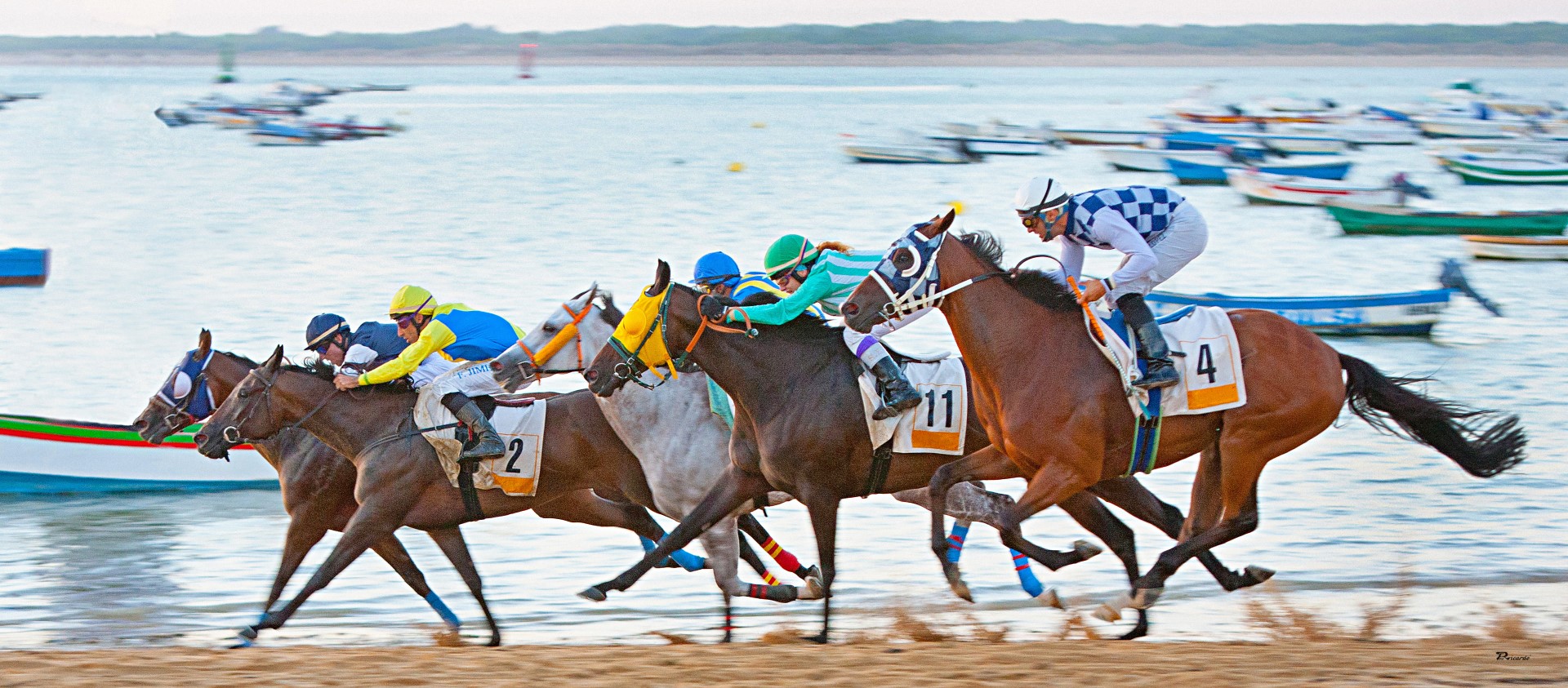
Gastronomy therefore provides the perfect complement to the town's extensive leisure and festive programme, including the Manzanilla Fair, the departure of the Rocío brotherhoods and the famous horse races held on the town's beaches, declared an Event of International Tourist Interest in 1997.
Flavours of Sanlúcar
Sanlúcar's extensive gastronomic offering is built on three key pillars: produce from its market gardens, products from its wineries and the catch from its waters. Sanlúcar's fish and seafood, especially its prawns, enjoy a reputation that has travelled well beyond the region.
In Sanlúcar, the ingredients themselves are as famous as the dishes made with them. Its culinary tradition is based on rich seafood stews with an authentic maritime character, such as skate with bitter orange, monkfish with fried bread and mantis shrimp soup. These dishes are usually accompanied by the local wine, Manzanilla, as well as other table wines that are lower in alcohol and paler in colour but have a distinctive flavour.
The Sanlúcar prawn: king of the sea and local gastronomy
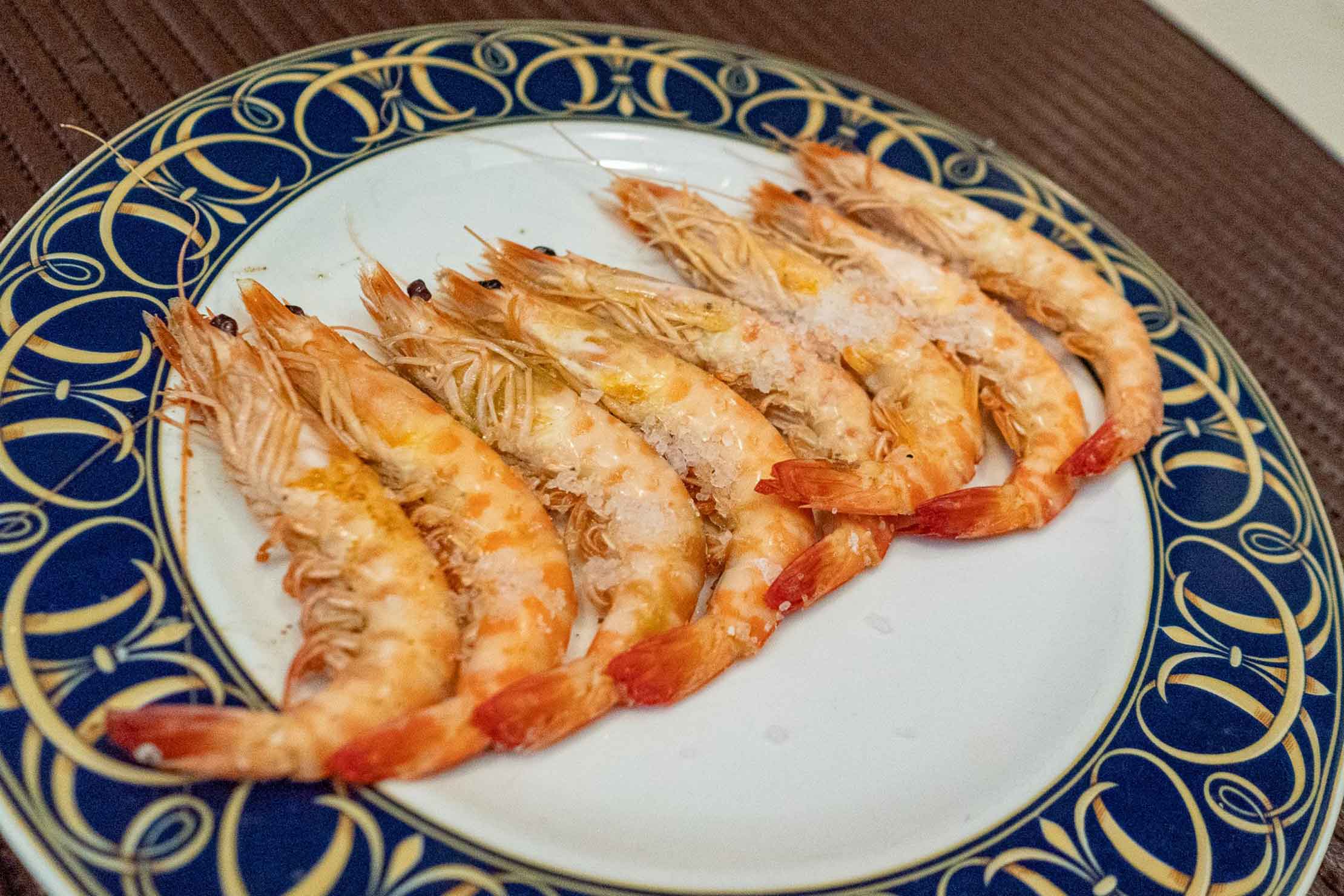
The Sanlúcar prawn is one of the stars of Cádiz cuisine, a local product that has crossed borders to win over not only the thousands of tourists who visit the town every year but also renowned chefs in Spain and abroad, who have made it a signature ingredient on their menus.
Its scientific name is Penaeus kerathurus and it is a medium-sized edible crustacean, highly prized and commercially valuable.
What makes the Sanlúcar prawn so special? The answer is simple: its flavour, which comes from its habitat in the estuary of the River Guadalquivir.
It is mainly eaten fresh and its flesh is highly valued. Boiled, fried or included in any traditional seafood stew, it is always an excellent choice.
Manzanilla: a unique and very special wine
Manzanilla is another product inseparably linked with Sanlúcar de Barrameda. The vineyards, divided into traditional 'pagos', have grown for centuries on the area's characteristic albariza soils. Sanlúcar now has more than twenty wineries, supplied either by their own vineyards or by must made from Palomino grapes.
Maritime Sanlúcar: seafood and traditional stews
Sanlúcar's cuisine is closely tied to tradition. With strong maritime roots, local cooking has always played a central role in the town's homes.
The distinctive way fish is prepared in Sanlúcar deserves special mention. Fried fish, cooked to exactly the right point, can be almost sublime and lets diners appreciate the different textures of local species, from wedge sole and small hake to baby squid, cuttlefish and red mullet…
The food market: the heart of Sanlúcar's gastronomy
It is located in the heart of the shopping district within the Historic Quarter of Sanlúcar de Barrameda.
This municipal building covers almost 1,400 square metres. Built in the 18th century, it has been renovated three times, in the 19th, 20th and 21st centuries. Activity returned to the square in June 2018 and it has remained a focal point for the city's commercial and food-and-wine scene ever since.
The fish section stands out most, not only for its variety but also for the exceptional quality of the produce. The excellent ingredients displayed daily by Sanlúcar's market traders have made the food market a reference point for locals and visitors who use their time in the city to stock up on some of the finest produce from land and sea.
Sanlúcar's sweet side
No good meal is complete without dessert, and Sanlúcar's many gastronomic attractions include a wide variety of sweets defined by artisanal methods and high-quality ingredients.
Traditional sweets prepared by the nuns of the Madre de Dios convent —sold to customers through the convent turntable— and Regina Coeli have helped preserve distinctive flavours such as yemas, tocino de cielo, almond roscos, polvorones, pestiños, white roscos and cocadas, made for more than 40 years and loved by everyone who tastes them.
The alpisteras are among the most typical sweets of Sanlúcar de Barrameda. Traditionally eaten during Holy Week, they get their sweetness from a light syrup. Dessert can continue with handmade ice cream, and the city has two legendary names: La Ibense Bornay —which has exported its ice cream as far as Dubai— and Helados Toni, where the third generation now serves younger customers from behind the counter.
Sanlúcar is unquestionably a destination worth visiting for its outstanding gastronomic wealth.
 X
X