

 English
 Spanish
 Catalan
 French
 Italian
 La ciudad de la Isla Verde sabe que tiene rincones entre dos aguas que inspiraron a Paco de Lucía, su genio universal a componer, entre otros, los acordes de esa mítica melodía que viene a la mente con sólo oír hablar de guitarra. Ese genio es de Algeciras, de ello dejó constancia en muchos de los títulos de su discografía. Y su rastro puede seguirse ahora en una ruta que pasea por todos los hitos de la trayectoria de Francisco Sánchez Gómez, Paco de Lucía, en la ciudad donde nació y donde descansará eternamente. Entre dos aguas no es el único guiño a su tierra en la discografía del compositor. Algeciras está plagada de lugares que forjaron la vida y la obra del maestro. Y todos ellos están en un camino guiado que invita a adentrarse en episodios de la historia del genio y a conocer una ciudad que no sólo es portuaria. La ruta turística de Paco de Lucía pasa por todos ellos. Son nueve los hitos, señalizados con tótems explicativos, que propone la visita elaborada por el Ayuntamiento de Algeciras. Desde su casa natal en la Fuentenueva hasta el paraje del Río de la Miel, la ruta pasa por un camino plagado de anécdotas e historias que bien pueden servir para conocer sus orígenes y entender su música. Entre estos lugares está, por ejemplo, la céntrica calle Munición, que aunque ya no lleva este nombre y hace años que dejó de ser un hervidero de fiesta flamenca, sí fue lo suficientemente importante en la vida del compositor como para inmortalizarla en el título de unas alegrías del disco Luzía (1998). Y es que hasta allí llevaba Antonio de Algeciras a sus hijos Pepe y a un jovencísimo Paco a oír discos del Niño Ricardo. [gallery type="slideshow" link="none" size="full" ids="896,899,895"] Certamen Internacional de Guitarra Esa vía asoma a uno de los vestigios de los orígenes de la ciudad, el Complejo Arqueológico de las Murallas Medievales, unas ruinas situadas en pleno centro de Algeciras, y al parque María Cristina, donde Paco ofreció algunos de sus conciertos y donde desde hace dos años, al fresco de las noches de julio, se homenajea al maestro en el Certamen Internacional de Guitarra. La ruta invita a pasear por la calle Alfonso XI, o Convento para los locales, por la puerta del Ayuntamiento de la histórica Conferencia de Algeciras, donde Paco fue nombrado Hijo Predilecto. Y desde allí, camino hacia la Plaza Alta, que es el punto de paso de la vida de la ciudad mañanera. Original por las ranas que decoran su fuente, por el azulejo sevillano de los años 30 que reviste su balaustrada y por haber sido hecha universal por Paco de Lucía en una soleá del disco Almoraima (1976). No muy lejos, bajando por la calle Radio Algeciras, se llega al mercado Ingeniero Torroja. Bajo la que fuera la mayor cúpula sin nervios del mundo, construida en 1935, se sigue vendiendo hoy el mejor género de la zona y, entre otros productos, el pescado de esta bahía Entre dos aguas, la famosísima rumba de Fuente y Caudal (1973). En su exterior, donde hoy se ubican los vistosos puestos de fruta y verdura cerca de la calle Tarifa, tenía su puesto de telas la familia de Paco. De ahí que tenga su espacio en la ruta. Pero también lo tienen la playa del Chorruelo, a la que bajaban los clientes del hotel Reina Cristina, hoy engullida por el desarrollo portuario; el monumento de Paco de Nacho Falgueras, ahora ubicado en la rotonda de la dársena del Saladillo, pronto en el paseo del Acceso Central al puerto que llevará su nombre; la playa del Rinconcillo o parajes naturales dignos de una buena ruta senderista, como la punta del Faro de Punta Carnero o el Río Ancho de la rumba de Almoraima, el Río de la Miel. Araceli Muñoz | Periodista

 X
X 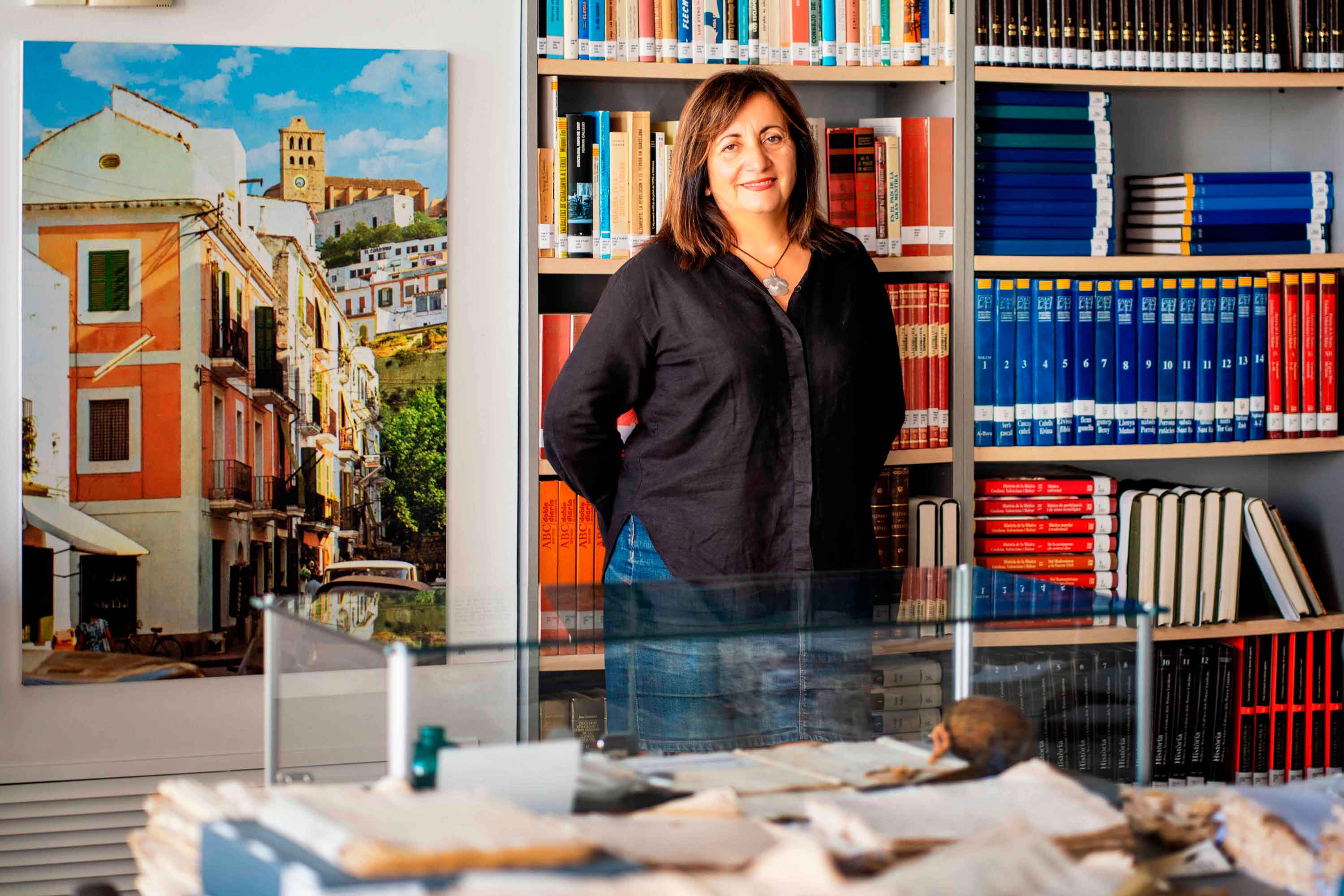
Historias del mar
Fanny Tur: «Baleària ya forma parte de la historia del transporte marítimo»
Ibicenca, activista medioambiental, historiadora, directora del archivo histórico de Eivissa… Fanny Tur Riera desempeñó, entre otros cargos públicos, el de consellera de Cultura del Govern Balear entre 2017 y 2019. Desde esta perspectiva, su análisis con visión histórica cobra valor: «Baleària ya forma parte de la historia del transporte marítimo de las Balears y del Mediterráneo», afirma antes de reflexionar sobre lo que supuso la irrupción de la naviera, ya que «los monopolios nunca son buenos y diversificar la oferta siempre tiene que beneficiar al usuario». En clave cultural y de género, esta historiadora destaca de la naviera Baleària cuestiones como «la atención en y al catalán, o poner nombres de mujer a algunos barcos, mostrando que la historia también la escribimos las mujeres». Desde la perspectiva ecologista, Tur Riera valora el compromiso de Baleària con la sostenibilidad partiendo de que «la actividad humana en general y el turismo y la gran movilidad en particular tienen unos efectos devastadores sobre el mar y el territorio». En este sentido, destaca, «todas las medidas que se pongan en práctica para minimizar los efectos de la masificación, como por ejemplo emplear energías renovables y colaborar con entidades ecologistas, ponen un grano de arena en una lucha que hace tiempo es imprescindible para la misma supervivencia». Pero si algo destaca de la aportación de Baleària esta exconsellera de Cultura del Govern Balear es el papel desempeñado por la Fundación Baleària, que ha hecho que «la creación pueda viajar a nuevos escenarios y no se quede en el lugar de origen. Para enriquecerse y crecer, el arte y la creación se tienen que mover mientras conservan sus raíces bien fuertes». Y ello, subraya, en combinación con la gestión de espacios culturales «en diferentes lugares —lo que desde la Fundación Baleària llaman las Llonges de la Cultura—, facilitando así que puedan acoger actividades, encuentros, investigación, muestras colectivas y creadores de todo el país para que se puedan encontrar y enriquecerse mutuamente» porque, reflexiona, «el arte y la investigación son trabajo propio, pero también son puesta en común y conocimiento mutuo». Creación cultural «En definitiva —asegura Fanny Tur— Baleària a través de su fundación ha hecho posible que la creación tenga movilidad, circule, se muestre en nuevos escenarios, porque así crece y encuentra nuevos paisajes… ha contribuido a la relación y el conocimiento mutuo entre creadores, facilitando que se encuentren, se conozcan y, en definitiva, que establezcanvínculos». En el caso de Balears, Fanny Tur considera que la de Baleària y de su fundación han sido una magnífica aportación favorecedora de la articulación social y cultural, además de subrayar la revitalización que ha supuesto la conexión, en todos los ámbitos, entre Dénia y Eivissa.
Read more

Historias del mar
De grumete a capitán. Vocabulario marítimo básico (I)
¿Dónde queda babor y estribor? ¿Cuál es la diferencia entre manga y eslora? Seguro que has oído una y mil veces términos como estos pero todavía te siguen generando dudas cuando subes a bordo de un ferri. No te preocupes, hemos preparado un glosario básico de léxico marítimo para que alimentes tu vocabulario y disfrutes todavía más de tu experiencia de viaje. Deja atrás tus titubeos de grumete y presume de hablar con la propiedad de un capitán. ¿Empezamos? PARTES DEL FERRI CASCO. El cuerpo del buque. La estructura ‘en neto’, sin máquinas, mástiles ni elementos accesorios para la navegación. CUBIERTA: Cada uno de los pisos de una embarcación. Forman la estructura que permiten un espacio habitable para la tripulación y el pasaje. Los barcos tienen varias cubiertas, tanto para la bodega -donde se ubica la carga y los vehículos- como para las zonas de pasajeros –con salones, áreas de butacas, restaurantes, etc.- siendo la principal la superior. QUILLA: Es la columna vertebral del barco. La pieza de hierro que va de popa a proa por la parte inferior del barco y en que se asienta toda su armazón.Constituye el principal refuerzo estructural de la embarcación, en el que se encastan los demás y sobre el que descargan su peso. [caption id="attachment_1776" align="aligncenter" width="800"] Corte transversal del ferri Martín i Soler de Baleària, donde se diferencia el casco, la quilla y las diferentes cubiertas.[/caption] VOLUMEN Y DIMENSIONES ESLORA: La longitud de la embarcación. O dicho de otra manera, la distancia de punta a punta de la estructura del buque. MANGA: La anchura (máxima) de un buque. PUNTAL. La altura de la bodega de la nave desde la quilla hasta el extremo de la cubierta superior. DESPLAZAMIENTO: El volumen de agua que desplaza la parte sumergida del barco. Es decir… el peso del barco. Ahora se entiende mejor ¿verdad?. POSICIÓN EN EL BARCO PROA y POPA. La proa es la parte delantera del barco. Tiene forma de cuña para que el buque pueda "cortar el agua”. Por el contrario, la popa es la parte posterior de la estructura del buque. BABOR y ESTRIBOR. Por babor se considera el lado izquierdo de un buque, mirando desde atrás hacia delante, esto es de popa a proa. Estribor es la banda o lado derecho de un buque, mirando desde atrás hacia delante, esto es de popa a proa. OBRA VIVA y MUERTA. La viva es la parte del casco bajo el agua. Es decir, desde la quilla a la línea de flotación a máxima carga. La muerta, la parte del casco que sobresale del mar MANIOBRAS ARRIAR. Aflojar o soltar un cabo (las cuerdas de a bordo). También se utilizan los términos LASCAR (aflojar) y LARGAR (soltar). Una advertencia: a bordo de los barcos sólo hay una cuerda, la del cronómetro. Las demás se llaman CABOS (y en los barcos grandes ESTACHAS). VIRAR. Lo contrario de arriar, es decir COBRAR o recuperar un cabo o el ancla, cuando el buque se encuentra fondeado. Por cierto, la maniobra de virar es propia de buques de vela y no tanto de ferris. ATRACAR. Operación para ubicar el buque en el lugar previsto del muelle. Concluye en el momento en que la embarcación AMARRA (o ata firmemente) el último cabo al NORAY o bolardo del muelle. Por cierto, la maniobra contraria a ATRACAR ser llama DESATRACAR. Lógico ¿no? BARLOVENTEAR. Maniobrar aprovechando la fuerza viento (a favor o en contra) para que el impulso sea lo más favorable a la embarcación. Por ejemplo, en el caso de una operación de atraque. CAPEAR. Se trata de una maniobra de navegación con mal tiempo. Consiste en tratar de mantener la proa al viento y con poca velocidad, para conseguir una trayectoria controlada y segura hasta que amaine el temporal. FONDEAR. Posicionar el buque en aguas establecidas para el anclaje. Y hasta aquí, por esta vez. Si quieres seguir aprendiendo sobre ferris y transporte marítimo, sigue navegando con el blog Entreolas y no te pierdas nuestra próxima entrega de vocabulario.
Read more