


Category Filter
Ibiza y Formentera: Escapada por tres milenios de historia
Blog entreolas

Ibiza y Formentera: Escapada por tres milenios de historia

Por JOSEP ÀNGEL COSTA - FOTOS: SERGIO CAÑIZARES


Es-PouetoBAJA

Cuentan con unas playas paradisíacas que compiten con las del Caribe, el ambiente más cosmopolita de todo el Mediterráneo y una rica gastronomía con los mejores productos del mar. Además, las Pitiüses, las más meridionales de las Islas Baleares, permiten disfrutar de estos atractivos a través de un recorrido histórico que va más allá del esplendor fenicio-púnico.

Día 1:

09:00

Desayuno junto a las murallas. Como punto de partida de la escapada por el patrimonio histórico de las Pitiüses, en una ruta programada para desplazarse en vehículo entre las poblaciones de cada isla, nada mejor que un buen desayuno con la mejor bollería artesana en Croissant Show. Su terraza se encuentra junto al mercado viejo de la ciudad de Eivissa y a los pies de la entrada principal a las murallas.

09:30

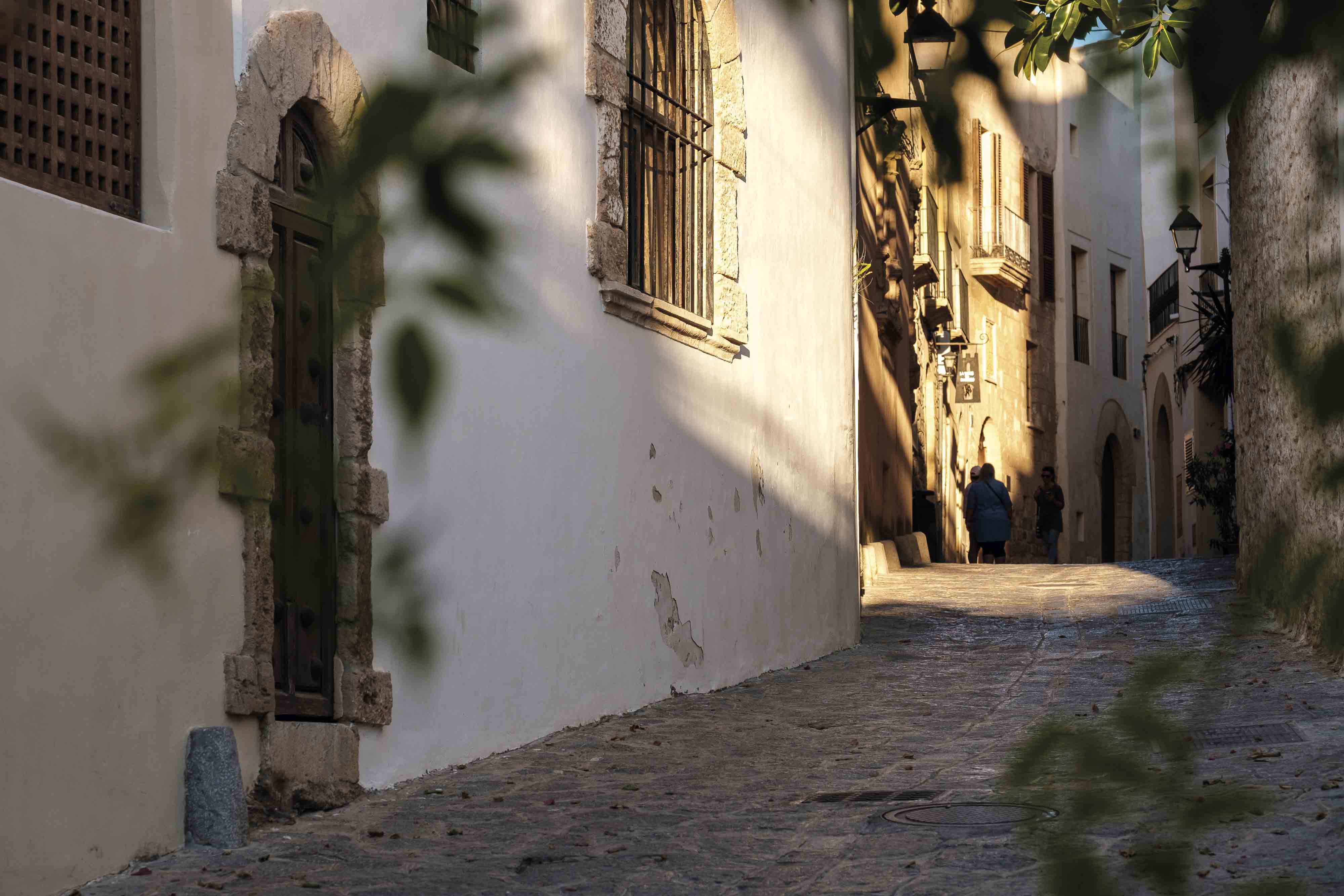
Dalt Vila. La breve subida por el Portal de Ses Taules deja atrás el barrio de La Marina para acceder a la ciudad alta (Dalt Vila), que forma parte del Patrimonio de la Humanidad de la Unesco. Sus callejuelas esconden vestigios de la ciudadela árabe, la catedral de Santa María o la gruta por la que, según la leyenda, entraron las tropas cristianas el 8 de agosto de 1235. Pero Dalt Vila destaca, sobre todo, por su ejemplar fortificación renacentista, finalizada en 1585, bajo el reinado de Felipe II. Los siete baluartes que protegen todo el perímetro sirven de inmejorable mirador de la ciudad, del sur de la isla de Ibiza y del estrecho que la separa de Formentera.


11:30

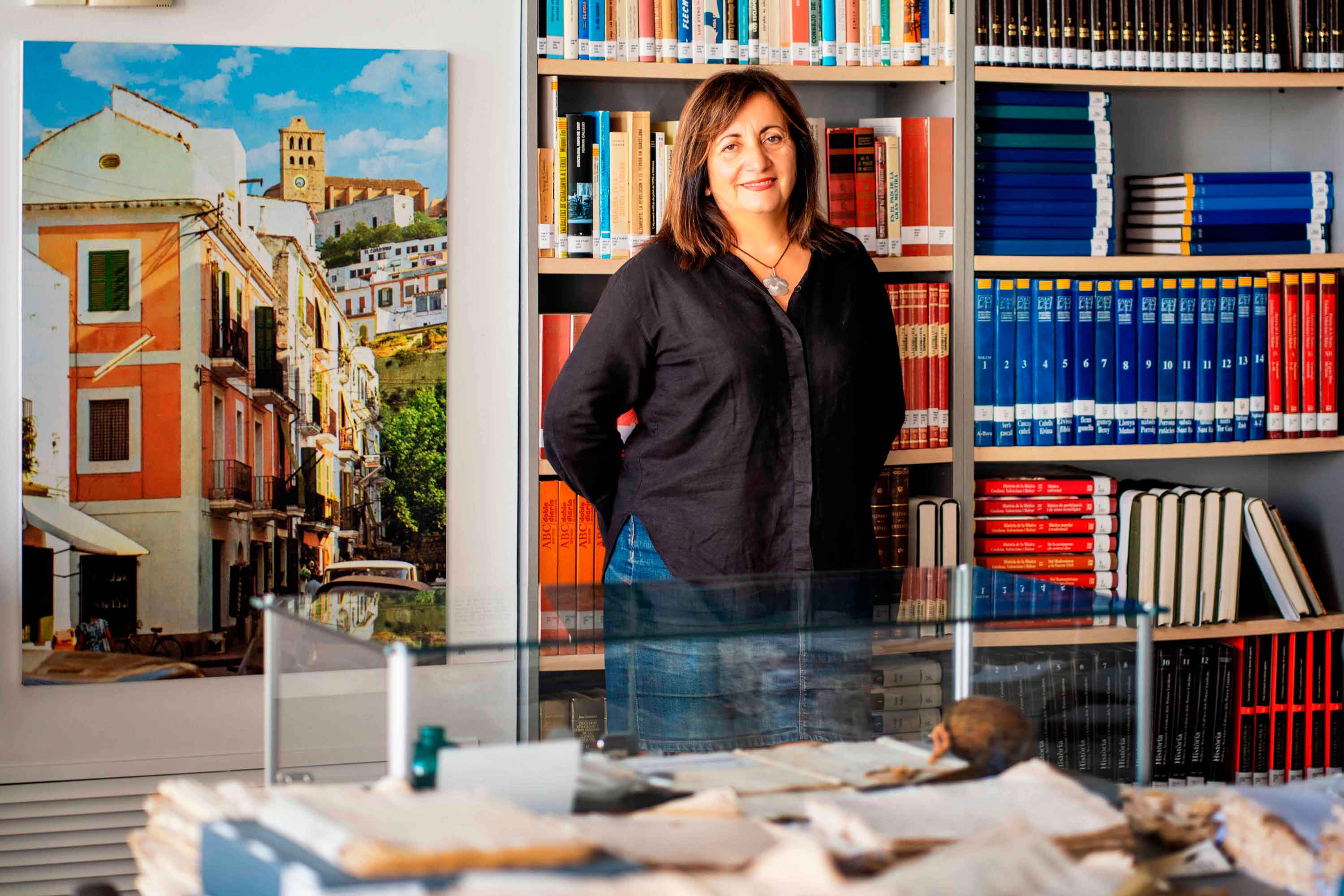
El cementerio fenicio-púnico. Tras salir del recinto amurallado, merece la pena recorrer el Paseo de Vara de Rey y la Plaza del Parque, con sus edificios de estilo colonial, antes de llegar al Museo de Puig des Molins. Una pequeña colina junto al núcleo histórico se usó desde el siglo VII a.C como cementerio y se erige hoy en día como la necrópolis fenicio-púnica más extensa e importante del mediterráneo occidental. Los ajuares que escondían sus más de 3.000 hipogeos nutren la amplia colección del museo monográfico.

14:00

El islote icónico. La siguiente parada, a media hora en coche, ofrece una de las panorámicas más fotografiadas de la costa mediterránea. El majestuoso islote de Es Vedrà se yergue 375 metros sobre el mar frente a la costa de Cala d'Hort, en el suroeste de la isla de Ibiza. El restaurante El Carmen, a pie de playa, es un escenario perfecto para gozar de las vistas y de un bullit de peix (guiso de pescado) con arroz a banda.

17:30

Arquitectura rural. Ses Païsses de Cala d'Hort, a un kilómetro de la costa, ofrecen otra perspectiva de Es Vedrà en medio de una antigua explotación rural con restos púnicos, romanos y bizantinos. Este yacimiento arqueológico museizado cuenta con restos desde el siglo V a.C hasta el VII de nuestra era. El conjunto se completa con una casa payesa restaurada, uno de los muchos ejemplos de la atávica arquitectura local.

19:30

El pueblo de la puesta de sol. Para terminar la jornada, nada mejor que dirigirse al norte de Cala d'Hort para llegar a Sant Antoni y la bahía de Portmany. El paseo marítimo de la villa recorre la playa de s'Arenal hasta llegar a es Pouetó, un chiringuito de toda la vida ideal para contemplar una de las puestas de sol, entre los islotes de poniente, más famosas del mundo.


21:30

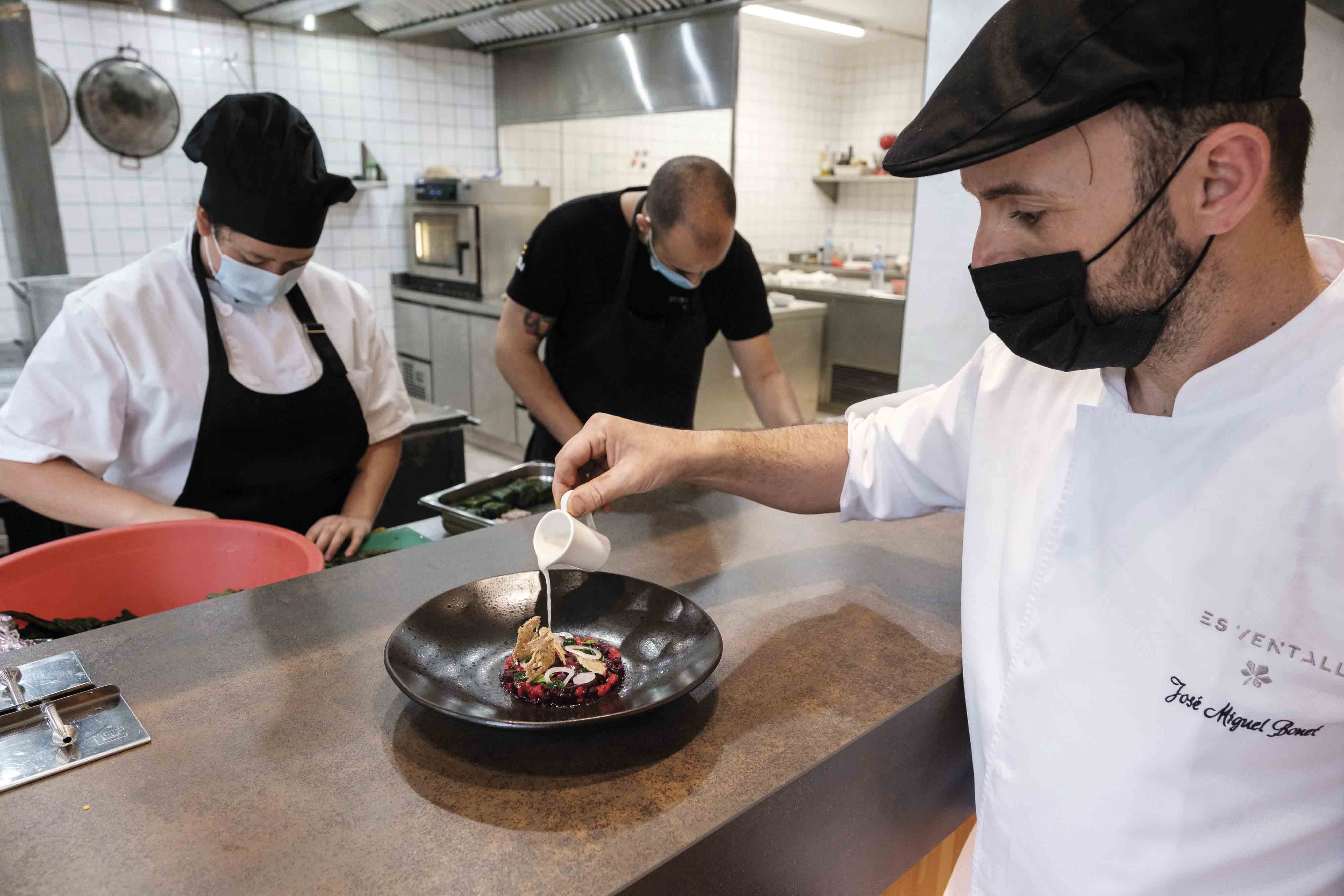
Nueva gastronomía. Es Ventall, en el centro de Sant Antoni, es un estandarte de la cocina de raíces ibicencas adaptada a las nuevas corrientes, con versiones más ligeras y presentaciones imaginativas. Trabajan los productos de su propia huerta.


Día 2:

09:00

Rumbo a Formentera. El trayecto entre las dos Pitiüses se salva en apenas media hora con Baleària, así que se aconseja tomar un tentempié frugal al despertarse para desayunar sin prisas en Formentera. El Café Matinal es famoso por sus productos caseros, desde yogures y mermeladas a todo tipo de panes. Se encuentra en pleno casco histórico de Sant Francesc Xavier, así que queda a mano una vuelta por su zona peatonal y sus pequeñas tiendas.


11:30

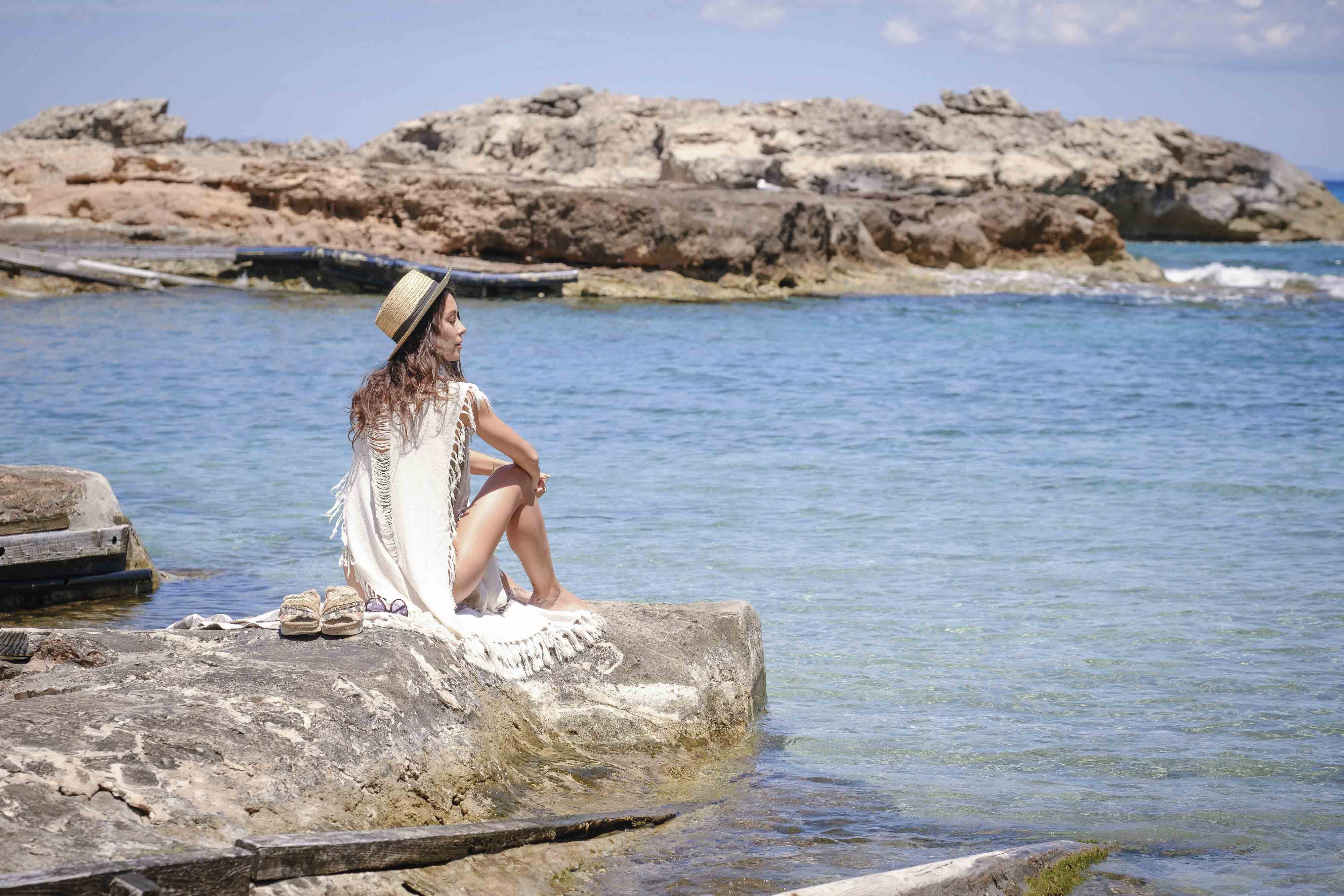
Origen megalítico. Se da la circunstancia de que Formentera cuenta con huellas de la presencia humana mucho más antiguas que Eivissa. El sepulcro megalítico de Ca na Costa se remonta a la edad del Bronce, entre el 2.000 y el 1.600 a. C. Además, cuenta con una ubicación de postal, junto a un estanque (Estany Pudent) y los sistemas dunares.

12:30

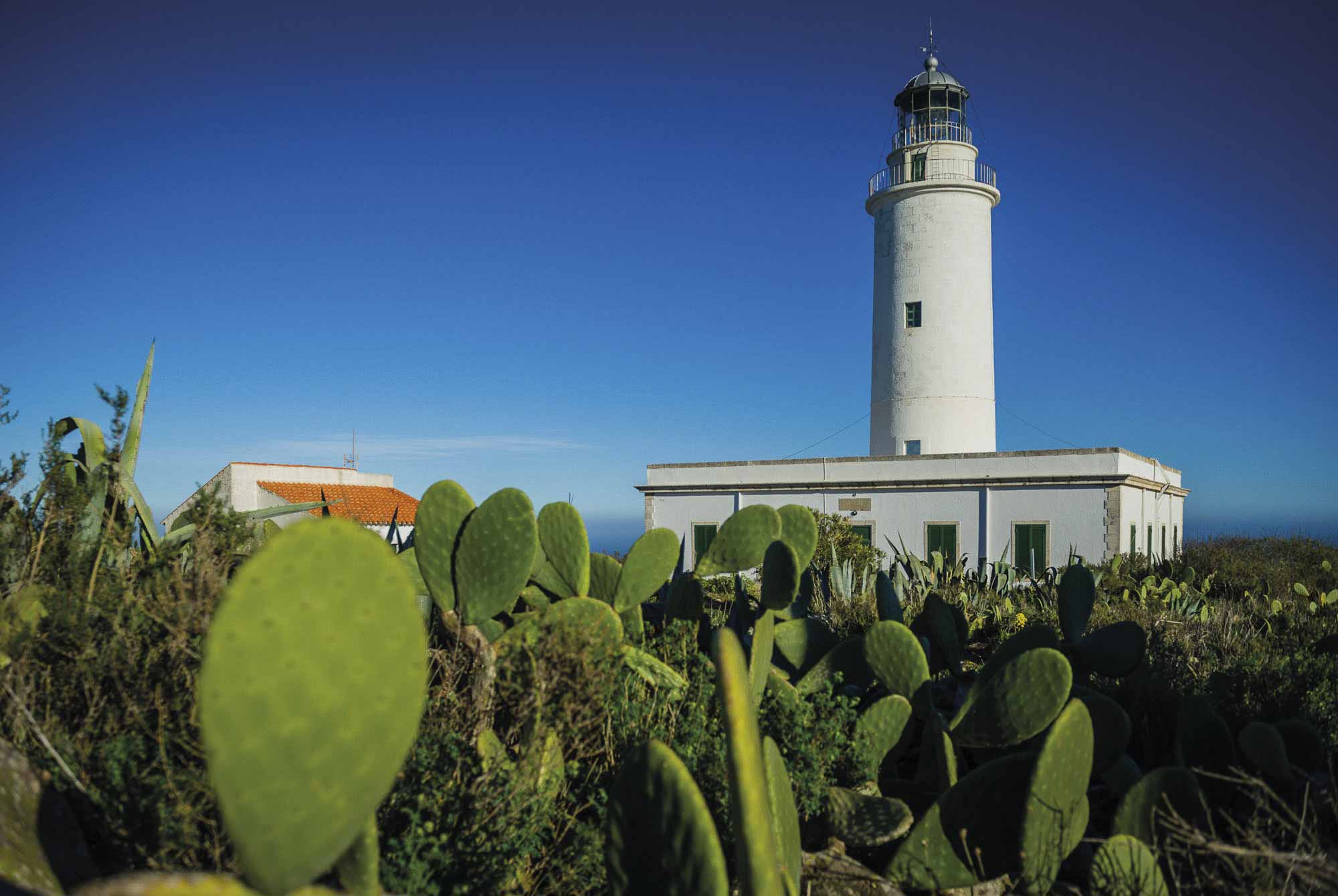
El faro de Julio Verne. El trayecto hasta la Mola, como cualquier camino que se tome en la menor de las Pitiüses, es un regalo para la vista, con increíbles panorámicas sobre toda la isla y de la costa sur de Eivissa. Tras ascender a la cota más alta de Formentera, la carretera finaliza junto a su faro más emblemático, con permiso del de Cap de Barbaria. Los acantilados de más de 100 metros acaparan toda la atención del visitante, por eso no son pocos los visitantes que no advierten la presencia del monolito dedicado a Julio Verne. El visionario autor francés ubicó en Formentera parte de la acción de 'Héctor Servadac', la novela por entregas que escribió en 1877.


14:00

Núcleo de pescadores. A los pies del promontorio de La Mola, toca parada en Es Caló, un pequeño núcleo junto a un muelle pesquero, rodeado de los tradicionales varaderos de madera para resguardar las barcas. A un lado se encuentra la calita de Ses Platgetes y, sobre el mismo embarcadero, el restaurante Can Rafelet. Su cocina se basa en el recetario tradicional de arroces y pescados, pero su especialidad, como en buena parte de la isla, es la langosta frita con huevos y patatas.

18:30

Visita a Santa Eulària. Tras desembarcar en Eivissa, en menos de media hora se llega a Santa Eulària para aprovechar las últimas horas de la jornada. Su impresionante Puig de Missa cuenta con el mejor ejemplo de las iglesias fortificadas que, siglos atrás, protegían a los ibicencos de los ataques berberiscos. Junto al templo, se encuentra el Museo de Etnografía, en una de las casas payesas más antiguas y espectaculares de la villa.

20:00

Paseo junto al mar. La bajada de la colina del Puig de Missa deja a pocos metros de la calle Sant Jaume, conocida como la calle de los restaurantes, una vía peatonal que concentra una amplia y variada oferta gastronómica. Pero, aún queda tiempo aún para dar una vuelta por el concurrido paseo marítimo de esta localidad antes de sentarse a cenar.

21:00

De tapas. Junto a uno de los restaurantes históricos de la calle Sant Jaume, el Celler de Can Pere, sus propietarios abrieron una taberna más desenfadada para comidas y cenas de tapas. Además de los platos más clásicos para compartir, destacan especialidades locales como el frito de pulpo, las tostadas de pan payés, caracoles o la ensalada de crostes i peix sec (pan crujiente con pescado seco conservado en aceite).


PATRIMONIO DE LA HUMANIDAD

UN LEGADO UNIVERSAL

El recinto amurallado de Dalt Vila mereció su distinción como Patrimonio de la Humanidad por la Unesco al ser uno de los ejemplos de mayor envergadura de las fortificaciones renacentistas, además de conservar una ciudad histórica con estratos púnicos, romanos y árabes. El casco antiguo de la ciudad se completa, ya en la parte baja, con los viejos núcleos de pescadores de Sa Riba y Sa Penya y el barrio de La Marina, antaño el centro de la actividad económica de Eivissa. Esta zona extramuros cuenta con una concurrida vida nocturna durante la temporada turística, sobre todo en el puerto, con unas callejuelas repletas de pequeñas tiendas que recuerdan a un gran bazar.


Asset Publisher
Morocco's Mediterranean side
Guías de viajes

Morocco's Mediterranean side

  This region is perfect for exploring cities with centuries of history and switching off amid natural landscapes and unspoilt beaches. From Tangier to Nador, here are ten places in northern Morocco to discover by motorhome.   Only a few kilometres separate Spain from Morocco; in less than an hour by ferry from southern mainland Spain, an entire country opens up that is best discovered slowly. The Rif massif dominates this Amazigh region and has shaped a landscape of small, remarkable roads that cross valleys and hug the coastline.   1: The gateway to Morocco Tangier This city is a gateway not only to Morocco but to the African continent. Located at a strategic point on the Strait of Gibraltar, it has Phoenician and Roman roots. The streets of the medina reveal both the Arab past and present, while this architecture mingles with 20th-century buildings dating from the period when Tangier was under international administration. Spanish influence can also be seen, for example in the Cervantes Theatre.   Tangier's ceramics reflect the colour of the sea   2: Views over the Strait Cape Spartel Cape Spartel, ten kilometres from Tangier, offers one of the finest views over the Strait. This is where the Atlantic gives way to the Mediterranean. The lighthouse here was one of the first in the country and has been operating since 1864. It stands within a nature reserve that fills up at weekends with Tangier residents looking to escape the city for a family day out. Nearby are also the Caves of Hercules and the Atlantic beaches of Sidi Kacem and Achakkar where surfing and other water sports can be enjoyed.     3: The Atlantic coast Assilah The narrow white streets of Assilah have become an open-air museum. Murals bring colour to the medina of this small Atlantic town. From the old-city walls you can see the ocean and the town's sandy beaches. It is the perfect place to stop and enjoy some fish.   Assilah's medina is recognised by UNESCO as historic heritage   4: The blue city Chefchaouen Morocco's blue pearl wins over travellers with its maze of lanes on the side of a mountain. The old town is a seemingly endless network of irregular streets lined with small shops selling souvenirs, clothes, food and spices. It is one of the best places to stay overnight and also a great base for enjoying the many walking trails in the region.     5: Switch off in nature Talassemtane National Park This natural park of almost 60,000 hectares is one of the treasures of the Rif Mountains. One of the best places to base yourself is the small village of Akchour, from where several routes set out into this mountainous area on foot or by bike. You can also see Atlas cedar forests and the waterfall named after the village.   Streams and natural pools abound in Talassemtane     6: The White Dove Tetouan Back on the Mediterranean, Tetouan is an essential stop. Its buildings are white, while in the medina this colour mixes with the green of many doorways. The old town is listed as a UNESCO World Heritage Site. Tetouan is also known as “the daughter of Granada” because of its Hispano-Moorish architecture. A few kilometres away lies Martil beach, the closest coastal area to the city and a good place to spend the night.   7: Sea and mountains Al Hoceima National Park Following the coastal road from Oued Laou towards Al Hoceima brings you to this national park, a vast landscape of nature and mountains that descend towards the Mediterranean. Between the cliffs and rocky stretches are small hidden beaches and coves such as Taoussarte and Taydiwine. Ospreys can also be seen hunting over these waters.   8: Mediterranean beaches Oued Laou Set between the mountains, the beach and small fishing village of Oued Laou are among the best places to stop, unwind and take a break from the journey. The road from Tetouan is one of the most beautiful in northern Morocco, following the coastline past cliffs and small rocky coves. Several campsites, shops and restaurants can be found near the village.   Green is associated with Paradise in Islam   9: The city on the cliff Al Hoceima This Rif city lies on the coast, surrounded by beaches and home to one of the most important ports in northern Morocco. It stands on an impressive cliff. Between 1994 and 2004, two major earthquakes struck the area, causing more than 500 deaths. It was also one of the centres of resistance to Spanish colonisation. Today, it is one of the most popular places for locals and travellers to spend their summer holidays and enjoy the calm Mediterranean waters.   10: The eastern coast Nador Nador is the final stop and the most important city on Morocco's eastern coast, only a few kilometres from Melilla. The city overlooks the Mar Chica, a saltwater lagoon connected to the sea. Following the road east, you come to the well-known Red Beach, a rocky beach, and the long Ras El-Ma beach, with several kilometres of sand. Close to the Algerian border lies the resort town of Saïdia, where you will find numerous large hotels and restaurants. 


Read more
Mallorca on foot and on two wheels
Guías de viajes

Mallorca on foot and on two wheels

  Mallorca's mild climate and good transport connections have led many walkers and, above all, cyclists to choose the island for their favourite sport. Here are ten routes to get your legs moving, either on foot or without leaving the saddle.   With 1,600 km of secondary roads and 468 km of signposted routes, Mallorca offers the perfect infrastructure for cycle tourism. Its diverse landscape —coastal, urban, rural and mountainous— also makes it ideal for exploring on foot. The experience is even better when the island is quieter, between October and May. 1: Contrasting landscapes along the old railway line The Manacor–Artà greenway This is not a circular route, so you will need to plan the return journey. At just under 30 kilometres, it is relatively easy and lets you enjoy a variety of landscapes without getting off the bike, following the old railway line. Starting east of Manacor, by the time you reach Artà you will have passed through tunnels and old stations and seen rural Mallorca, mountains, Mediterranean woodland and, in the distance, the coastline of s'Illot and Cala Millor. An easier alternative runs from Son Carrió to Son Servera.   2: Culture and the Serra de Tramuntana Valldemossa, Deià and Sóller The Valldemossa Charterhouse, where Chopin stayed, and Sóller's architectural heritage, particularly its Modernist buildings, make these two Serra villages well worth visiting. This road-bike route is for experienced cyclists. From Valldemossa, head to the Monastery of Miramar, founded by Ramon Llull, and Son Marroig, associated with Archduke Ludwig Salvator of Austria. Following the coast, you will reach Deià before descending to Sóller's Orange Valley. The route covers 36 km. 3: Mallorca's highest point, Lluc and the Cúber and Gorg Blau reservoirs Puig Major from Sóller Another demanding route for experienced cyclists, but one that belongs in this top ten because it climbs the island's highest peak. From Sóller, climb to the Monnàber tunnel, around 900 metres long. Roughly 2 km farther on is the military base, where permission must be requested to access Puig Major. From its 1,445-metre summit, you can enjoy some of the island's finest views. Afterwards, descend towards the Lluc Sanctuary, another essential stop, passing the Cúber and Gorg Blau reservoirs. From Coll de Sa Batalla, return to Sóller along the MA-10.   Walking among ancient stones 4: Beaches and natural parks by bike From Cala Egos to Es Trenc This non-circular road-bike route covers around 60 km. It takes in the coast of Santanyí and Campos and some of Mallorca's finest beaches. Starting in Cala Egos, head to Portopetro via Camí des Barranc, passing along the northern edge of Mondragó Natural Park. Continue alongside the torrent d'en Reieta to Santanyí, then cross this attractive town and ride on to Es Llombards, Ses Salines and Colònia de Sant Jordi. There you can leave the bike and, if the weather allows, walk for a while and take a dip in Es Trenc-Salobrar Natural Park or, at the other end, Es Carbó. All are spectacular beaches. 5: Great views of the Serra and the coast Planícia from Esporles This 30 km mountain-bike route is of moderate difficulty. Starting in Esporles, one of the Serra's prettiest villages, head towards Mirador de Mar along the old path that once linked the village with Port de Calonge. The views are spectacular. Return towards the MA-10 to descend towards Banyalbufar, but turn off first towards Planícia. Depending on your energy and available time, you can explore one of the three routes within this public estate. On the return journey, stop at the Es Verger viewpoint before continuing to another beautiful village, Banyalbufar, and from there back to Esporles. 6: Phoenician necropolis beside the beach Son Real The walk through the public estate of Son Real, in the municipality of Santa Margalida, is especially suitable for families. It is only around 2 km long, with no significant climbs or descents, and includes plenty to interest children. There are four possible routes, but the essential one leads to the impressive Punta des Fenicis necropolis, with burials dating from the Iron Age through to Roman times. And while you are there, you can enjoy a swim at the beach next to it.   Sea and mountains in Sóller   7: Family walking and cycling S'Albufera S'Albufera de Mallorca Natural Park, in the north of the island, is ideal for families. There are four routes that can be completed on foot or by bike: Sa Roca, Es Colombars, Es Cibollars and Es Camí d'Enmig-Ses Puntes. The longest, around three hours, is the last of these, but all of them offer the chance to enjoy the park's rich wildlife, particularly its birdlife.   8: One of Mallorca's most photographed horizons Torrent de Pareis There are several routes, some even suitable only for mountaineers, leading to the spectacular mouth of this torrent, one of Mallorca's most photogenic beaches. The classic route is the descent through the gorge from s'Entreforc, where the Gorg Blau reservoir flows out: it takes around 6 hours, covers 5 km and requires experience or a good guide. The easiest family-friendly option is the path beginning at Sa Calobra beach.   9: Ramon Llull's place of contemplation Cura Sanctuary If Ramon Llull chose this as a place for spiritual retreat, there must have been a reason. Our suggested route starts in the village of Randa before climbing to Cura Sanctuary, where the Mallorcan philosopher withdrew in the 13th century and founded his school. Along the way, as well as enjoying impressive views, you will visit the Sant Honorat hermitage and Nostra Senyora de Gràcia Sanctuary. On the final section, along Camí de Bon Pastor, you can see some galleries that were used as ammunition stores during the Spanish Civil War. The only real difficulty is the access to Puig de Son Reus. 10: Refuge for Trappist monks during the French Revolution La Trapa Several paths lead to La Trapa, a monastery founded in 1810 by French Trappist monks who, twenty years after the storming of the Bastille, decided to flee the country. Abandoned only a few years later, the estate was acquired in 1980 by the environmental group GOB to prevent development. The most popular route to La Trapa begins at s'Arracó cemetery. Another route from Sant Elm follows the coastline. A third goes via Coll de Sa Gramola and is a good choice when the rocks are wet. All of them provide exceptional views of the Sa Dragonera islet.   Horses accompany cycle tourists


Read more