
 English
 Spanish
 Catalan
 French
 Italian

Ships also have a place of origin, sometimes far removed from where they sail: the shipyard where they were built and where their lives began. It is not a detail that is usually widely known. Have you ever wondered where the vessels currently making up the Baleària fleet come from?
Today we take a look at the different places where this shipping company’s ferries and fast ferries went from being pieces of metal to becoming actual vessels. Here is Eight countries, three continents: the origins of Baleària’s vessels, part 2.
Eight Italian vessels
Different generations and different concepts of made in Italy vessels currently sail in the company’s fleet. Together they total eight vessels built at various shipyards. We begin with a trio of ferries that are virtually identical: the Sicilia and the Nápoles, recently joined by the Kerry. All three were built by Visentini, whose official Italian name is Cantiere Navale Visentini, Società a Responsabilità Limitata.
The shipyard is in Porto Viro, a town of just over 14,000 inhabitants in the Po River delta, south of Chioggia and the Venice lagoon. The Hedy Lamarr ferry was also built there, along with two very recent and highly regarded vessels: the Marie Curie and the Hypatia de Alejandría. Like the Sicilia and the Nápoles, these three are also 186 metres long.
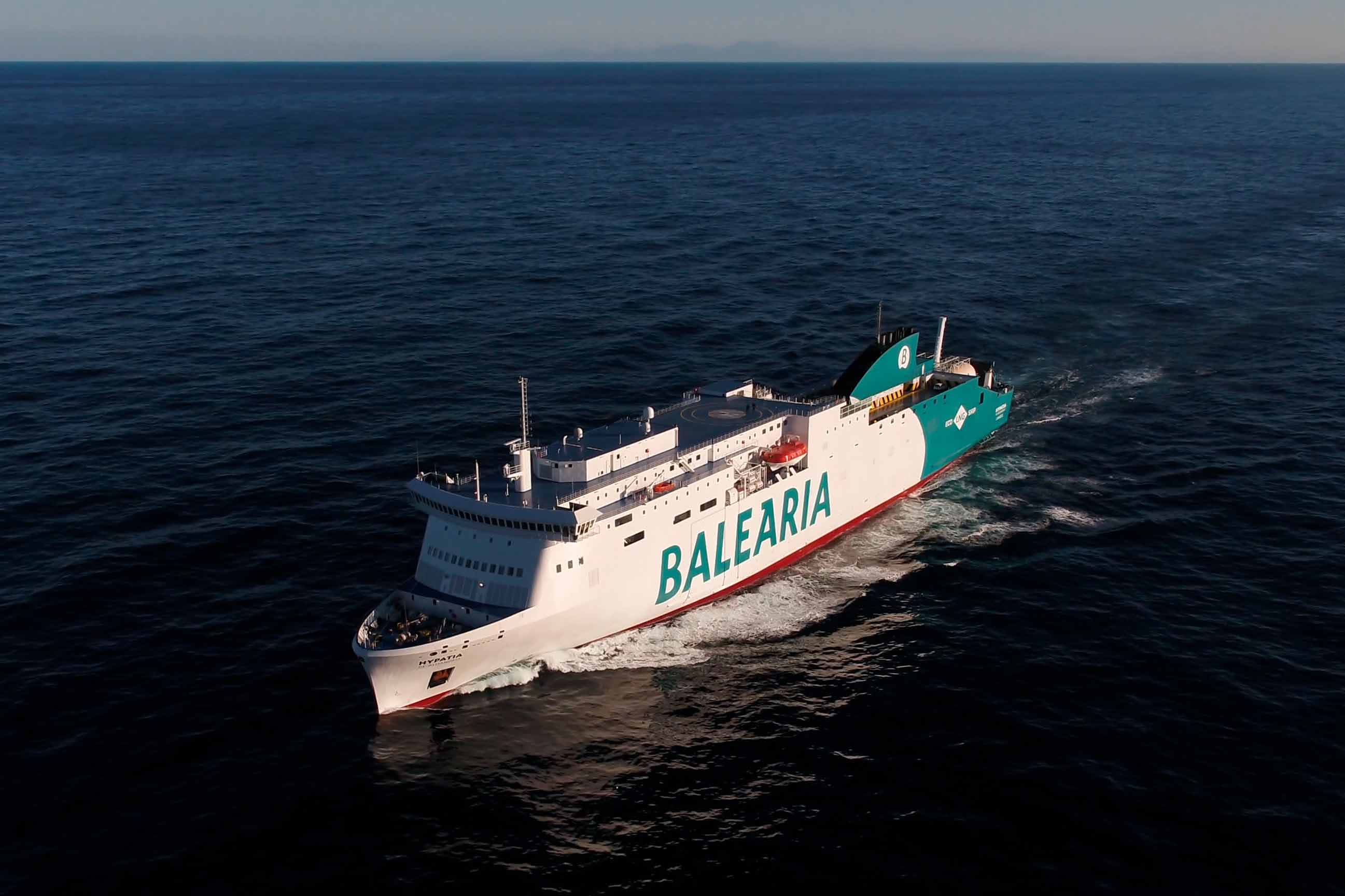
Hypatia de Alejandría ferry
Two more vessels in the fleet were built in Italy and can often be seen crossing paths in Els Freus or approaching La Savina, Formentera: the monohull fast ferry Ramon Llull (83 metres) and the Posidonia ferry (69 m). The former was built at the former Rodriquez shipyard facilities in Pietra Ligure, a town of just over 8,000 inhabitants in the province of Savona, Liguria. The latter is Tuscan, having been completed in Livorno at the historic Luigi Orlando shipyard, a company founded in 1866 on what were already old military premises that were converted to build civilian vessels.
One French, one Dutch… and one Singaporean
The Poeta López Anglada, a classic 133-metre ferry on the Strait routes, was born in Nantes. More specifically, it was built at Chantiers Dubigeon, a long-established company founded in 1760 and owned by the same family for five generations. Baleària’s Dutch vessel is the 150-metre Dénia Ciutat Creativa, built at the Van Der Giessen de Noord shipyard in Krimpen aan den IJssel, east of Rotterdam, Europe’s busiest commercial port.
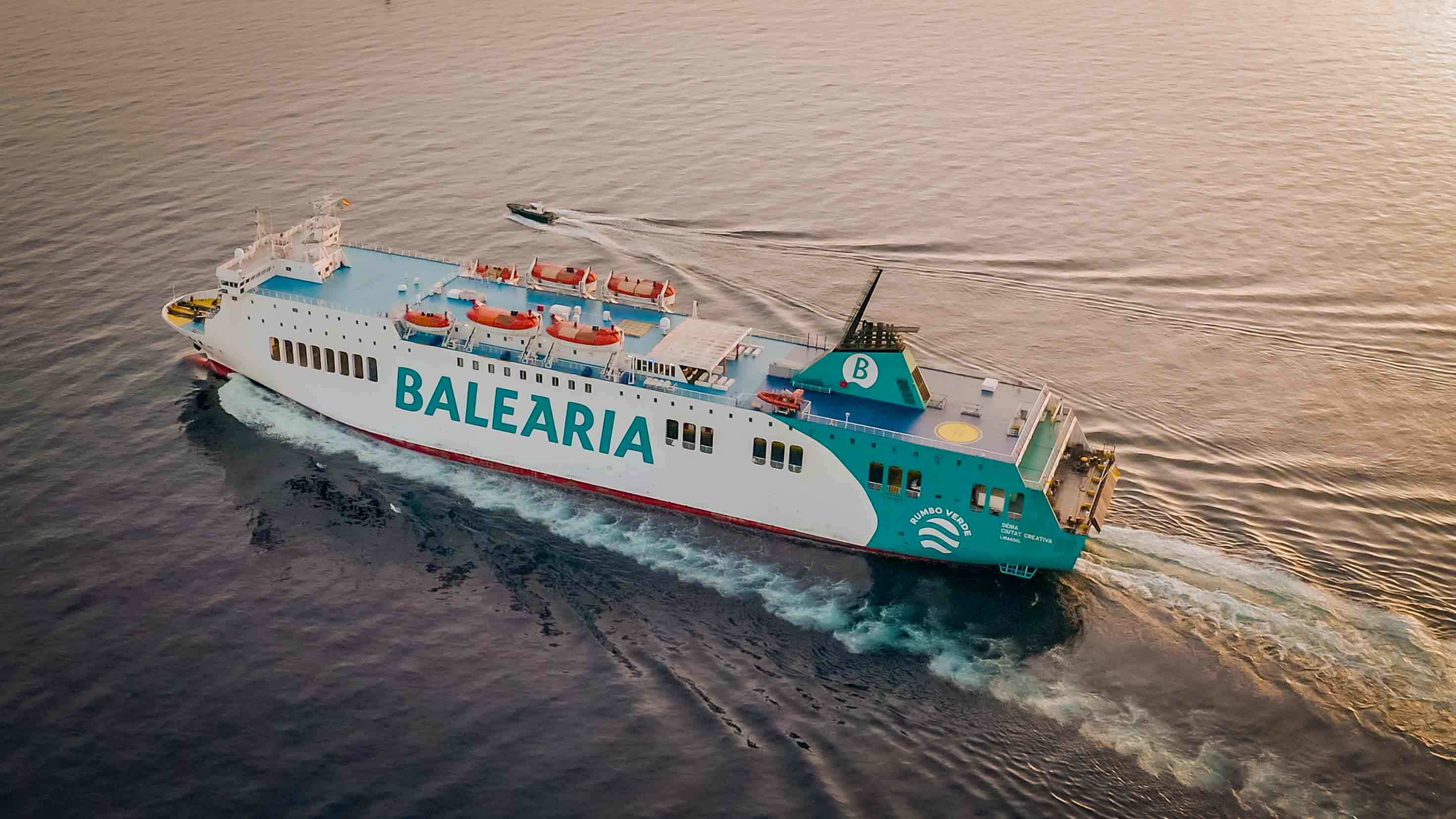
Dénia Ciutat Creativa ferry
The only Asian-built vessel in the company’s current fleet is the Nixe, built by Marinteknik, a Singaporean company founded in 1984 and specialising in high-speed craft. It was in fact a pioneer in the use of special profiled aluminium extrusions, which make vessels both lightweight and strong and therefore improve their performance. This is why Baleària commissioned this vessel and a sister ship at the time.
…and five Asturian vessels
We end this journey across three continents in Asturias, where five vessels currently operating for the company were built. First is the Eco series : four identical 28-metre fast ferries named Eco Aqua, Eco Lux, Eco Terra and Eco Aire. They were designed from the outset to operate between Ibiza and Formentera in 30 minutes and were commissioned from Gondán, a Castropol shipyard with almost a century of history.
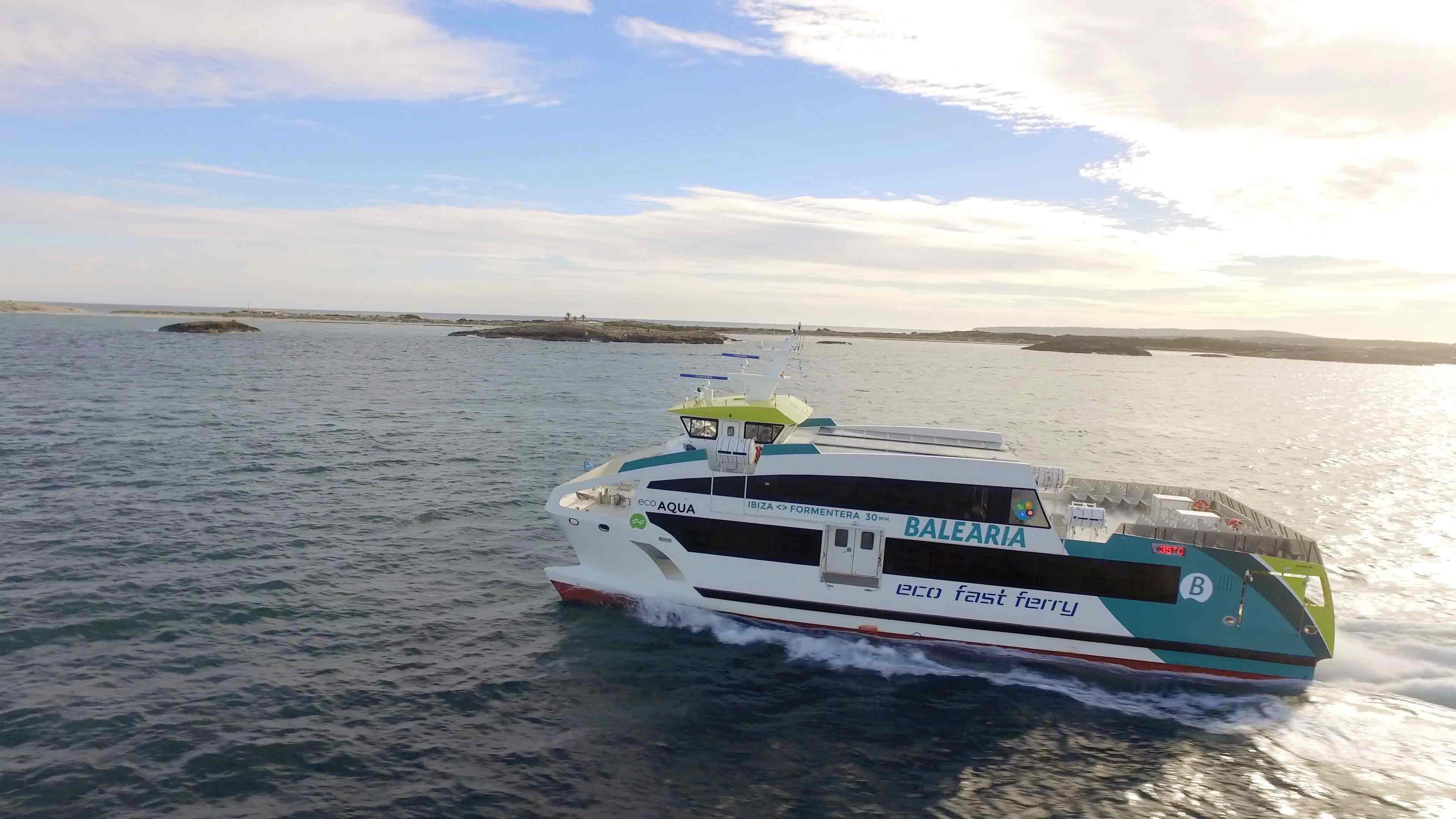
Eco Aqua fast ferry
The fifth Asturian-built vessel is the world’s largest fast ferry, measuring 124 metres in length: the Eleanor Roosevelt, built at the historic Armón shipyard in Gijón, Asturias’s largest city.
Spain, Singapore, France, Italy, Australia, the Netherlands, Finland and Norway: eight countries across three continents are the birthplaces and construction sites of the current Baleària fleet.
 X
X